


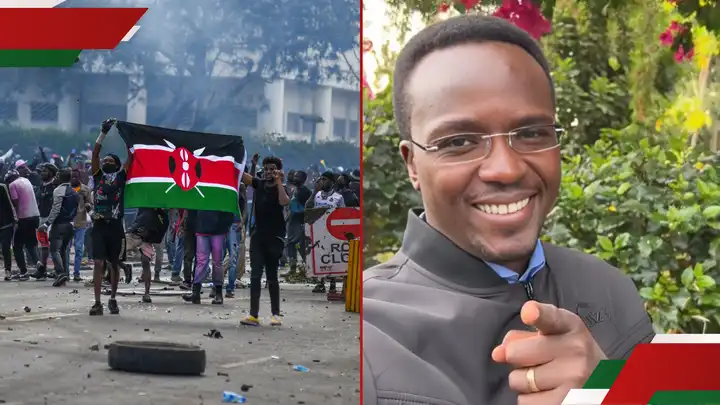
Can a generation that knows what it doesn’t want, but not what it does, truly shape the future? Iain Njiraini noted that Gen Z is united in rejecting William Ruto’s second term yet undecided on what next. That’s the question being posed by political commentator and commercial pilot Iain Njiraini, who took to Instagram to challenge Kenya’s Gen Z over their opposition to President William Ruto’s leadership. In the video, Njiraini noted that young people across the country appear strikingly united in calling for Ruto to serve only one term. However, he questioned the depth and sustainability of that unity, pointing out that it quickly dissolves when the discussion shifts to who should take over. “There is this united voice saying Ruto will do one term.
A generation in rare agreement. But here is the twist: when you ask them who should take over, the unity disappears. Everyone has their opinion,” Njiraini remarked. He warned that this lack of a shared vision or viable alternative could ultimately work in favour of the incumbent president. “And that’s the danger. Because as long as the Gen Z are united in opposition, they are divided in direction. And this division plays right into the hands of the incumbent, almost guaranteeing him a second term by default,” he added. Njiraini stressed that while youthful passion is powerful, it must be paired with purpose to have electoral impact. “Unity without a clear direction is just noise,” he said. “And noise does not win elections. Numbers do.”
His remarks come at a time of heightened disillusionment among young Kenyans, many of whom feel betrayed by unfulfilled campaign promises, rising living costs, and widespread joblessness. Social media has become a key outlet for their frustrations—but Njiraini questioned whether online anger, without strategy, can translate into political change. Iain Njiraini warned that lack of direction among Gen Z could easily hand William Ruto a second term. Could Gachagua’s power move break the opposition? In a previous article by TUKO.co.ke, former deputy president Rigathi Gachagua declared himself the most suitable candidate to face Ruto in the 2027 General Election.
His bold appeal to be named the opposition’s presidential flagbearer sparked immediate debate, particularly due to the presence of other aspirants like Kalonzo Musyoka, Fred Matiang’i, and Martha Karua. Gachagua’s remarks raised concerns over growing divisions within the opposition, as he appeared to sideline his fellow contenders. Political analyst Mark Bichachi noted that internal competition among opposition leaders was expected, but warned that disunity could hand Ruto an easy victory. He pointed out that with ODM leader Raila Odinga working with the government and other aspirants lacking structure or strategy, the opposition risked losing relevance.
By Harry Ivan Mboto