
![Six Kenyan Creatives Win Sh4.5M in Capture the Good Challenge [Details]](https://www.breakingkenyanews.com/wp-content/uploads/2026/09/cfbe48b2-fc56-43e3-93d4-3a1de9043bf5-300x200.webp)


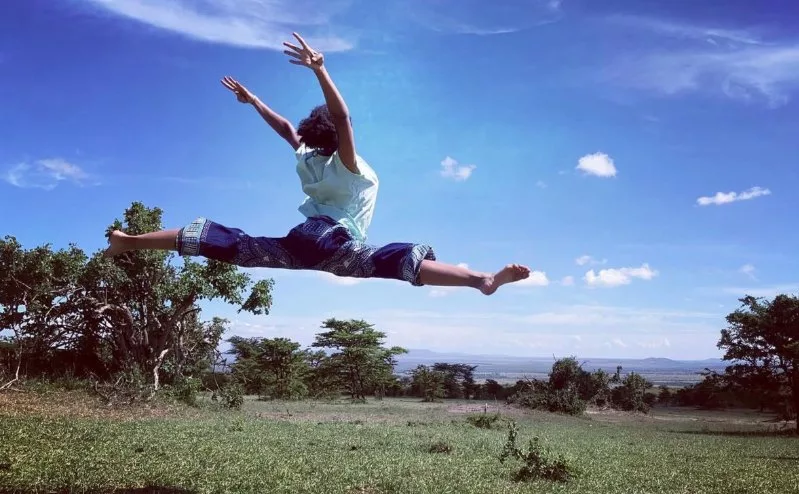
In May, Keri Yamane, 16, carried the Kenyan flag high on stage in Houston, USA after performing ‘Paquita’, a famous 19th-century story ballet set in Spain during the occupation by Napoleon’s army.
Paquita is a peasant girl who saves a French officer and falls in love with him. The twist in the story is that she is actually of noble birth but stolen in infancy and when this is found out, it paves the way for her to marry her beau.
Paquita is a demanding performance requiring years of rigorous ballet training, yet young Yamane made it to the top 40 finalists amongst 2,000 young performers selected from 15,000 global participants for the finals at the Youth America Grand Prix, the biggest ballet competition for ballet dancers between the ages of nine and 18. She was the only finalist from Africa (apart from South Africa).
HOW SHE STARTED
To reach the level of performing professionally at some of the most famous opera houses like the Royal Opera House in the UK, Palais Garnier in Paris or the Bolshoi Theatre in Moscow, demands more than just passion; it demands mental and physical determination from a very young age.
And this is Keri’s story.
Her first introduction to ballet was in kindergarten at the upmarket Banda School in Nairobi at the age of four. Born of mixed parentage, her Japanese mother Yumi Yamane is a leopard researcher in Kenya, and her father is African Kenyan.
Keri loved dancing around playfully with her age-mates. Her mother at the time was in the throes of defending her PhD on her leopard research in Nairobi National Park (across the road from Banda School), which meant she had to return to Japan with Keri and her younger brother.
In Japan, Keri was enrolled in a ballet school and found the Asian style of ballet very strict, unlike her kindergarten years.
But she persevered and spent two years at the ballet school, and that instilled in her the high standard of discipline required in coming years. Back home in Kenya, Keri returned to the Dance Centre Kenya under the tutelage of the artistic director, the professional American ballerina Cooper Rust.
“Every year, DCK puts up a big ballet performance, and I really wanted to be the first attendance to Sugar Plum Fairy in the ballet story, ‘The Nutcracker’,” she says.
She didn’t get the role. “I was heartbroken,” recounts Keri, who was only nine years old at the time.
‘The Nutcracker’ is a famous ballet dance, in which Clara receives a toy nutcracker as a present from her grandfather and when she’s asleep, enters into a magic dream where the nutcracker fights the evil Mouse King, transforms into a prince and guides her though the land of snow and sweets. The Sugar Plum fairy is the ruler of the land of sweets.
Work required Keri’s mother to fly back to Japan with the children, opening another chapter in Keri’s ballet training at the Japanese ballet school, Yarita Yu Ballet Studio, which focuses on classical ballet training and competitive development, with students entering in events like the Japan Ballet Competition and Youth America Grand Prix. “This is when my life changed,” Keri says.
It was intense training. The 10-year-old attended class five times a week, each for three hours in addition to normal school between 8am and 3pm.
Although it was tough, Keri trained in earnest to be selected for the competition class that would allow her to compete.
“I was not selected for it, and it affected me,” she says. “That’s when I realised that all I wanted was to be a ballet dancer.”
Returning to Kenya, Keri enrolled at DCK again under Cooper. This time, she had her eyes set on performing Clara in ‘The Nutcracker’. But again, it was not to be. “I was so disheartened but danced as the Columbine (doll), which is a good role for an 11-year-old,” Keri says.
THE MOMENT ARRIVES
Undeterred, Keri continued practising. And then came her moment. A year later in 2022, she performed as Princess Aurora, the heroine in the classic ballet, ‘The Sleeping Beauty’, a competition organised by the International Dance Talent Competition in Italy.
And in 2023, she was selected for the finals again in Italy to perform in the main role of Kitri in Don Quixote, a romantic comedy of an eccentric older knight looking for love, while helping the young couple, Kitri and Basilio, against Kitri’s father’s wishes. Her partner was Eugene Ochieng, also from DCK, currently completing his studies at the University of North Carolina School of the Arts in the US.
A cornerstone of DCK is supporting talented dancers from underprivileged backgounds like Ochieng, who grew up in Kibera, one of Africa’s largest slums.
The duo, Keri and Ochieng, beat all six contestants.
There’s no stopping Keri now. After Don Quixote, she received a 75 per cent scholarship for a two-week internship at the Brussels International Ballet School. Returning to Nairobi, it was at the suggestion of Cooper that it was time to look for a professional ballet school. And at the grand age of 14, Keri was accepted again at the Brussels International Ballet School, Professional Ballet Training Programme.
“I was over the moon,” says the young ballerina.
It’s not easy. She’s the youngest student at the school and living an independent life.
The training schedule is intense: waking up at 5.45am and practising dance from 8.30am to 4.30pm, in addition to classes in anatomy (human) and nutrition, French and English.
“Ballet is a discipline, you grow as a human being and you learn to be mentally strong and tough,” she says.
Her aim is to graduate at 18 and work in one of the top dance companies in the world, like the Royal Ballet and Opera House in London, in the footsteps of her role model Francesca Hayward, who is a principal ballerina and was born in Nairobi.
At only 16, Keri has a plan for the future, when she returns home to retire in Kenya. “Professional ballet dancers perform until they are about 40 years old,” she says. “When I retire, I want to come back to Kenya, teach ballet and take the students to professional ballet schools to perform internationally, as I am doing.”
For a 16-year-old, that’s a real vision for the future.
BALLET IN KENYA
The pioneer of ballet in Kenya is Madame Vera Zerkovitz, who taught classical ballet at the British Council, now called the Kenya Culturala Centre in Nairobi, from the 1950s until her death in Nairobi in 1993.
Today, ballet is a vibrant movement in Kenya, with schools like Dance Centre Kenya and the Frontier Pioneer School Ballet Club in Kericho.
It has been introduced in the slums where children have never heard of ballet by luminaries like Anna Nygh and Mike Wamaya, using dance to instil discipline, confidence and hope among underprivileged youth in Kibera and other areas. Wamaya won a global award for this.
In 1998, the Royal Ballet of the United Kingdom performed ‘Dances for Elephants’ in Nairobi to fundraise for elephant conservation during the height of ivory poaching in Kenya.




![Six Kenyan Creatives Win Sh4.5M in Capture the Good Challenge [Details]](https://www.breakingkenyanews.com/wp-content/uploads/2026/09/cfbe48b2-fc56-43e3-93d4-3a1de9043bf5-768x512.webp)