


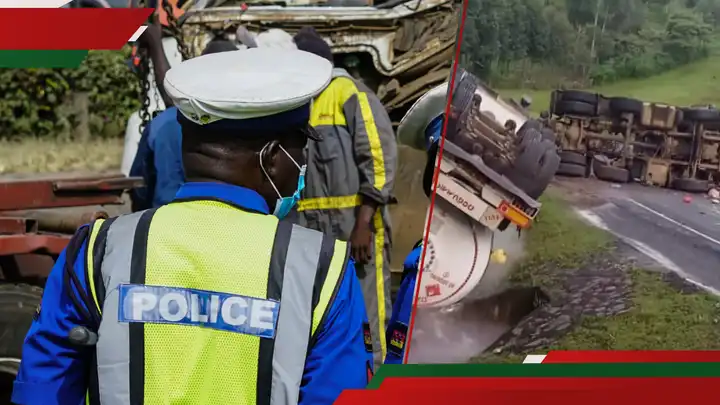
A fuel tanker overturned in the Rakite area along the Kisumu-Busia Highway, triggering a dangerous rush by locals attempting to siphon fuel. The fuel tanker overturned along the Kisumu. According to officers from Butula, the tanker driver lost control of the vehicle while allegedly speeding toward the Kenya-Uganda border. Witnesses recounted the chaotic scene that followed. “He failed to control the vehicle before it overturned by the roadside, and within moments, residents had already gathered with containers, ready to siphon the fuel,” an eyewitness said, according to a report by Citizen Digital.
The accident occurred just a few meters from Butula Police Station, putting authorities on high alert. Why did Butula police struggle to contain crowd? Officers at the scene struggled to keep the crowd at bay, warning them of the severe risks involved in fuel siphoning. Despite repeated cautionary messages, many locals remained undeterred, motivated by the prospect of obtaining free fuel. The incident has reignited concerns over the dangers of fuel theft and the recurring risks associated with overturned tankers. Authorities have emphasised the life-threatening hazards, including the potential for fires and explosions and subsequent fatalities or injuries, toxic fumes and health risks. How did Busia fuel tanker accident kill 13? This latest event brings back memories of a similar tragedy in 2021 when a fuel tanker explosion in Malanga, also along the Kisumu-Busia Highway, claimed 13 lives, leaving the community in mourning.
The incident occurred when a trailer swerved to avoid a head-on collision with a fuel tanker. In the process, the tanker struck the trailer’s right side and overturned, spilling petrol by the roadside. Despite the imminent danger, members of the public rushed to the scene and began collecting the leaking fuel. Moments later, the tanker ignited, erupting into flames. Firefighters from Busia County battled the blaze for three hours before finally bringing it under control. Officials have urged residents to prioritise safety and avoid engaging in dangerous fuel siphoning practices.
by Nancy Odindo