


Kenyan households stare at another increase in the cost of living this month as a surge in global crude oil prices raises the prospect of higher pump prices, transport costs and commodity prices.
Brent crude, the international benchmark, has traded above $100 (about Sh12,980) a barrel for the past one month amid continued disruptions linked to the conflict in the Middle East, with prices briefly climbing towards $108 (Sh14,018) this week.
This is after US President Donald Trump rejected an Iranian proposal linked to reopening the Strait of Hormuz.
The latest oil shock comes as Kenyan households are already dealing with elevated prices, with annual inflation rising to 6.8 per cent in September from 6.6 per cent in August, according to the Kenya National Bureau of Statistics (KNBS).
Food inflation stood at 9.5 per cent, while transport costs rose 15.6 per cent year-on-year.
The development puts pressure on the Energy and Petroleum Regulatory Authority (EPRA) ahead of its October 14 review of maximum pump prices.
EPRA retained prices for the September 15-October 14 cycle, leaving a litre of super petrol in Nairobi at Sh214.03, diesel at Sh217.86 and kerosene at Sh191.38.
This was despite increases in the klanded cost of diesel which rose by 11.86 per cent from US$855.59 to US$957.05 per cubic metre, while kerosene increased by 9.71 per cent, from US$915.01 to US$1,003.87 per cubic metre.
The average landed cost of imported super petrol however dropped by 7.87 per cent, from US$948.92 per cubic metre in July to US$874.26 in August.
However, international market conditions have changed considerably since the current prices were set.
Brent futures climbed to around $107.35 (Sh13,922) a barrel during the recent escalation, although prices have remained volatile as markets respond to developments around Middle East supply and diplomatic efforts.
On October 1, Brent was around $100 (Sh12,980) amid continued concerns over global fuel supplies.
The Strait of Hormuz is particularly important because it carries a substantial share of global oil supplies. Any prolonged disruption would increase crude and shipping costs for oil-importing economies such as Kenya.
Manufacturers are warning that higher fuel prices could quickly spread through the economy.
Kenya Association of Manufacturers chief executive Tobias Alando said sustained high fuel and transport costs were creating an increasingly uncertain operating environment for local industrialists.
“Heightened distribution expenses ultimately filter down to consumers through elevated commodity prices,” Alando said.
The impact extends beyond the cost of diesel used to transport raw materials and finished products.
Higher freight charges, imported inputs and energy costs can squeeze margins and force businesses to reconsider pricing.
The pressure is also being felt by public transport operators where Matatu Owners Association president Albert Karakach has called for government intervention to cushion operators and commuters from high fuel prices.
“Government should look into lowering fuel prices through the different options at hand including taxes,” Karakach told the Star.
Transport inflation was already among the largest contributors to September’s cost pressures, according to KNBS.
A further increase in diesel would raise operating costs for matatus, buses, trucks and other commercial vehicles, potentially feeding into fares and the cost of moving food and manufactured goods.
Martin Chomba, chairman of the Petroleum Outlets Association of Kenya, said the geopolitical tensions were increasingly becoming a household economic issue rather than a distant international crisis.
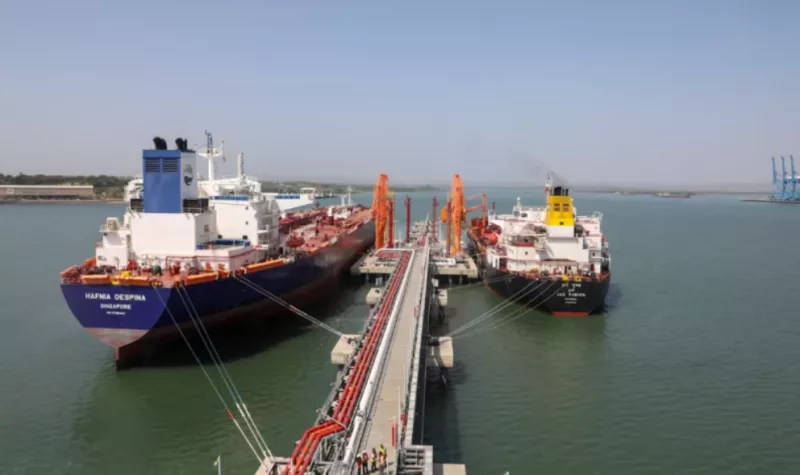
For Kenya, which relies on imports for its petroleum needs and also imports wheat, fertiliser, industrial raw materials and other commodities, Chomba warned that higher international energy and shipping costs could translate into broader inflationary pressure.
The government has retained the reduced 8 per cent VAT on petroleum products until October 14, providing some relief to motorists.
However, prolonged increases in international oil prices could test the extent to which taxes and other components of the pricing formula can cushion consumers.
The Central Bank of Kenya has also flagged global oil prices and the Middle East conflict as risks to inflation.