



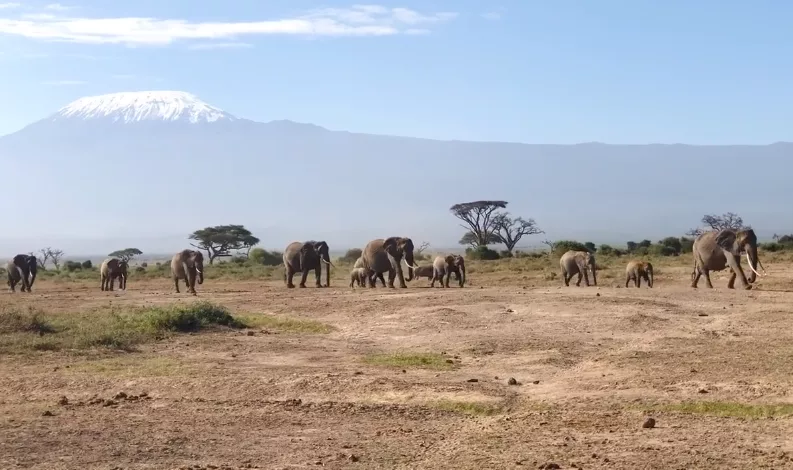
Investigations to determine what killed 16 elephants in the Amboseli-Kimana ecosystem have reached an advanced stage even as preliminary findings point to cyanide poisoning as the most probable cause.
In an update issued on Friday, the Kenya Wildlife Service (KWS) said it was awaiting the completion of confirmatory laboratory tests before making a final conclusion on what killed the animals.
The jumbos, mainly adult females and calves, were reported dead between June 24 and July 31.
KWS said the 16 elephants exhibited weakness and partial paralysis of their hind limbs before dying.
The agency said it launched investigations immediately after the first case was reported on June 24 by deploying veterinary and scientific teams from Nairobi, Tsavo and Amboseli.
The teams conducted post-mortem examinations, collected samples and stepped up surveillance to identify the cause of the deaths.
The wildlife agency said it also enlisted the Government Chemist and the University of Nairobi to undertake toxicological, microbiological and related laboratory analyses on samples collected from the dead elephants.
According to KWS, preliminary laboratory analysis by the University of Nairobi indicates cyanide poisoning is the most likely cause in the cases examined.
However, the agency said it can only draw a conclusion after receiving the confirmatory tests to match the laboratory findings with individual case records and establish the source and pathway of exposure.
“Moving forward, KWS will provide further upsates as verified information becomes available,” the agency said.
As part of the investigations, KWS on July 30 requested the Pest Control Products Board (PCPB) to establish and lead a multi-agency technical team to examine whether pest control products or other crop protection chemicals may have been improperly used, stored or disposed of in the Kimana area.
The agency said the team is also investigating whether water, soil or forage may have become contaminated.
In addition, investigators are examining whether giant star grass (Cynodon plectostachyus), a cyanogenic plant species, could have contributed to the elephants’ exposure.
“The Kenya Wildlife Service is committed to establishing the facts and keeping the public informed every step of the way,” KWS Director General Erustus Kanga said.
Despite the ongoing investigations, KWS said findings so far do not indicate an infectious or transmissible disease.
The agency added that it has intensified elephant surveillance, ranger patrols and veterinary monitoring across the ecosystem to prevent further deaths and protect wildlife and visitors.
KWS also assured the public and the tourism sector that Amboseli National Park remains open and is operating normally.
It appealed to members of the public with any relevant information to report it through its toll-free line or official communication channels.