



Poaching remains the biggest obstacle to Kenya’s efforts to protect and grow its rhino population, the Ministry of Tourism and Wildlife has said.
The ministry also identifies illegal wildlife trade as the second-biggest threat to the country’s efforts to conserve and increase wildlife populations.
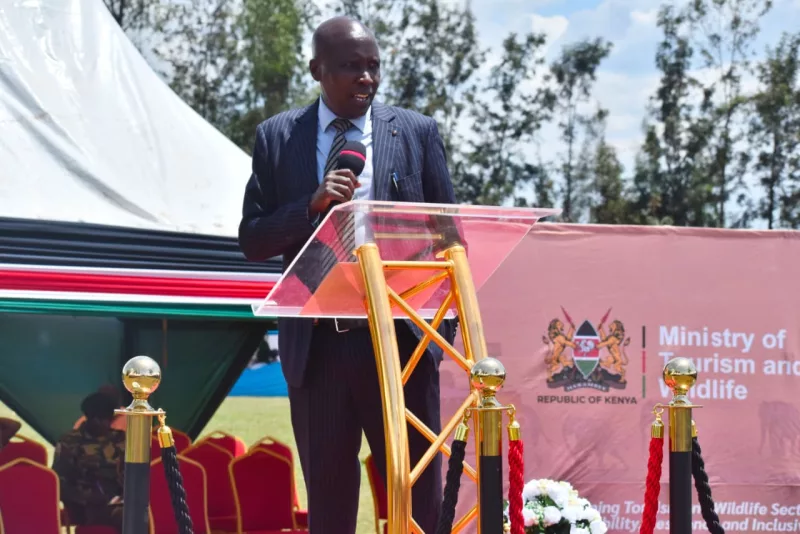
Secretary of Administration at the State Department for Wildlife Tobiko Nayioma said rhinos have become endangered because of the high value attached to their horns.
Nayioma said Kenya’s rhino population once declined from about 20,000 to 300, largely due to poaching and illegal wildlife trade.
He called for an integrated approach involving communities living alongside national parks and other wildlife conservation areas.
“The future of parks is inseparable from the well being of the community surrounding them. Community must be recognised as partners and custodian of conservation,” Nayioma said.
He spoke during this year’s World Rhino Day celebrations in Ndhiwa, Homa Bay County, where he said the government had introduced various measures to protect rhinos and ensure their population continues to grow.

Secretary of Administration at the State Department for Wildlife Tobiko Nayioma hands over a trophy to a football team coach during World Rhino Day in Ndhiwa/Robert Omollo
The rhino species kept in Kenya’s national parks include the black rhino, southern white rhino, greater one-horned rhino and Javan rhino, among others.
Other threats to rhinos include habitat loss, human-wildlife conflict and climate-related pressures.
Nayioma said modern conservation must be guided by science, technology and reliable data.
He said Kenya’s rhino population can survive and recover through the provision of suitable habitats, maintenance of ecological integrity and preservation of genetic diversity.
“Keen monitoring, veterinary surveillance and ecological research are essential for understanding the rhino population. They will as well help one in mastering their reproduction and the threats they face,” he said.
Ndhiwa West Sub-County Commissioner Lucy Ndemo said authorities were working closely with communities to protect wildlife in Ruma National Park.
According to a ministry report, Ruma National Park has 22 white rhinos and 28 black rhinos.
Ndemo cautioned residents against setting fires in the park during the dry season.
“Fire threatens and disrupts the ecological situation of wild animals. We’re also warning poachers that legal action will be taken against them when found culpable,” she said.
Meanwhile, the ministry said it plans to compensate people injured in attacks by wild animals.
Directorate of Partnerships and Wildlife Co-existence official Florence Kanana said 39 people in Homa Bay are seeking compensation after being attacked by wild animals.
“Compensation is about empathising with those who were injured. The compensation exercise is scheduled for October 14,” Kanana said.
Sub-County Administrator Fredrick Ochieng Oyugis said the county government was working with the national government to create a conducive environment for tourists visiting Ruma National Park.
He said Homa Bay County also supports domestic tourism.
“Our collaboration has seen Ruma National Park host the roan antelope half marathon. We must protect the park because it’s also our heritage,” Oyugis said.
The officials planted trees and awarded teams that participated in a football match in Ndhiwa.
Other headline options
- Poaching Puts Kenya’s Rhino Conservation Efforts at Risk
- Poaching, Illegal Trade Threaten Kenya’s Rhino Population
- Poaching Remains Biggest Threat to Kenya’s Rhinos, Official Says
- Why Kenya’s Rhino Population Remains Under Threat
- Government Raises Alarm Over Poaching Threat to Kenya’s Rhinos
- Poaching Threatens Gains in Kenya’s Rhino Conservation, Official Warns