



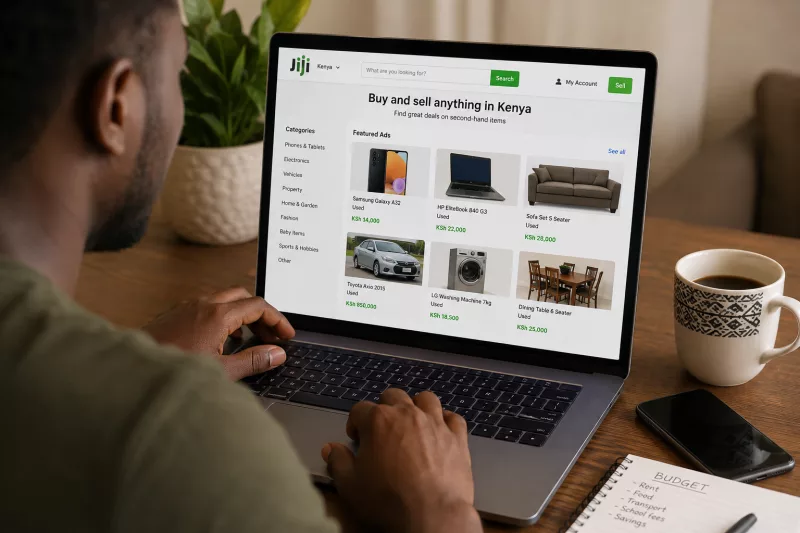
A growing number of Kenyans are abandoning the allure of brand-new products and turning to second-hand goods as tight household budgets force families to stretch every shilling.
Whether it is a used laptop for school, a refurbished smartphone, a second-hand sofa or a pre-owned car, consumers are increasingly opting for cheaper alternatives as the cost of everyday living continues to eat into disposable incomes.
New data from online marketplace Jiji shows searches for used goods jumped 70 per cent in the first quarter of 2026 compared with the same period last year, painting a picture of how economic pressure is reshaping spending habits.
The platform recorded more than 14.7 million unique searches for pre-owned products between January and March, with electronics, vehicles and household items attracting the highest interest.
The surge suggests that for many households, buying second-hand is no longer driven by preference but by necessity.
“Kenya has historically been a second-hand driven market, but what we’re seeing now is accelerated growth within this segment, underpinned by a more economically aware consumer. We’re making this ecosystem more efficient by connecting buyers and sellers and helping unlock value from goods already in circulation,” said Jiji Africa chief operating officer, Maxim Makarchuk.
The findings offer fresh evidence of the strain facing consumers even as headline inflation also continues to strain households.
This has seen families continue to spend a larger share of their income on essentials such as food, transport, rent and school-related expenses, leaving less money for discretionary purchases.
As a result, many shoppers are choosing to own quality products they could not otherwise afford if bought new.
According to data by the marketplace, the trend is especially visible in electronics, where buyers are increasingly searching for used laptops, smartphones and televisions that offer better specifications at a fraction of the retail price.
Demand for second-hand vehicles has also remained strong as motorists seek lower-cost alternatives in a market where new cars remain out of reach for many households.
Beyond affordability, the growing acceptance of second-hand goods is changing consumer attitudes. What was once viewed as a fallback option is increasingly becoming a first choice, driven by value for money rather than social stigma.
The shift is also creating opportunities for households looking to earn extra income by selling items they no longer use instead of letting them gather dust.
Online marketplaces have made it easier for sellers to convert unused electronics, furniture and vehicles into cash while giving buyers access to lower-priced goods.
For retailers of new products, however, the trend signals a more cautious consumer. As households postpone purchases or switch to pre-owned alternatives, demand for new electronics, furniture and other durable goods could come under pressure.
The trend comes at a time that Kenya is planning to ban the importation of electrical and electronic equipment that is more than 12 years old as part of new measures aimed at tackling the country’s growing electronic waste challenge.
The proposed rules, contained in draft environmental regulations developed by the National Environment Management Authority (NEMA), will apply to a wide range of household and industrial appliances, including televisions, refrigerators, smartphones, computers and other electronic devices.
The framework seeks to curb the influx of near-end-of-life and obsolete second-hand electronics, many of which are imported as donations or refurbished products despite being close to disposal.
NEMA says the move is intended to reduce the volume of electronic waste generated in Kenya and limit public exposure to hazardous substances found in ageing electronic devices, which have been linked to serious health risks, including respiratory illnesses and cancer.
The proposed restrictions form part of broader efforts to improve the management of electronic waste and promote the importation of safer, longer-lasting technology into the Kenyan market.