


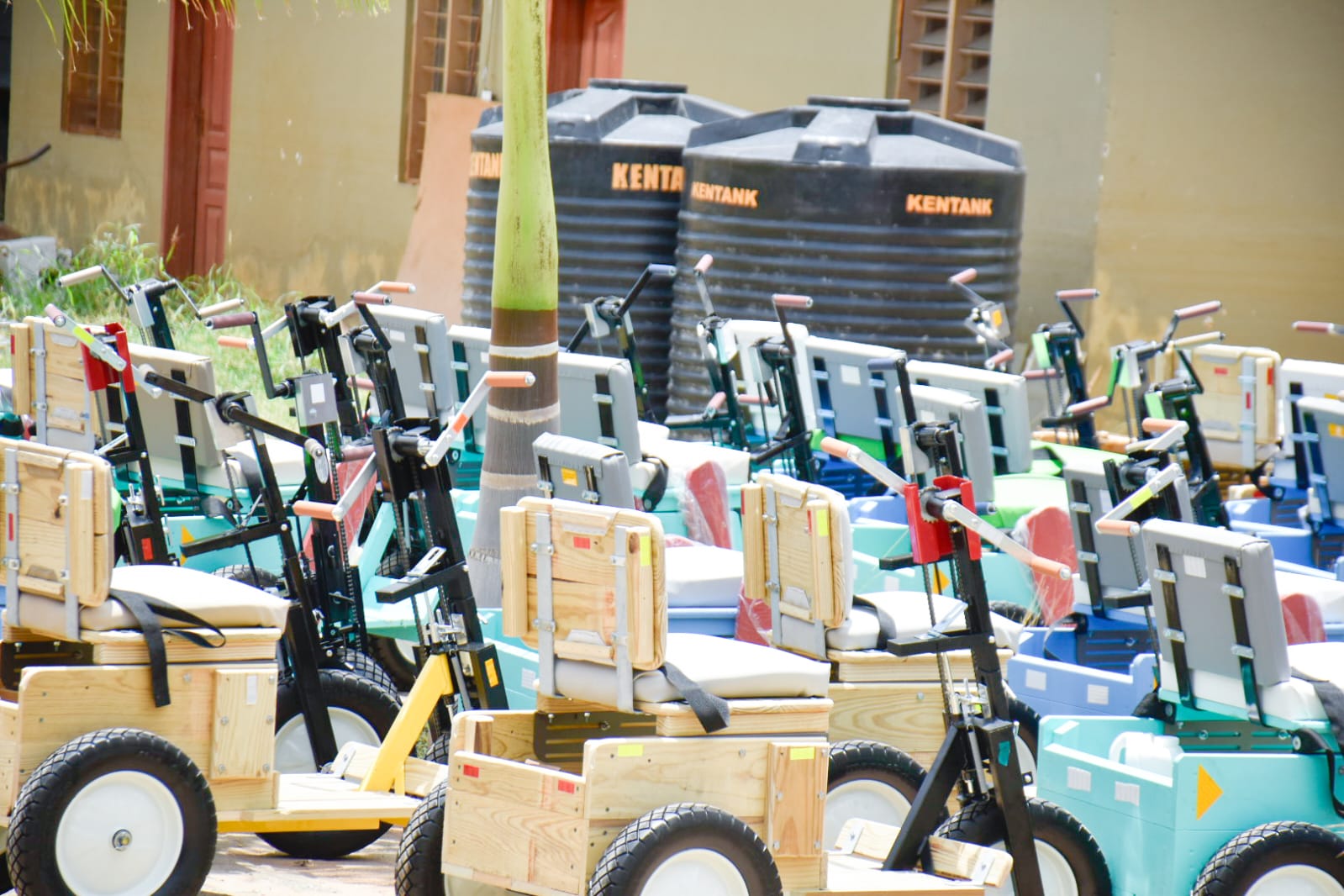
The government is considering reviewing taxes charged on wheelchair parts and components imported by local manufacturers as it seeks to reduce costs and tackle Kenya’s shortage of about 550,000 wheelchairs.
Medical Services Principal Secretary Ouma Oluga said the huge gap means hundreds of thousands of children and adults are unable to move around easily, attend school, work or live independently.
Oluga spoke on Thursday during a meeting that brought together wheelchair providers, local manufacturers, rehabilitation experts and development partners to discuss ways of improving access to wheelchairs and rehabilitation services.
“We are facing an unmet need of about 550,000 wheelchairs in Kenya. This means many people who need mobility support are still going without it, and that affects their education, health, work and participation in society,” Oluga said.
He said Kenya can no longer rely mainly on imported wheelchairs and needs to build local solutions that can meet growing demand.
One of the main proposals discussed at the meeting was increasing local manufacturing and assembly of wheelchairs to lower prices and improve supply across the country.
“We want to expand local manufacturing and assembly of affordable and quality wheelchairs in Kenya. We also want to create an environment that supports local manufacturers to grow and invest,” Oluga said.
He said reducing taxes on imported parts could make wheelchairs cheaper and encourage more companies to manufacture and assemble them locally.
Wheelchairs are among the assistive devices that many Kenyans with disabilities struggle to access because of high prices and limited supply.
However, Oluga said providing a wheelchair is only one part of helping a person regain mobility and independence.
“A wheelchair service goes beyond supplying a device. It includes assessment, prescription, fitting, user training, maintenance, repair and follow-up so that users receive the right support and achieve better outcomes,” he said.
Health experts say a poorly fitted wheelchair can cause pain, injuries and posture problems, making it difficult for users to use the device comfortably and safely.
The meeting also discussed ways of making wheelchairs more affordable through the Social Health Insurance Fund.
Stakeholders said strengthening the fund’s benefits package could help more people access wheelchairs as well as rehabilitation services such as assessment, fitting and repairs.
Oluga said the government also wants to improve public understanding of disability and reduce stigma faced by people who use wheelchairs and other assistive devices.
Many people with disabilities continue to face discrimination in schools, workplaces and public spaces, limiting their ability to participate fully in society.
Participants further called for better data on disability and assistive technology needs to help the government plan services and direct resources where they are most needed.
The ministry also wants stronger partnerships between government, manufacturers, healthcare workers and development organisations to improve services across the country.
“The government remains committed to working with all stakeholders to develop sustainable and locally–driven solutions that strengthen rehabilitation services, support local industry and expand access to assistive technology,” Oluga said.
He said the plans support the government’s goal of achieving universal health coverage and ensuring that PWDs are not left behind in access to healthcare services.
The plans come as a government report showed Kenya hais already making made huge strides in inclusion of PWDs.
The National Council of Administration of Justice said in its 2023-24 report that a wide array of players in the criminal justice chain have made considerable contributions to ensuring reduction of marginalisation and stigma of PWDs.
The Needs Assessment Report for persons with disabilities report highlighted the level of inclusion of persons with disabilities in the public service.
The report hails Kenya National Commission on Human Rights for collaborating with the National Council for Persons with Disabilities to support the launch of the Second Status Report on Disability Inclusion in Kenya, which brought together more than 70 ministries, departments and agencies.
The KNCHR also collaborated with other state agencies and nonstate actors and developed a draft National Policy for People with Disabilities.
“The Council for Legal Education continued to support candidates with special needs during the Advocates Training Programme examination administration.
“The council also revised its service delivery charter to include steps to accommodate persons with disabilities, including Braile, video, and audio system,” the report reads.
The Kenyan section of International Commission on Jurists developed a digest that informed policy towards easing life for the PWDs.
A disability inclusion conference was held in November last year.