




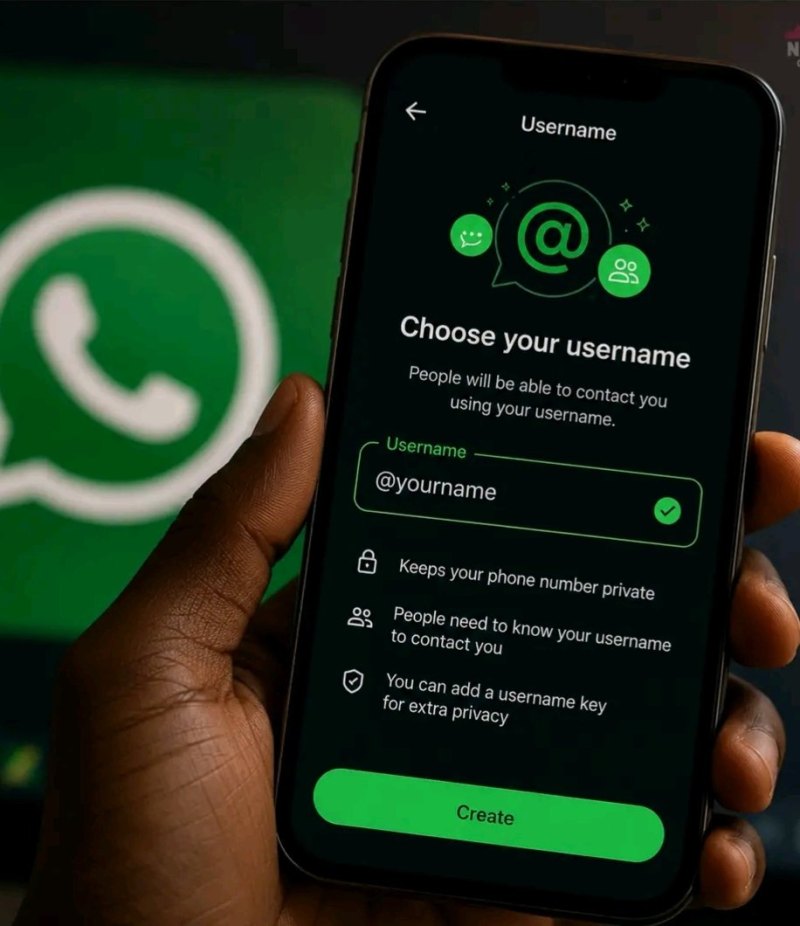
WhatsApp is set to let people chat without having to reveal their phone number. The platform will allow its three billion account holders to exchange unique usernames instead.
This change will be rolled out globally over the next few months. From Monday, users began being able to reserve a name via the app. While the feature is not compulsory, it marks a significant shift for the messaging giant.
Choosing a Unique Handle
Usernames must be between three and 35 characters long. High-profile officials and celebrities will have their names protected to prevent impersonation. This means it is unlikely the app will be overrun with users calling themselves Donald Trump.
Meta’s other platforms, including Instagram and Facebook, will give existing organisations and creators the first chance to claim their handles on WhatsApp. Users will be able to remove or change their usernames at any time.
“We have designed this as a core privacy feature,” said Alice Newton-Rex, WhatsApp’s head of product.
How the System Works
There will be no public directory of usernames on the app. This means you cannot simply search for a stranger. People will need to know your exact username to contact you for the first time.

A phone number is still required to have a WhatsApp account in the first place. However, once the feature is fully active, individuals will be able to connect using only their usernames. Existing privacy tools, such as the ability to block or report unwanted messages, will remain in place.
A Focus on Privacy
Alice Newton-Rex explained that many users did not always want to share their phone numbers in order to be in contact with others. This is particularly true for people in large group chats.
She said she hoped the feature would “give users control over how they choose to show up” on the app. Current privacy settings are limited to blocking individuals and silencing unknown callers.
While users can currently add a profile name, it is only displayed in groups for people who do not have that contact saved.
Expert Scepticism
Not everyone is convinced this solves all privacy issues. Carisa Veliz, a professor at Oxford University, noted that WhatsApp still collects metadata for marketing.
“It is a good feature, but even if it does offer more privacy, remember WhatsApp is not a privacy-friendly app overall,” she said. She reminded users that Meta has a difficult track record regarding data protection.
“We have to remember that WhatsApp is owned by Meta – one of the tech companies with the worst track records when it comes to privacy,” she added.
“It collects much metadata about users for marketing purposes,” noted Professor Carisa Veliz.
Industry Context
WhatsApp follows the secure messaging app Signal, which introduced an identical service in 2024. This update comes as the platform undergoes a major leadership change. Kunal Shah, the founder of an Indian fintech start-up, is taking over as the head of the platform.
He replaces Will Cathcart, who is stepping down after seven years in the role.
The minimum age for using WhatsApp is 13.Messaging apps are currently exempt from the UK’s upcoming social media ban for under-16s. That ban is scheduled for implementation next year.
Meanwhile, Australia has already prevented children under 16 from using ten key social media platforms since late 2025.