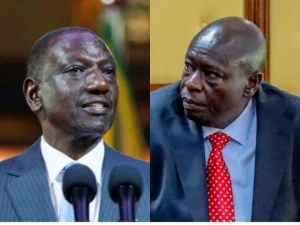
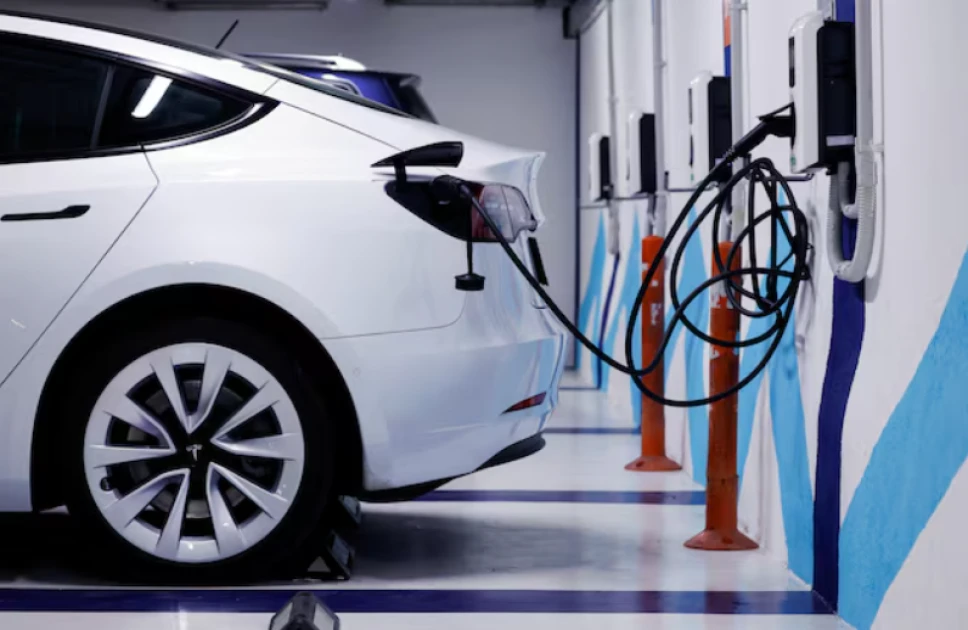
President William Ruto has announced that the first 100,000 electric vehicles imported into Kenya will be exempt from import duty, as the government moves to accelerate the country’s transition from fossil fuels amid the ongoing global fuel crisis.
Speaking during a live address from State House Mombasa on Friday, Ruto said the tax relief will apply to both public service and privately imported electric vehicles as part of broader efforts to reduce Kenya’s dependence on volatile global oil markets.
“I’m also making a declaration that the first 100,000 electric vehicles to be imported into Kenya, whether for public service or private use, will be duty free,” said the President.
Ruto said the government is also working with private investors to establish electric vehicle manufacturing facilities locally in a bid to position Kenya as a regional hub for clean energy mobility.
At the same time, the President revealed that the government has already ordered 3,000 electric vehicles through the Ministry of Interior for use by security and administration officers.
He said the shift towards electric mobility forms part of a long-term strategy to shield Kenya from recurring global fuel shocks.
“We must embrace electric vehicles as a first step,” said Ruto, adding that the country was also accelerating investments in renewable energy, modern public transport systems and energy security infrastructure.
The Head of State further disclosed that Kenya, together with East African partner states and the private sector, is pursuing plans to commercialize oil reserves in Turkana and across the region while developing a regional refinery to reduce dependence on external supply chains.
According to Ruto, the measures are aimed at building a more self-reliant and economically secure country in the face of continued instability in the global energy market.
“The government of Kenya, working together with our East African partner States, and the private sector, is determined to bring into production our oil reserves and resources in Turkana and across the East African region, alongside the development of a regional refinery to reduce our vulnerability to disruptions beyond our control,” he said.
“Equally, we are accelerating investments in renewable energy, electric mobility, modern public transport and energy security infrastructure so that future generations of Kenyans are less exposed to global fuel instability.”