
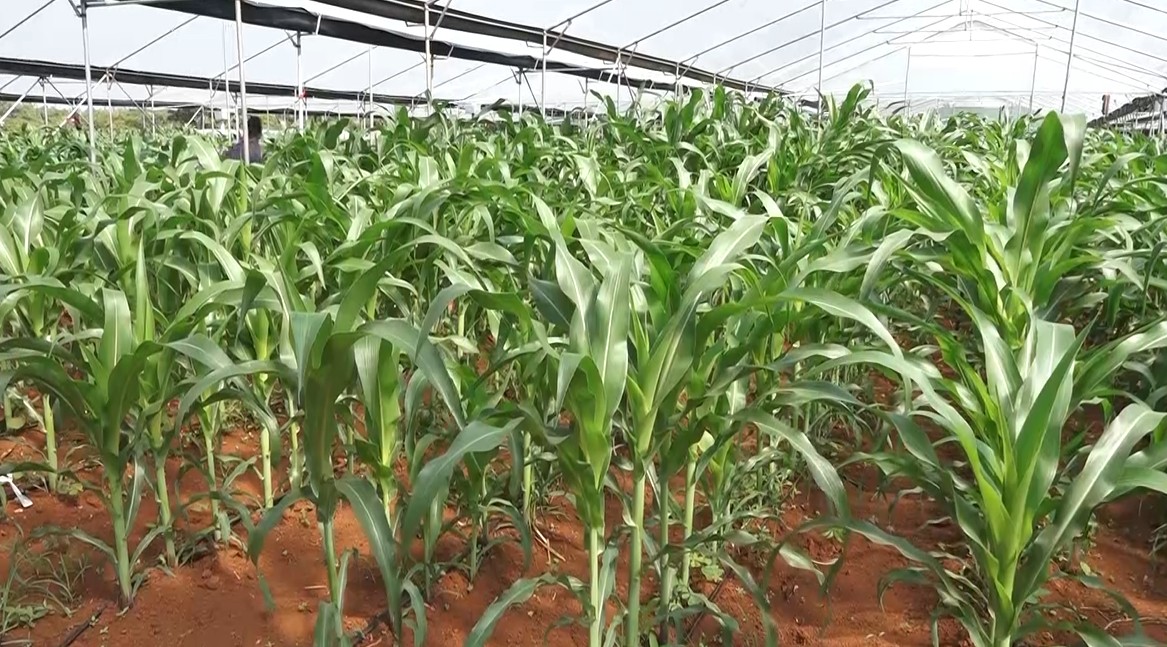
In the lush landscapes of Siaya County, rows of vibrant maize plants stretch toward the Kenyan sun. But beneath the surface of this agrarian tableau lies a high-stakes scientific mission. Known as the “Multi-Stress” project, this ambitious research initiative is investigating how local maize crops withstand a barrage of environmental and biological pressures from water scarcity and nitrogen deficiency to destructive pests like stem borers and fungal infections.
Funded by the German Research Foundation (DFG) Deutsche Forschungsgemeinschaft the project brings together a formidable coalition of international academic heavyweights. While Kenya’s Jaramogi Oginga Odinga University of Science and Technology (JOOUST) serves as the main local partner coordinating regional activities, it collaborates closely with elite German institutions, including the University of Tübingen, the University of Göttingen, and the University of Hohenheim.
Initially slated for a four-year run with a potential four-year extension, the project has a prospective lifespan of eight years. With initial funding for the first four years reaching 5.5 million Euros complemented by a substantial local setup cost of nearly 50 million Kenyan Shillings the sheer scale of the operation is hard to miss.
The experimental infrastructure spans 18 greenhouses, each measuring 10 by 30 meters. Within these structures, researchers are testing six distinct maize varieties grown locally, replicated across various treatments to yield 16 specialized greenhouse environments.
The project has also become a melting pot for international scholarship, absorbing 15 PhD students specializing in ecophysiology, soil-water relations, insect infestations, and fungal pathology. Dr. Issaka Abdulai, a postdoctoral researcher at the University of Göttingen from Ghana, highlights the global scope of the team. “We have students from China, Uganda, Kenya, and Germany,” he notes proudly. “It’s very, very international.”
Traditional research has often examined individual stresses on crops in isolation. The Multi-Stress project, however, looks at how these factors compound one another.
According to Prof. Dr. Denis Ochuodho of JOOUST, the team is tackling the complex interplay between abiotic factors (such as water and nitrogen) and biotic threats (like stem borers and leaf rust). By observing how different maize genotypes specifically selected from the Lake Victoria basin in Elgeyo Marakwet respond under controlled conditions, researchers aim to untangle the physiological and genetic mechanisms at play.
”We started with 20 varieties sold on the market and ran greenhouse experiments to see how they respond to drought and fertilizers,” Dr. Abdulai explains. Through sequential harvesting and rigorous lab analysis conducted nearly every two weeks, the team narrowed those down to six core varieties for intensive study.
As the crops grow, researchers are deploying high-tech instrumentation. Students utilize porometers to measure stomatal conductance, alongside devices tracking leaf temperature and photosynthesis.
Crucially, all this empirical data feeds into advanced crop simulation models powered by machine learning and artificial intelligence. These models allow scientists to simulate various future scenarios tweaking fertilizer amounts, adjusting water supplies, and forecasting how crops will perform decades into the future under changing climatic conditions. This process, known as “ideotyping,” helps breeders design and select maize varieties optimized for tomorrow’s climate.
While the work is deeply rooted in cutting-edge science, the ultimate beneficiaries are local farmers. The project relies heavily on vital institutional stakeholders like KARRO (Kenya Agriculture and Livestock Research Organization), which handles all local soil analyses.
As the research progresses from the initial phase in Elgeyo Marakwet toward nationwide testing, the team plans to bring county governments, local communities, and agricultural extension officers into the fold. The goal is to share empirical insights so farmers can better navigate environmental hurdles and boost productivity.
For Prof. Ochuodho and his international colleagues, the ultimate victory lies not just in data points, but in empowering the next generation of scientists. By blending European technological prowess with East African agricultural realities, the Multi-Stress project is planting the seeds for a more resilient, food-secure future in Kenya and beyond.