



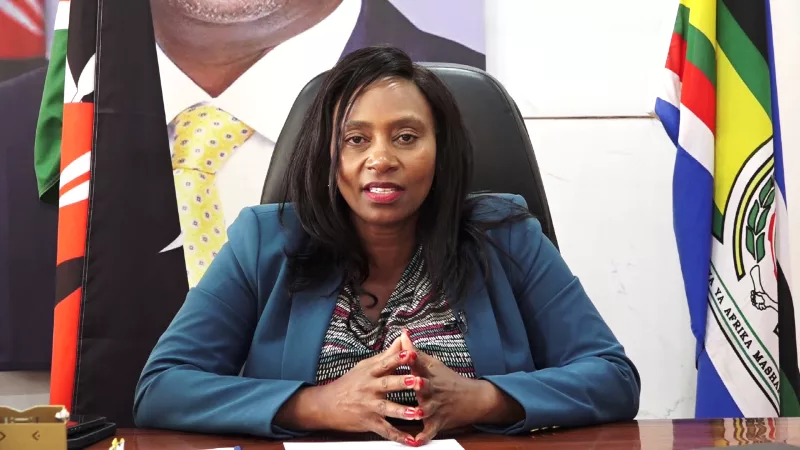
The government has urged counties to set aside facilities for possible Ebola quarantine.
This is as it intensifies surveillance and contact tracing to prevent further infections, with Kenya’s caseload rising to seven.
Public Health Principal Secretary Mary Muthoni said the Ministry of Health had achieved a 99 per cent contact-tracing rate among people who had interacted with the first patient and subsequent cases as officials moved to contain the disease.
Muthoni said county governments needed to identify suitable facilities that could be activated if the virus spread beyond the current containment efforts.
She said preparations were precautionary and intended to ensure counties could respond quickly to new infections.
“It is good as a cautionary measure and equally is in preparation for any eventuality,” Muthoni said.
The PS said health officials had intensified surveillance and contact tracing beyond those already placed in quarantine to minimise the risk of community transmission.
She added that the government had distributed personal protective equipment to points of entry and was sending additional supplies to health facilities, prioritising regions considered most vulnerable because of their proximity to border crossings.
The measures follow the ministry’s confirmation of four additional Ebola infections among people already in quarantine, bringing the country’s total to seven since the first patient was identified.
The first patient, a Kenyan man who had been living in the Democratic Republic of Congo, travelled to Nairobi through Uganda before developing symptoms. He was isolated and treated but later died on October 5.
The ministry subsequently confirmed a second case involving a close relative of the first patient, followed by four additional infections announced on October 17. The latest cases included three health workers who had attended to the first patient and another relative.
The infections have been linked to the Bundibugyo strain of Ebola, which has also caused an outbreak in the Democratic Republic of Congo.
Muthoni said the ministry was working to identify and monitor people who had come into contact with confirmed patients. She said the 99 per cent tracing rate reflected progress in tracking those potentially exposed.
She urged Kenyans to remain calm and observe preventive measures, stressing that early reporting and timely medical attention were essential to containing the disease.
The ministry has advised people returning from affected areas to monitor their health for 21 days and immediately report symptoms such as fever, unusual tiredness, headache, muscle or joint pain, sore throat, vomiting and diarrhoea.
Members of the public have been asked to contact the ministry through its toll-free hotline, 719, if they develop symptoms or suspect they may have been exposed to the virus.
“Do not wait for bleeding to start before seeking any medical advice,” the PS warned, urging people to seek medical attention promptly rather than assume early symptoms were harmless.
The ministry has also advised the public to wash their hands regularly with soap and running water or use an alcohol-based hand sanitiser containing at least 70 per cent alcohol.
Kenyans have been cautioned against direct contact with the blood and other body fluids of suspected or confirmed patients, including saliva, sweat, faeces, breast milk and semen.
The government has further urged people to avoid shaking hands, kissing or engaging in other forms of physical contact with suspected patients. Those who may have been exposed should follow instructions from public health officials.
Safe sex has also been emphasised, particularly for people recovering from Ebola and their partners, because the virus can persist in semen after recovery.
The ministry has encouraged religious institutions and other public spaces to maintain hygiene, including handwashing before and after prayers and after using shared facilities.
Muthoni said the distribution of protective equipment and heightened screening formed part of broader efforts to prevent further infections while strengthening counties’ capacity to respond to suspected cases.
She urged Kenyans to remain vigilant without panicking, noting that prompt identification and appropriate medical care were important in managing the disease and limiting its spread.