


Lawmakers are set to summon the leadership of the Kenya Institute of Curriculum Development after accusing the institute of an alleged skewed distribution of textbooks to schools.
The MPs said on Friday the institute gives excess textbooks to C1 schools at the expense of C3 and C4 schools, which do not receive enough textbooks, forcing learners to share.
They said this disadvantages learners in C3 and C4 schools.
The anomaly has been identified particularly at the Coast, where C1 schools such as Shimo la Tewa High School have more than 1,000 extra textbooks stored away and unused, while some C3 and C4 schools in Turkana have no textbooks.
National Assembly Public Investments Committee on Governance and Education chairperson Dick Maungu said on Friday the situation was unfair to schools in Turkana, whose learners are forced to compete with those in schools on the Coast.
Maungu said the MPs also found Mama Ngina Girls’ High School had more than 600 extra textbooks.
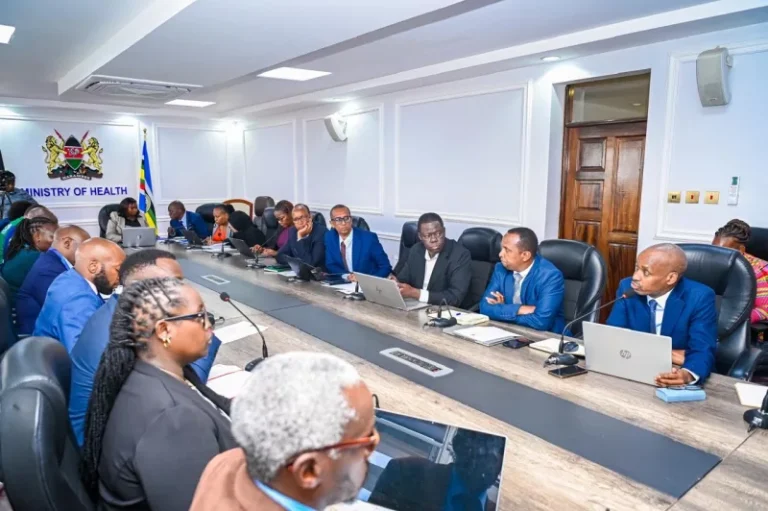
The MPs were in Mombasa examining the Auditor-General’s reports for C1 schools covering the period from 2020 to 2025.
They reviewed reports for 11 schools from the Coast, including Mama Ngina Girls’, Shimo la Tewa High, Kwale High, Matuga Girls’ High, Kenyatta High and Bura Girls’ High schools.
“Why is the KICD [Kenya Institute of Curriculum Development], which is responsible for the distribution of textbooks, being discriminatory?” Maungu posed.
“There are some schools which have extra textbooks while some, especially the C4 and C3 schools, do not have enough textbooks.”
Under the Competency-Based Education system, senior secondary schools, which offer Grades 10 to 12, are classified into four distinct tiers: C1, C2, C3 and C4. These replace the 8-4-4 system’s national, extra-county, county and subcounty schools, respectively.
Maungu said KICD was playing games.
“How then does KICD determine the number of books that a school should get? These are conflicts. We shall be inviting KICD to tell us more,” he said.
The Luanda MP said schools also contribute money to the Kenya Secondary Schools Heads Association (Kessha), but these funds are not audited.
He said this essentially meant public money was being used without being audited.
“We have seen that happening at the Coast here. We need to look into that,” Maungu noted.
The MP said they had no issues with Kessha, but the association must receive money through the proper channels.
“Because these are public funds, the Auditor General should be allowed to audit and examine the books of Kessha,” Maungu said.
He said the committee would invite Kessha’s leadership to explain itself after scrutinising the Auditor-General’s reports for all 52 C1 schools in the country.
“They will have to tell us why they continue making use of public money, yet they are not audited by the Auditor-General,” Maungu said.
He said the MPs had found a unique case in the Coast region, where a county education director had written letters to principals of C1 schools in the region, forcing them to contribute money to Kessha.
“We found it very unique. I don’t know where he got the powers from. He dared to write letters to the school principals telling them to give Sh550 per student for drama and Sh340 for some other activities,” Maungu said.
“We asked ourselves where does a county director of education derives such powers from. Because he doesn’t have (such powers) by law.”
He said the MPs had also discovered that the amounts received by schools at the Coast differed from those recorded in the National Education Management Information System (Nemis).
He said a school might receive a certain amount in Term One, but the amount would differ in Term One of another year.
Another issue identified at the Coast, Maungu said, concerned CBC classrooms.
According to him, principals said they had received the money, but the procurement had been carried out elsewhere.
“They were only instructed that work has been completed and they should pay. This means the principals were only instructed to pay the money but they do not know how the job was procured, who was constructing the classrooms, who was supervising,” Maungu said.
“All that they were told is to pay.”
He said the Education Cabinet Secretary or the Principal Secretary would also be invited to shed more light on how the CBC classrooms were procured and managed.
Maungu said the MPs were generally pleased that the principals had been audited for the first time, describing it as an encouraging development.