




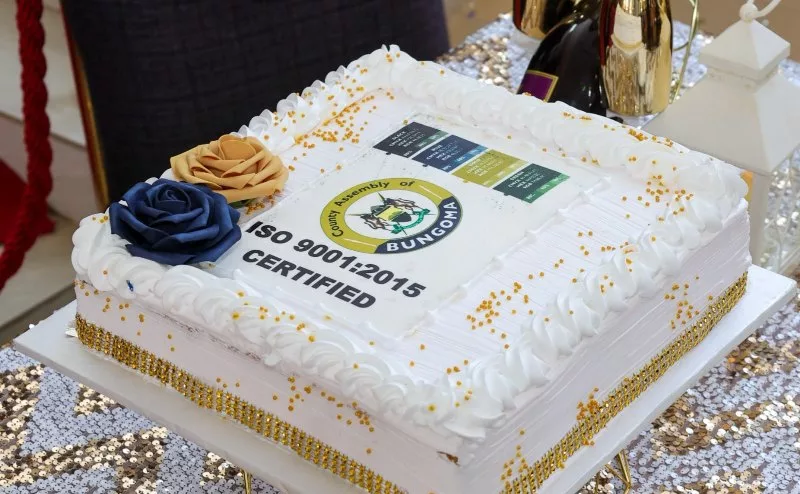
The County Assembly of Bungoma has become the first county assembly in Kenya to attain ISO 9001:2015 certification, in a move aimed at strengthening service delivery, accountability and institutional efficiency.
The certification, awarded under the Quality Management System framework, recognises the assembly’s adoption of structured processes designed to improve performance and promote continuous improvement in its operations.
The certificate was handed over in a ceremony attended by Kenya Bureau of Standards (KEBS) Director General Esther Ngari, alongside North Rift Deputy Director Rono Birgen, Director of Standards Development and Trade Eng Zacharia Lukorito and Deputy Director of the Certification Body Isabella Lunani.
KEBS said the achievement demonstrated the assembly’s commitment to embedding quality management principles in its operations and improving services to the public.
“The certification demonstrates the importance of embracing quality management systems to strengthen institutional efficiency, accountability and service delivery,” Ngari said.
ISO 9001:2015 is an international standard that sets out requirements for quality management systems, helping organisations improve processes, meet applicable requirements and enhance customer satisfaction.
For the Bungoma Assembly, the certification is expected to provide a framework for monitoring performance, strengthening internal procedures and identifying areas that require improvement.
KEBS congratulated the assembly on the achievement and reaffirmed its commitment to supporting public institutions in adopting standards aimed at promoting quality, efficiency and accountability.
The certification comes amid growing calls for public institutions to strengthen accountability and demonstrate measurable improvements in service delivery.
County assemblies play a central role in county governance through legislation, representation and oversight of county executive activities. Effective internal systems can help support these functions by improving administrative processes and consistency in service delivery.
However, certification alone does not guarantee better public services.
Its impact will depend on how consistently the assembly implements the quality management system and uses it to address operational challenges.
The ISO 9001:2015 certification provides a framework for continuous improvement, with institutions expected to maintain the required standards through ongoing implementation and assessment.