



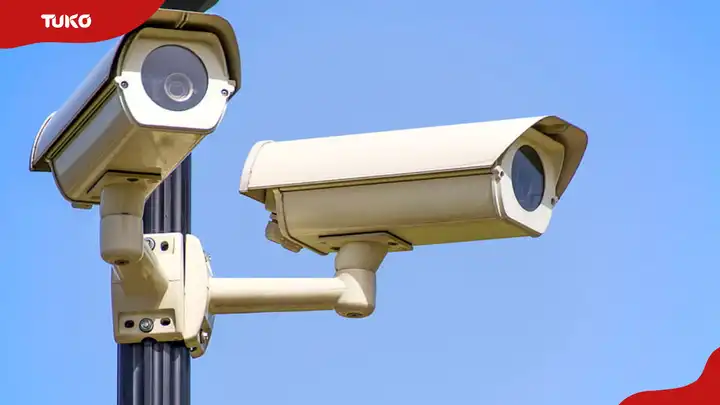
Types of CCTV cameras in Kenya
Kenya’s surveillance market stocks a broad mix of camera types. Major brands such as Hikvision, Dahua, Ezviz, CP Plus, and Uniview dominate the market, offering different levels of performance, pricing, and features to suit various users. The sections below break down each camera type, its core features, ideal settings, and 2026 price ranges. Camera type Best setting Price range (KSh) Key strength Dome Indoors: shops, offices, corridors 3,500 – 10,000 Discreet, vandal-resistant Bullet Outdoors: gates, driveways, perimeter 2,500 – 30,000 Long range, visible deterrent Turret (eyeball) Indoor/outdoor, flexible angle 4,000 – 15,000 Easy repositioning PTZ Large compounds, malls, warehouses 10,000 – 175,000+ Pan/tilt/zoom, auto-tracking IP / Network Offices, businesses, smart systems 5,000 – 30,000 HD resolution, remote access Analogue HD Homes, small shops on a budget 2,500 – 8,000 Low cost, simple setup Wireless / Wi-Fi Apartments, indoor home use 4,500 – 18,000 No cabling required Solar / 4G Farms, remote gates, construction sites 8,000 – 45,000 No mains power or cables Fisheye / 360° Open halls, large rooms, car parks 7,800 – 15,000 No blind spots Night vision / IR 24-hour monitoring, low-light areas 3,500 – 20,000 Clear footage in darkness ANPR / Number plate Entrances, parking, border points 15,000 – 80,000+ Reads vehicle plates
Dome cameras
Dome cameras are one of the most common types installed across Kenya. They are shaped like a dome, making it difficult for intruders to tell where the lens is pointing. They are discreet and vandal-resistant, making them common in shops, offices, and lobbies. Dome cameras are better for indoor retail environments due to their discreet appearance and vandal resistance. A basic 1080p dome camera in Kenya retails between KSh 3,500 and KSh 10,000, depending on resolution and brand. Popular options include vandal-proof Hikvision dome IP cameras and Dahua dome HD cameras. Bullet cameras Gray bullet-style security camera on wall. Bullet cameras are long and cylindrical, designed for long-distance monitoring and outdoor use. Their casings are water-, dust-, and dirt-resistant, making them well suited to Kenya’s varied weather conditions. Bullet cameras excel for outdoor perimeter monitoring with their long-range capabilities and lower cost. They are a frequent choice for gates, driveways, and parking areas where their visible form also acts as a deterrent. A basic 720p bullet camera starts from KSh 2,500 to KSh 4,500, while a 2MP outdoor bullet camera costs KSh 4,000 to KSh 7,000.
Turret (eyeball) cameras
Turret, or “eyeball”, cameras combine features of domes and bullets. The ball-and-socket mounting design allows the lens direction to be changed after installation — something a fixed dome camera cannot accommodate easily. Turret cameras suit both indoor corridors and outdoor mounting points where the viewing angle may need to be fine-tuned over time. They provide another flexible option, while remaining more compact than PTZ cameras. Prices in Kenya generally fall between KSh 4,000 and KSh 15,000 for a mid-range model. PTZ cameras (pan-tilt-zoom) PTZ cameras are ideal for following subjects and covering larger areas. They can rotate horizontally, tilt vertically, and zoom in optically — all controlled remotely or automatically via motion tracking. PTZ cameras are used for wide-area coverage in malls and parking areas. Serious PTZ models with long-range infrared climb to KES 36,000 – KES 70,000, while entry-level consumer PTZ units start from around KSh 10,000. High-end Hikvision PTZ surveillance cameras with optical zoom ratios of 25× or more can exceed KSh 150,000 for large commercial deployments.
IP / Network cameras
IP cameras are the most modern CCTV cameras in Kenya, offering high-definition video, remote viewing, and advanced smart features. They transmit footage over a network cable to a Network Video Recorder (NVR) rather than a coaxial cable to a DVR. IP CCTV systems use digital networking with NVRs and are ideal for large-scale or remote monitoring. A 2MP IP camera costs KSh 5,000 to KSh 10,000, while a 4MP IP camera ranges from KSh 8,000 to KSh 16,000. For 4K (8MP) models, buyers should expect to pay KSh 15,000 to KSh 30,000 per unit. Analogue HD cameras Analogue HD cameras connect by coaxial cable to a DVR and are usually simpler and cheaper than their IP counterparts. They are the entry-level workhorse for small homes and shops that do not need remote viewing or AI analytics. Common examples include Hikvision Turbo HD cameras and Dahua HD-CVI 1080p cameras. Analogue HD cameras in Kenya retail between KSh 2,500 and KSh 8,000, making them the most affordable option for a basic security setup.
Wireless / Wi-Fi cameras
Wireless cameras reduce cabling but still need power. They connect to a home or office Wi-Fi network and stream footage to a smartphone app or cloud storage, making them popular for apartments and home use. Ezviz wireless cameras are available in Kenya, retailing between KSh 3,500 and KSh 12,000, depending on storage capacity and camera resolution. Dahua also offers wireless cameras featuring full-colour night vision, weatherproof housing, and remote access capabilities, costing between KSh 5,000 and KSh 20,000. The main drawback is dependence on a stable Wi-Fi signal. Solar and 4G cameras Solar and 4G cameras work without mains power or cables, making them useful for construction sites, farms, and remote gates. A solar panel charges an internal battery during daylight, while a 4G SIM card handles data connectivity wherever a mobile signal exists. The product uses battery plus solar power supply and an IP66 high waterproof rating, making it no-wiring and maintenance-free. Solar CCTV kit prices in Kenya range from KSh 18,000 to KSh 45,000 for a single-camera setup with panel and battery included. Standalone 4G cameras retail from KSh 7,500 to KSh 10,000.
Fisheye / 360° cameras
A fisheye camera has a built-in wide-angle lens that offers a 360° view covering approximately 100 square metres. This eliminates blind spots in a single open space — something that would otherwise require multiple standard cameras. They are well suited to open-plan offices, supermarket floors, hotel lobbies, and large parking garages. The 360° Wi-Fi fisheye camera keeps an eye on every corner of a home, store, or office without missing anything in the monitoring area. Entry-level fisheye cameras in Kenya start from around KSh 7,800 to KSh 15,000. Night vision / infrared (IR) cameras Night vision and day/night cameras are designed to perform well in both daylight and complete darkness. They use infrared (IR) LEDs that illuminate a scene invisibly — allowing the sensor to record clear footage even in a pitch-black environment. Outdoor cameras need weatherproof bullet or PTZ cameras with higher IP ratings (IP65+) to handle Kenya’s weather conditions, and most quality IR cameras sold locally carry that rating. Popular examples include Hikvision ColorVu cameras, Dahua Night Color cameras, and standard IR HD cameras.
ANPR / Number plate recognition cameras
Automatic Number Plate Recognition (ANPR) cameras, also known as LPR cameras, are purpose-built to capture and read vehicle registration plates clearly. Common examples in Kenya include Hikvision ANPR cameras and Dahua LPR IP cameras. They are increasingly used at estate booms, office parking bays, petrol stations, and border control points. Because they require high shutter speeds and specialised image processing, they sit at the premium end of the market, with prices typically starting from KSh 15,000 and rising steeply for multi-lane or high-speed applications. Analogue vs. IP: which system should you choose? The choice between analogue and IP is one of the most common questions among Kenyan buyers. A 2-camera analogue system for a small home or office costs KSh 15,000 to KSh 30,000 installed, while a 4-camera IP system for a medium home or business ranges from KSh 35,000 to KSh 60,000. Hybrid systems combine analogue and IP setups for flexibility, letting property owners retain existing coaxial cabling while adding IP cameras to new coverage areas. This is a practical upgrade path for businesses that already have an older analogue system in place.
Which type of CCTV is best for home use in Kenya?
Hand holding white security camera next to wall mounted unit. Photo by Pickpick Source: UGC For most Kenyan homes, the ideal combination is a dome or bullet camera indoors paired with a bullet or wireless camera outside. For small shops in Nairobi, 2–4 dome cameras (1080p) for indoor coverage and 1–2 bullet cameras for entrance monitoring provide comprehensive coverage at a manageable cost. Homeowners on a tight budget can start with a basic analogue HD kit. Those wanting remote viewing via phone should opt for IP or Wi-Fi cameras from brands such as Hikvision or Dahua. Rural households or those with unreliable power supply benefit most from solar and 4G camera kits. CCTV and the law in Kenya The main laws governing CCTV in Kenya are the Constitution of Kenya, especially Article 31 on the right to privacy, and the Data Protection Act, 2019. Under the Data Protection Act, CCTV footage is treated as personal data because it can identify individuals.
Under Kenya’s Data Protection Act, 2019, footage that can identify a person counts as personal data — and once you’re capturing images of people, you’re legally a data controller (or processor) under the Act, with real obligations attached. Businesses with an annual turnover of KES 5 million or more, or more than 10 employees, that use CCTV are required to register with the Office of the Data Protection Commissioner (ODPC) as a data controller or processor, and must display visible signage informing people that CCTV is in operation. Under the DPA, unlawful processing of personal data can lead to fines of up to KSh 5 million or 1 per cent of a company’s annual turnover — whichever is higher — and individuals can face imprisonment of up to two years for certain privacy violations. Household CCTV that stays strictly within your own property boundary is generally exempt from these requirements. FAQs How many types of CCTV cameras are there? The types of CCTV cameras commonly used in Kenya include dome, bullet, turret, PTZ, fisheye, number plate, and night vision cameras. When system-level categories are added — analogue HD, IP, wireless, solar, and 4G — the full list covers approximately 10–11 distinct types. The right number for any property depends on location, budget, and coverage requirements.
Which type of CCTV is the best? There is no single best type. Choosing between different CCTV camera types in Kenya should start with the purpose of the camera rather than the price. If unyielding quality and the latest advancements are the priority, Hikvision is king; Dahua wins if affordability is a must. For most homes, dome or bullet cameras from either brand offer the best value. What is the cheapest CCTV camera in Kenya? CCTV camera prices in Kenya range from KSh 2,500 for a basic dome camera to KSh 25,000+ for advanced 4K IP cameras. A basic 720p bullet camera starts from around KSh 2,500 to KSh 4,500. Full installed kits, including DVR, hard drive, and cabling, start at KSh 15,000 for a small two-camera analogue system. Do I need permission to install CCTV in Kenya? The use of household CCTV is generally exempt from DPA requirements unless the cameras capture areas beyond your property or invade someone else’s private space. However, a CCTV camera at your place of work falls within the scope of the Data Protection Act, requiring you to register either as a data controller or processor, and to notify data subjects that the premises are under CCTV surveillance.
Which CCTV brand is best in Kenya? Hikvision remains the most dominant CCTV brand in Kenya due to its reliability, wide availability, and strong technical support network. Dahua offers similar quality at slightly lower prices and is a popular second choice. Uniview is a rising brand in the Kenyan CCTV market, popular for advanced IP surveillance systems. Tuko.co.ke also highlighted facts about Kenya’s police uniforms, including the colours, rank insignia and roles that distinguish the country’s various services and specialist units. The new General Duty uniform, introduced in August 2026, pairs a light-blue shirt with navy-blue trousers, while the APS and GSU retain their jungle-green outfits. A constable, meanwhile, is identified by the absence of insignia.