


KENYA’s private sector wants the country to increase recycling of products and materials to cut on waste, minimise businesses expenses and create new job opportunities.
This, as Kenya pushes towards a circular economy which ensures materials are kept in use for as long as possible through reuse, repair, and recycling, as opposed to the old system of “make, use and dispose.”
The move will create jobs, strengthen local businesses, reduce reliance on imports and make the economy more resilient to global supply shocks, experts at this year’s annual circular economy conference, in Nairobi, said.
The conference is organised under the Kenya Private Sector Alliance (Kepsa)’s Sustainable Inclusive Business Kenya and the Kenya Plastics Pact, with this year’s forum bringing together businesses, innovators, policymakers, researchers and communities to explore practical circular solutions.
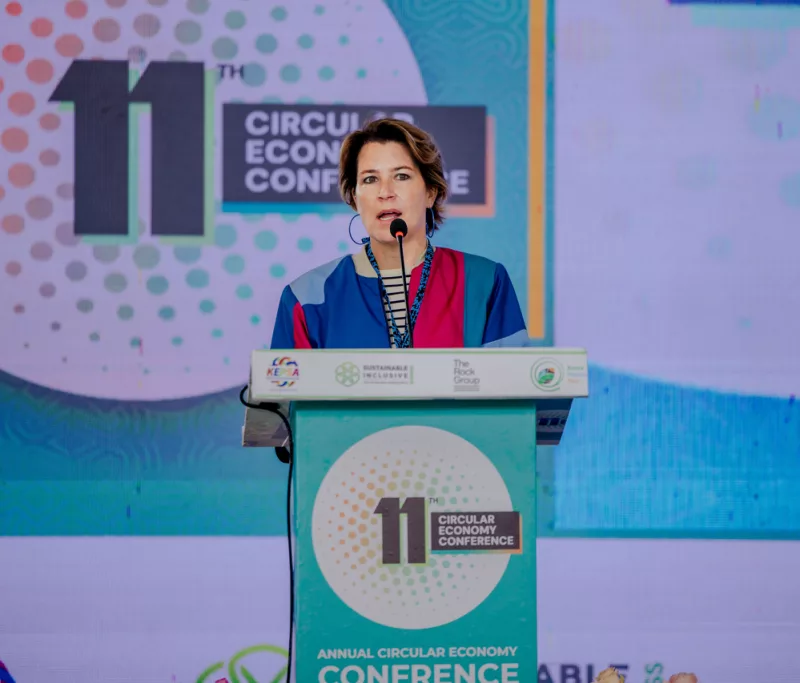
Karin Boomsma, project director at sustainable inclusive business Kenya, said circularity should be viewed beyond environmental protection and positioned as an economic resilience strategy.
“Circularity gives us an opportunity to ask a different question. What can we produce locally? What can we repair locally? What can we reuse locally? What materials do we already have around us?” she said.
A circular economy seeks to keep products and materials in use for as long as possible through reuse, repair, refurbishment, remanufacturing, repurposing and recycling, while reducing the use of virgin raw materials and waste.
According to National Environment Management Authority, the model goes beyond recycling by redesigning products and business models to preserve value and minimise waste throughout their life cycles.
Proponents say the model could unlock substantial economic value.
Modelling cited in research on Kenya’s circular transition estimates that the shift could increase GDP by about 0.5 per cent and create about 46,000 additional jobs, compared with a business-as-usual scenario.
Agriculture and construction are among the sectors expected to see significant employment gains.
The opportunity is also visible in electronic waste where Kenya generated an estimated 56,000 tonnes of e-waste in 2025, with the metal content alone valued at between $48 million and $50 million, equivalent to about Sh6.5 billion.
Boomsma said circular production could help businesses withstand disruptions to international supply chains and rising import costs.
“If we can turn organic material and nutrients that are currently being lost into safe, locally produced fertilisers and soil amendments, we can reduce our dependence on imported inputs while creating local businesses and jobs,” she said.
Hand in Hand Eastern Africa, an NGO that empowers the society through creation of sustainable enterprises and jobs with the aim of reducing poverty, placed livelihoods at the centre of the circular economy debate.
It noted that many people collecting, sorting and repurposing discarded materials are already operating as micro and small business owners.
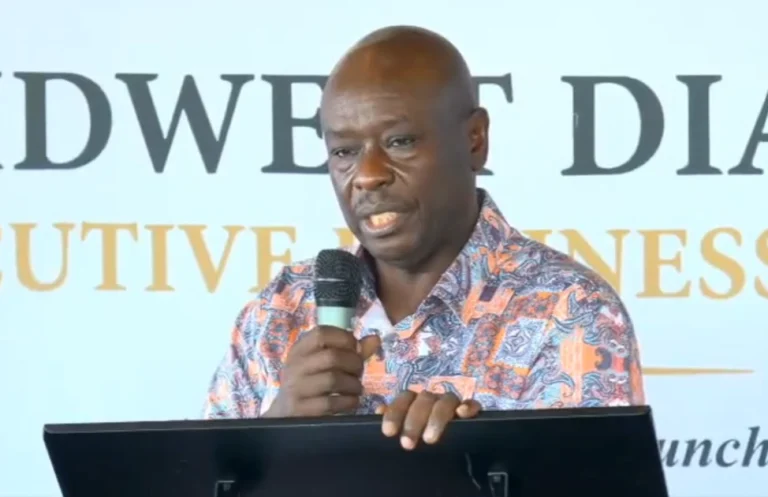
“Circularity is also a livelihoods issue,” CEO Albert Wambugu said, adding that many of those involved are women and young people operating without the support systems needed to grow their enterprises.
He urged policymakers and private-sector players to consider circular businesses as viable commercial enterprises rather than merely environmental projects.
“Listen to these stories not only as examples of what is possible, but as business cases. Because that is what they are,” he said.
Wambugu identified collection networks, aggregation, access to materials and producer-responsibility systems as some of the areas requiring improvement if smaller enterprises are to participate effectively.
Carl Kibwage, programme manager at Konrad-Adenauer-Stiftung Kenya, however cautioned against assuming that waste automatically becomes wealth without the infrastructure and investment required to process it.
“Waste is wealth’ describes a possibility,” he said, noting that between discarded plastic and a useful product lie collection, technology, energy, skills, finance and markets.
Konrad-Adenauer-Stiftung is a German political foundation that promotes democracy, the rule of law, civic education, and transparent governance across national and county levels.
Kibwage said government had a central role in providing reliable infrastructure, skills development, predictable regulations and effective public services, while private investment and development finance could support enterprise growth.
The push comes as Kenyan businesses continue to face cost and supply pressures.
The August Stanbic Bank Kenya Purchasing Managers’ Index fell to 49.7 from 51.3 in July, slipping below the 50-point mark separating expansion from contraction, with high raw-material costs and tight cash flows limiting firms’ ability to increase output.
Kepsa and its partners are also promoting the circle, a community of practice intended to mobilise capital for post-revenue circular ventures that are ready to scale but face limited access to suitable concessional and commercial finance.