

Being a wildlife ranger is an extremely demanding and dangerous job.
The profession requires immense physical stamina, mental resilience and personal sacrifice on the front lines of conservation.
Frequently, rangers trek long distances in worn-out footwear across steep, rocky terrain populated by dangerous wild animals.
They also endure extreme heat as they protect iconic species.
These men and women remain dedicated while performing one of the toughest yet most vital jobs on the planet.
However, the work of these unsung heroes and heroines often goes unrecognised.
It is for this reason the Wildlife Ranger Challenge exists — to address these issues by raising funds and increasing recognition of the ranger profession.
The challenge took place across the unforgiving terrain of the Lewa Wildlife Conservancy on Saturday.
Now in its seventh year, the Wildlife Ranger Challenge — organised by international conservation charity Tusk and the Game Rangers Association of Africa (GRAA), with funding from Mark Scheinberg — stands as the continent’s largest initiative celebrating the men and women protecting Africa’s wildlife and natural landscapes.
The challenge was launched during the Covid-19 pandemic in 2020 to help keep ranger teams operational.
It has since evolved into a continent-wide movement that raises funds for ranger welfare while increasing public awareness of the vital work rangers perform.
The initiative has raised $28 million (Sh3.62 billion) for welfare, equipment and training, supporting or engaging more than 11,500 rangers since its launch in 2020 during the pandemic.
This year’s event is expected to generate a further $3 million (Sh388.5 million).
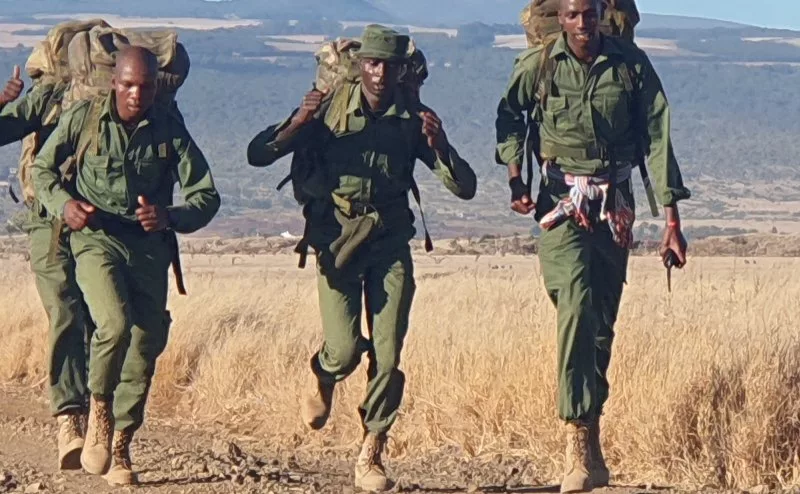
Following two months of training, including tactical quizzes and various physical challenges, Saturday’s 21km races saw ranger teams push their physical endurance to the limit across the continent.
This included special regional hub events in Kenya, Uganda, South Africa and Zambia, alongside affiliated races in several other countries.
Chantal Migongo, chief conservation officer for Tusk, said Saturday’s display of strength, discipline and unity across Africa was a powerful reminder of what rangers endure daily to protect our shared planet.
“As our research shows, Africa still has only one-fifth of the rangers it needs. We must treat rangers as essential frontline environmental defenders who deserve proper equipment, fair pay, insurance and long-term investment,” she said.
Rob Macaire, CEO of the Lewa Wildlife Conservancy, said it was a privilege for the conservancy to host the Regional Hub of the Wildlife Ranger Challenge and welcome 24 ranger teams from across Kenya.
“This challenge is about far more than crossing a finish line. It shines a light on the discipline, resilience and commitment that rangers demonstrate every day in safeguarding wildlife, supporting communities and securing the future of Africa’s wild landscapes.”
“We are proud to stand alongside Tusk, the Game Rangers Association of Africa, and our fellow conservation partners in recognising these frontline conservationists and investing in their well-being. When rangers are equipped to flourish, both people and wildlife thrive too.”
The Lewa Wildlife Conservancy covers 65,000 acres — a vast wilderness with dramatic views to the south of snow-capped Mt Kenya and extending north to the arid lands of Tassia and Il Ngwesi.
It features diverse habitats ranging from pristine forest and fertile grasslands to extensive springs and acacia woodland.
Africa currently relies on just 65,000 rangers.
However, effectively securing its wild spaces and meeting global nature targets will require an estimated 345,000 dedicated personnel on the ground — five times the current workforce.
Organisers of the challenge warn that global backing still falls short of what is required to safeguard Africa’s biodiversity.
Africa hosts nearly a quarter of global terrestrial mammal species and one-sixth of all plant life, making its ecosystems critical to planet-wide climate and biodiversity goals.
Rangers will also be essential if African nations are to meet the global target of protecting 30 per cent of land and sea by 2030.
To build a sustainable future for conservation, the ranger profession must transform into a respected, well-resourced career to which young people aspire.
Despite performing critical functions — from community peacekeeping and search-and-rescue to ecosystem monitoring — many continue to operate without adequate equipment, sufficient health and safety training or basic insurance.
The challenge aims to help close these gaps and expand the continent’s ranger workforce.
During Saturday’s event, the Bongo Brigade emerged as champions of the male category in this year’s Wildlife Ranger Challenge.
Carrying a 22kg kit across the harsh terrain of the Lewa Wildlife Conservancy on Saturday, the Bongo Brigade from the Mountain Bongo project claimed the title.
Female rangers navigated the rough terrain carrying a 10kg load in a test of agility and endurance.
Sera Men from the Sera Rhino Conservancy took second place, while MEP Bulls from the Mara Elephant Project finished third.
Lewa Lions from the Lewa Wildlife Conservancy finished fourth.
In the female category, Team Lioness from Olgulului emerged as the winners, followed by Sera Ladies from the Sera Wildlife Conservancy in second place.
It is hoped the challenge will spotlight the daily lives of rangers and the obstacles they face, while mobilising resources to bridge gaps in nature protection.