

Foreign diplomats have been warned against interfering in the general election as the government steps up its defence of the electoral commission.
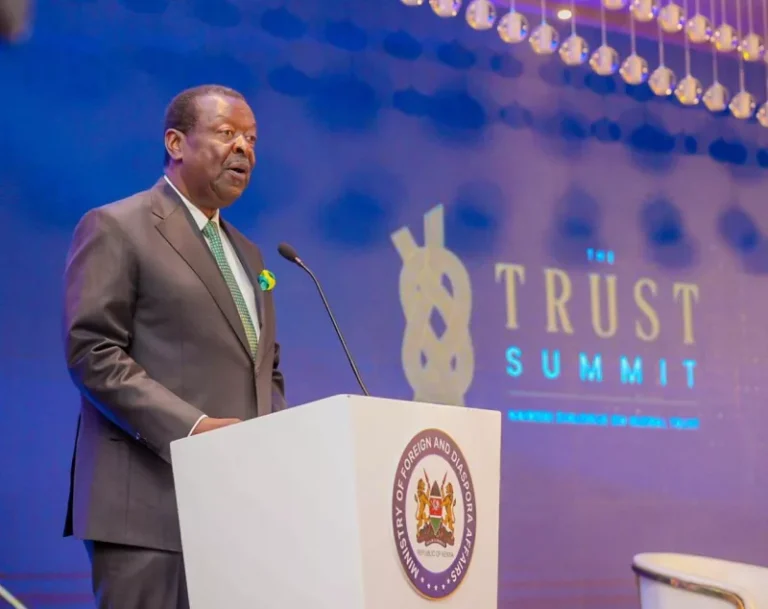
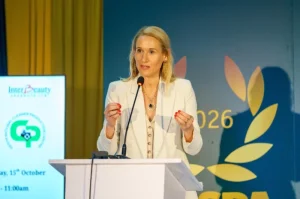
Prime Cabinet Secretary and Foreign Affairs Cabinet Secretary Musalia Mudavadi issued the warning on Wednesday during his quarterly briefing to diplomats.
In his address, Mudavadi cautioned against attempts to undermine the electoral commission, saying it must be allowed to carry out its constitutional mandate independently and professionally.
“The electoral commission must be allowed to discharge its constitutional mandate independently and professionally,” he said, warning against attempts to “discredit the commission”.
“All of us have a responsibility to respect and strengthen our constitutional institutions. Democracy is sustained by strong institutions and respect for established rules and not by individual interests. On behalf of the people of Kenya, I seek your partnership in this endeavour.”
To the countries planning to send election observers, Mudavadi said preparations should begin early to ensure timely accreditation and avoid “inconveniences arising from non-compliance”.
His remarks came as political parties and leaders begin positioning themselves for the August 10, 2027 General Election, with the credibility and independence of electoral institutions already being raised by the opposition.
Foreign missions have traditionally played a key role in Kenya’s elections, deploying observers and issuing statements on political developments before, during, and after polling.
In 2017, for instance, heads of diplomatic missions engaged the Independent Electoral and Boundaries Commission (IEBC) amid heightened political tensions ahead of the repeat presidential election.
They urged Kenyan leaders and citizens to work towards a free, fair, credible and peaceful poll.
Ahead of the 2022 election, 13 ambassadors and high commissioners—including representatives of the US, the UK, Germany, France, Canada, and the EU—issued a joint statement urging political actors to respect peace commitments and democratic principles.
The diplomatic missions also issued a statement after the 2022 presidential results, calling on political actors to use constitutional mechanisms to resolve disputes and commending the IEBC for organising the election.
Diplomatic interventions have, however, occasionally attracted criticism from the government, particularly when foreign governments have commented on sensitive political or electoral developments.
Already, the European Union delegation has raised concerns over the failure to implement some of its recommendations following the 2022 polls.
Immediate former EU Ambassador Henriette Geiger warned that Kenya risks heading into the 2027 election with many of the same electoral weaknesses identified by the EU Election Observation Mission in 2022.
Speaking in her exit interview in July, Geiger said Kenya has implemented “hardly any” of the reforms recommended by international election observers.
Geiger said little progress has been made in implementing recommendations aimed at improving the credibility, inclusivity and efficiency of the electoral system.
The envoy had raised similar concerns in March last year, when she urged Kenya to fast-track electoral reforms ahead of the polls.
Various foreign missions and international organisations have started engaging the IEBC on different areas of collaboration and support.
For instance, the IEBC has engaged the Embassy of Switzerland and the Carter Center.
IEBC chairperson Erastus Ethekon on 12 August hosted and held consultations with a delegation from the Embassy of Switzerland led by Chargé d’Affaires Dr Steve Tharakan.
“The discussions focused on key areas of electoral governance, including the settlement of electoral disputes, voter education and the development of a Code of Conduct for candidates and political parties,” the IEBC said.
On 18 August, the commission engaged a delegation from the Carter Center for discussions on preparations for the next election and “areas of potential collaboration towards the successful conduct of the elections”.
It said the engagement underscored the importance of collaboration and knowledge exchange in strengthening Kenya’s electoral processes and democratic governance.
“Commissioner Francis Aduol reaffirmed the commission’s dedication to protecting the integrity of the electoral processes,” the IEBC said in a statement.
“Looking ahead to the general election, he identified election-related violence, particularly the culture of political goonism during campaigns, as one of the greatest threats to peaceful elections.”
The Foreign Affairs CS also used the briefing to outline the government’s preparations to prevent election-related violence.
He said the government was committed to ensuring a “safe, free, and peaceful” election and was strengthening inter-agency coordination to identify emerging threats before polling day.
Mudavadi cited the launch of the National Cohesion and Integration Commission’s Roadmap to a Violence-Free 2027 General Election, dubbed Uchaguzi Bila Noma.
The roadmap seeks to strengthen early warning and response mechanisms ahead of the election and brings together government agencies, electoral institutions, political actors, civil society, and communities.
Mudavadi said the government would guarantee the security of citizens, institutions, and infrastructure considered essential to a credible electoral process.
“Those who threaten peace and security will be held firmly accountable in accordance with the law, regardless of their political affiliation and status in society,” he said.
“National security, peace, and stability remain the government’s foremost priority before, during and after elections.”