


L’Oréal East Africa has emerged as Kenya’s top resource-efficient manufacturer after cutting resource consumption and environmental impacts while increasing production at its Nairobi factory, underscoring the business case for cleaner industrial production.
The beauty products manufacturer won the Overall Resource Efficiency Award at the 2026 Industry Resource Efficient and Cleaner Production (RECP) Awards, alongside category honours in energy management, solid waste management, greenhouse gas emissions and environmental compliance.
The recognition highlights how manufacturers can improve operational efficiency, lower production costs and reduce their environmental footprint through investments in cleaner technologies, recycling and better management of energy and water.
The awards, organised by the Kenya National Cleaner Production Centre (KNCPC), come as Kenya seeks to strengthen its manufacturing sector, improve industrial competitiveness and promote sustainable production practices.
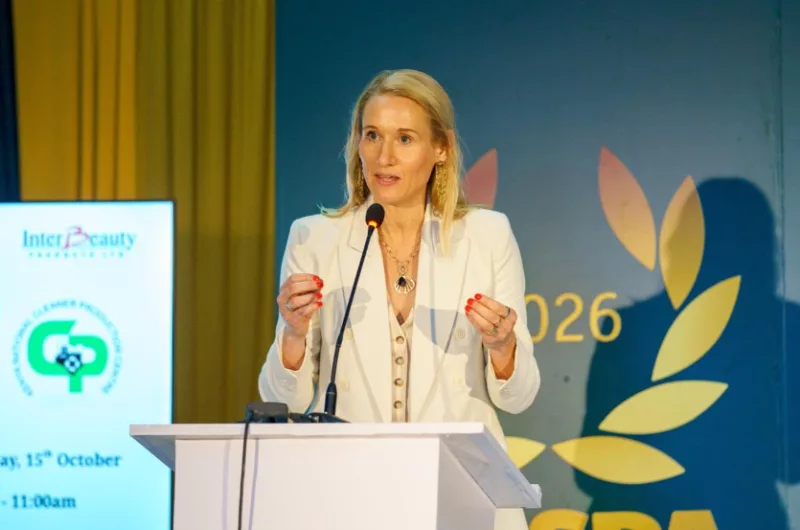
Kerstin Bird, president of L’Oréal’s Sub-Saharan Africa zone, said resource efficiency was increasingly central to the company’s manufacturing strategy.
“We believe that business growth and environmental responsibility must go hand in hand. At this facility, we are demonstrating how focused action on resource efficiency can support production while reducing water consumption and greenhouse gas emissions,” Bird said.
The company’s Mombasa Road factory completed its transition to renewable energy in 2024, combining a biomass boiler, a biodiesel generator, solar photovoltaic systems and electricity from the national grid.
Other measures include installing variable frequency drives, energy-efficient LED lighting with motion sensors, heat-loss insulation and equipment-level energy monitoring to reduce power demand.
The factory has also introduced water-reuse systems that allow treated effluent and reverse osmosis reject water to be used in fire hydrant and sanitary systems rather than being discharged.
Its waste reduction programme includes using recyclable PET bottles, reducing shrink-wrap film thickness and recovering cardboard, plastics and other materials through licensed waste management partners.
Steve Nyamori, deputy director at KNCPC, said the factory had implemented 23 resource efficiency and cleaner production interventions.
He said an investment of about $23,000 (Sh2.97 million) in cleaner production measures was reported to generate annual economic benefits and savings exceeding $50,000 (Sh6.45 million).
“Environmental performance and business competitiveness are not competing objectives. When companies use energy, water and materials more wisely, they can reduce costs, manage risk, strengthen resilience and create long-term value,” Nyamori said.
The assessment was conducted under the Sustainable Manufacturing and Environmental Pollution programme, funded by the UK government to support industries in developing economies to reduce pollution.
Of 225 industries mapped under the programme, 26 underwent comprehensive in-plant assessments covering water and wastewater management, energy use, greenhouse gas emissions, raw materials, solid waste, environmental compliance and other sustainability measures.
Tobias Alando, chief executive of the Kenya Association of Manufacturers, said resource efficiency was becoming an essential component of industrial competitiveness as businesses faced pressure to reduce costs and comply with environmental standards.
“The ability to produce more efficiently, minimise waste, reduce environmental impacts, and maximise value is increasingly essential to business success,” Alando said.
He urged manufacturers to embed sustainability into their operational decisions, arguing that the future of the sector would depend not only on the products made but also on how they were produced.
The company also received a Gold Award from the Royal Society for the Prevention of Accidents for workplace health and safety for the second consecutive year.
L’Oréal East Africa’s Nairobi plant is the group’s only manufacturing facility in East Africa. It produces local brands Nice & Lovely, Versman and Gold Touch, alongside international brands including Garnier and Mixa, serving markets across the region.
Its recognition offers an example of how investment in cleaner production can support Kenya’s wider industrialisation ambitions by improving resource productivity, strengthening environmental compliance and building more resilient manufacturing operations.