


US President Donald Trump has finally signed into law a bill extending the African Growth and Opportunity Act through December 2028, securing continued duty-free access to the American market for Kenya and other eligible African countries.
The Act was extended through the AGOA Extension Act, H.R. 6500, which was incorporated into a federal government continuing resolution, or spending and funding bill.
The signing brings to an end months of uncertainty for African exporters, manufacturers and workers whose businesses depend heavily on preferential access to the world’s largest consumer market.
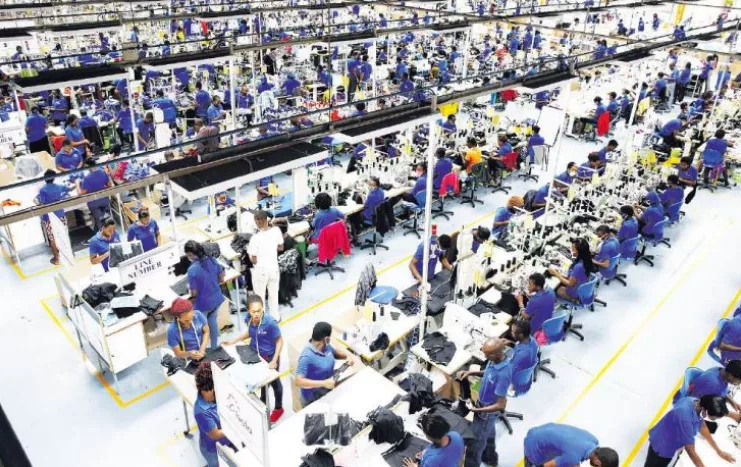
For Kenya, the extension offers a major reprieve to the country’s apparel industry, which has emerged as one of the biggest beneficiaries of AGOA and accounts for about 70 per cent of Kenya’s exports to the United States.
The programme had expired on September 30, 2025, after the US Congress failed to agree on a longer-term renewal, leaving exporters facing uncertainty over tariffs, production plans and investment decisions.
President Trump signed a one-year extension in February this year, restoring the programme retroactively and extending it only until the end of 2026.
The latest legislation now pushes the deadline to December 31, 2028, retaining AGOA’s existing framework, eligibility requirements and product coverage.
AGOA was first enacted in 2000 as part of a US strategy to shift its engagement with sub-Saharan Africa away from traditional aid and emergency relief towards trade-led economic development, investment and job creation.
The programme was initially extended to 2015 before Congress approved a further 10-year renewal in 2015, taking it to September 2025.
Subsequent short-term extensions have now kept the programme alive through 2026 and, following President Trump’s signature, through the end of 2028.
Investments, Trade and Industry Cabinet Secretary Lee Kinyanjui said the latest extension would provide Kenyan manufacturers and exporters with greater certainty and allow them to plan production and investment with more confidence.
“The extension of AGOA guarantees Kenyan enterprises continued exports of thousands of product lines to the US without the burden of tariff barriers,” Kinyanjui said.
A key provision retained under the extension is the third-country fabric provision, which allows Kenyan firms operating in Export Processing Zones to source yarns and fabrics from countries outside the AGOA bloc, manufacture garments locally and export the finished products to the US duty-free.
The provision has been critical to the competitiveness of Kenya’s apparel industry, enabling manufacturers to access raw materials at competitive prices while supporting local value addition and thousands of jobs.
According to the 2025 Kenya National Bureau of Statistics Economic Survey, apparel exports under AGOA rose by 19 per cent to Sh60.6 billion in 2024 from Sh50.8 billion in 2023.
The sector supports more than 66,000 direct jobs, mainly within Export Processing Zones, making continued access to the US market critical for employment, foreign exchange earnings and manufacturing investment.
The extension will also provide relief to exporters who continued shipping goods to the US during the period when the previous AGOA arrangement had expired.
Under the new legislation, eligible duties paid during the gap period will be refundable, with the government expected to work with exporters to facilitate applications to US Customs and Border Protection.
Beyond apparel, Kenyan exporters of agricultural products, including cut flowers, coffee, tea and macadamia nuts, also stand to benefit from continued preferential access to the American market.
Across Africa, AGOA supports exports in sectors including minerals and metals, agriculture, transport equipment, textiles, apparel and energy-related products.
US Trade Representative data shows that 33 countries and territories currently benefit from the programme. In 2025, US goods imports from AGOA-eligible countries totalled $31.2 billion, with $5.2 billion receiving AGOA preferences.
South Africa, the Democratic Republic of Congo, Nigeria, Ghana and Kenya were among the leading exporters under the arrangement.
However, while the two-year extension provides immediate relief, businesses and African governments are expected to continue pushing for a longer-term agreement to give investors the certainty needed to commit to major manufacturing projects.
CS Kinyanjui has urged manufacturers and exporters to accelerate production and investment and take full advantage of preferential access to the US market.