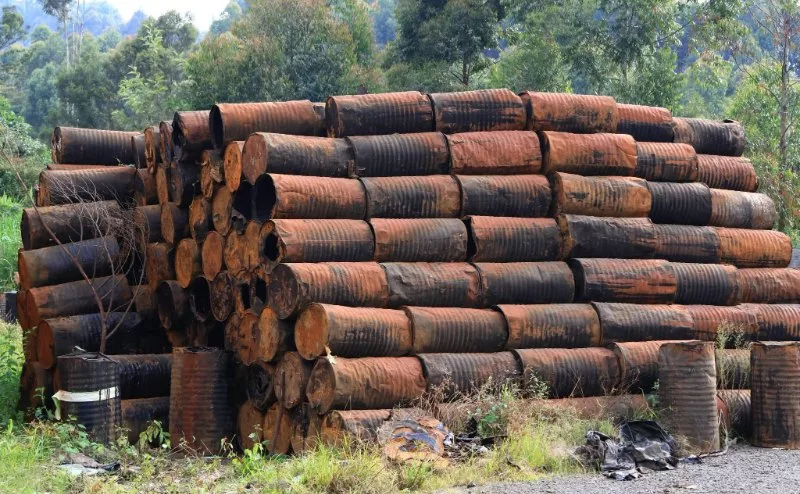



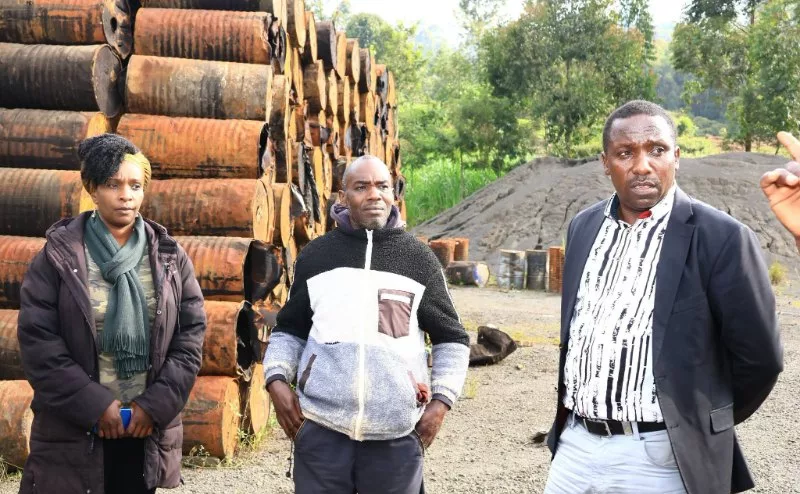
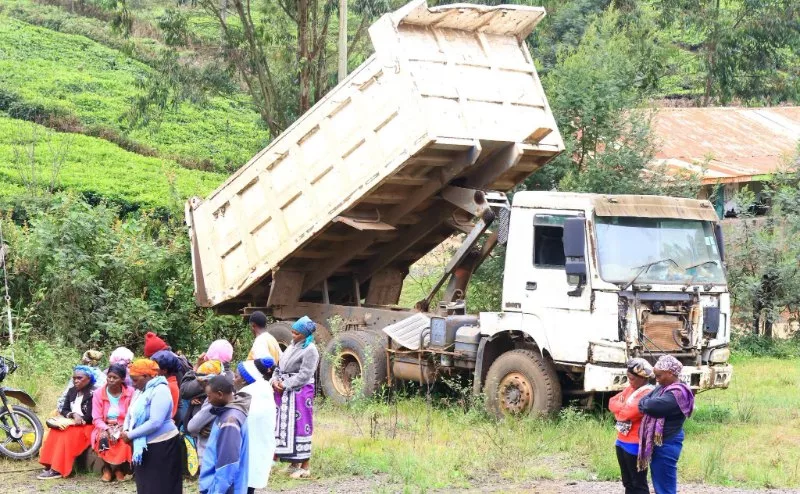
Residents of Tuthu in Kangema constituency have blocked the relocation of a contractor’s site, demanding that materials and equipment be used to tarmac the Tuthu-Kanyenyaini road before being moved to other parts of Murang’a.
The residents said they took the action after noticing that materials, including bitumen, chippings and construction equipment, were being moved from the site to Kigumo, despite the 13-kilometre road remaining in a poor state.
“We have vowed to guard the materials at this site and nothing will be moved to construct roads in other areas before this road is tarmacked,” said Nancy Waithera, a boda boda rider from Kanyenyaini.
The road is part of the Mau Mau roads project and was graded several years ago before works were abandoned, leaving sections exposed to heavy rains and other weather elements.
The resumption of construction works on the Mau Mau project after the government cleared pending bills owed to contractors had renewed residents’ hopes that the long-awaited road would finally be completed.
However, their optimism was short-lived after they noticed materials and equipment being moved from the site to other sections of the project.
Residents said they were particularly angered by the attempted relocation because construction materials used for sections of the Mau Mau project in neighbouring areas had been sourced from the site after being procured from local landowners.
About 2,500 drums of bitumen had been left at the site, with residents claiming they had recently started being transported to Kigumo after another contractor working on a different section of the Mau Mau project procured them.
Waithera said the poor condition of the road had made transport difficult and dangerous, particularly for boda boda riders who ferry residents and farm produce from the agriculturally rich area bordering the Aberdares.
“The road is completely impassable, with precarious terrain. Last month, two of my fellow riders were involved in accidents while navigating the sharp bends. One rolled over and hit his head against the rocks while the other lost his teeth,” she said.
She said riders often avoided taking passengers to Tuthu because of the risks posed by the road, while frequent damage to motorcycles had increased their operating costs.
The situation has also made transportation expensive for residents who depend largely on agriculture, with farmers facing difficulties moving produce to markets and accessing essential services.
Githinji Sadam said residents had received promises for years that the road would be upgraded, only for the project to stall after it had already been graded.
“We have received many promises and, while we were hopeful because materials to construct other roads are sourced here, our road remains impassable,” he said.
Residents further raised concerns over the anticipated El Niño rains, saying the poor state of the road and inadequate drainage could worsen flooding, increase the risk of waterborne diseases and make it difficult to evacuate patients or transport farm produce.
John Ngari said their hopes had been raised when the contractor initially started works on the Kanyenyaini-Tuthu road, only for residents to be informed that tarmacking would follow the completion of connecting roads.
He said the subsequent movement of the contractor’s site to Kigumo had convinced residents that their road could once again be left unfinished.
“How can we not benefit from materials that have been sourced from here? It’s ironical that they used the materials to do other roads and left ours in this state,” Ngari said.
Kangema MP Peter Kihungi backed the residents’ decision, saying the road had already been budgeted for and earmarked for construction.
He said the contractor and the Kenya National Highways Authority (KeNHA) had earlier requested more time to work on other sections, as the quarry being used to obtain construction materials was located along the Tuthu-Kanyenyaini road.
Kihungi said the understanding was that the Tuthu-Kanyenyaini road would be tarmacked after completion of the other sections.
The MP said he supported the decision to stop the movement of the materials until the road was upgraded and urged landowners not to enter into new contractual arrangements with the contractor, arguing that the existing agreement remained valid until the road was completed.
The Mau Mau roads project covers 540 kilometres across Kiambu, Murang’a, Nyandarua and Nyeri counties, with about 154 kilometres falling within Murang’a.
.