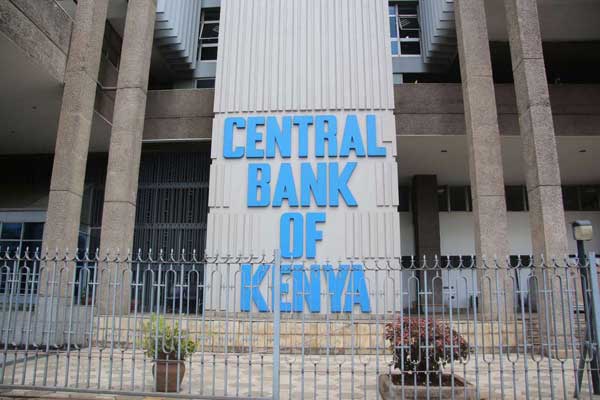



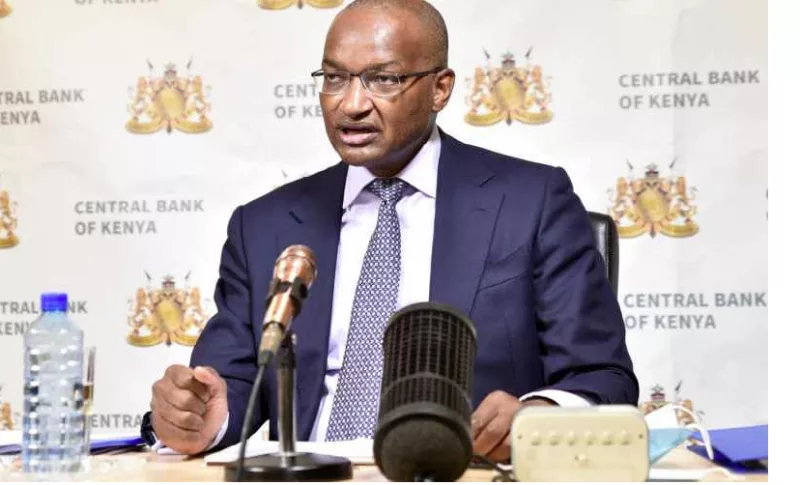
WHEN former IMF executive Patrick Njoroge walked into the fortress like Centra Bank headquarters on Haile Selassie Avenue in June 2015, he inherited a banking sector under serious strain.
The fortress that is the home to strong vaults for the storage of the Kenyan currency and foreign exchange reserves however provided little hiding room for what was to be a baptism by fire.
Within weeks, the new Central Bank of Kenya (CBK) governor would confront the failure of a bank, followed two months later by another and soon a third one.
Nearly a decade later, Njoroge says the controversial decision to shut down the troubled institutions was ultimately good for Kenya’s banking industry because it ended what he describes as a culture of regulatory forbearance.
“These are the rules and you follow the rules,” Njoroge reveals in the documentary series by CBK, honouring the legacy of governors of the apex bank as the regulator marks 60 years.
He served two four-year terms before leaving office in June 2023, when Kamau Thugge took over.
Njoroge recalls entering CBK amid high inflation, instability in the banking sector and ageing critical infrastructure.
One of his biggest concerns, he says, was whether some of the institution’s key systems would still be functioning the following morning.
On August 14, 2015, CBK placed Dubai Bank under receivership, citing liquidity and capital deficiencies that exposed depositors, creditors and the wider banking system to financial risk.
A subsequent assessment by the Kenya Deposit Insurance Corporation (KDIC) concluded that the weaknesses were so severe that liquidation was the only viable option.
Two months later, on October 13, Imperial Bank was placed under receivership following the discovery of irregularities and malpractices that exposed depositors and creditors to financial risk.
Less than a year later, on April 7, 2016, CBK appointed KDIC as receiver after concerns over the bank’s financial position and governance.
KCB subsequently took over management, allowing the institution to resume limited operations within weeks.
For Njoroge, these failures were not simply evidence of a weak banking sector. “They were a turning point”.
The regulator’s willingness to act, he argues, forced surviving banks to strengthen governance, risk management and internal controls.
“This sent a clear message that shareholders and managers could no longer assume that regulatory intervention would be delayed indefinitely. The reforms extended beyond supervision.”
Looking back, he says that the banking sector looks considerably stronger.
Regulators’ data show that total capital adequacy stood at 20.4 per cent in June 2025, comfortably above the statutory minimum of 14.5 per cent. Liquidity stood at 58.6 per cent against a minimum of 20 per cent.
Regulation has also moved further. Commercial banks are now required to progressively raise minimum core capital from Sh1 billion to Sh10 billion by December 2029.
Apart from strengthening the banking-sector safety net, the apex bank has ensured that ordinary depositors do not lose all their savings in case of bank failure.
At the centre of this framework is the Kenya Deposit Insurance Corporation (KDIC), which operates the Deposit Insurance Fund and has a broader mandate as a risk minimiser, rather than merely paying depositors after a bank has failed.
The corporation works alongside the Central Bank of Kenya (CBK) to supervise, intervene in, and resolve troubled institutions.
One of the major reforms Njoroge is proud of is Kenya’s move from a flat-rate deposit insurance premium to a risk-based premium system, implemented in July 2021.
Previously, banks broadly paid the same premium rate regardless of how risky their operations were. The risk-based model changed this by linking the premium a bank pays to its risk profile.
The main objective is to create an incentive for banks to strengthen risk management and avoid excessive risk-taking.
Under the current framework, banks pay a base premium of 0.15 per cent of their average deposits, plus a risk-adjusted component.
The precise premium therefore varies depending on the institution’s risk classification. The overall annual premium is subject to a minimum of Sh300,000 and a maximum of 0.4 per cent of average deposits.
During Njoroge’s tenure, deposit protection increased fivefold from Sh100,000 to Sh500,000 per depositor per institution with effect from July 1, 2020.
The increase was intended to reflect changing economic conditions, strengthen public confidence and protect a larger proportion of ordinary bank customers.
CBK’s latest Financial Sector Stability Report says that, at the Sh500,000 coverage limit, about 99 per cent of Kenya’s 115.3 million bank accounts were fully protected as of December 2024.
The Deposit Insurance Fund also grew by 18 per cent during 2024, from Sh209 billion to Sh248 billion.
This year, KDIC began engaging with banks on the Single Customer View (SCV) framework, which requires banks to maintain consolidated, accurate information about each depositor.
The idea is to eliminate fragmented or duplicate customer records so that KDIC can quickly establish how much a depositor is entitled to receive after failure.
After securing the sector’s stability, Njoroge says CBK embarked on modernising its monetary-policy framework, payment infrastructure, internal systems and data capabilities.
He remains unapologetic about his opposition to the interest-rate caps introduced in 2016.
The law limited bank lending rates to four percentage points above the CBK benchmark rate and imposed a floor on deposit rates.
He argues that the intervention distorted the credit market and encouraged banks to ration loans rather than lend to riskier borrowers.
“The World Bank later reached a similar conclusion, noting that the caps constrained the operating environment and reduced incentives for banks to lend to small and medium-sized enterprises.”
Another defining episode during Njoroge’s tenure was the Covid-19 pandemic.
He describes it as the biggest external shock of his tenure, but also one that accelerated Kenya’s transition towards digital payments.
We temporarily waived charges on mobile-money transactions of up to Sh1,000 and transfers between mobile wallets and bank accounts, while increasing transaction limits.
The measures helped drive a sharp increase in digital transactions during the pandemic.
He also regards the 2019 currency redesign and withdrawal of the old Sh1,000 notes as a major operational success.
More than 209 million old notes were returned, while Sh7.4 billion worth of notes remained outside the system after the September 30 deadline.