



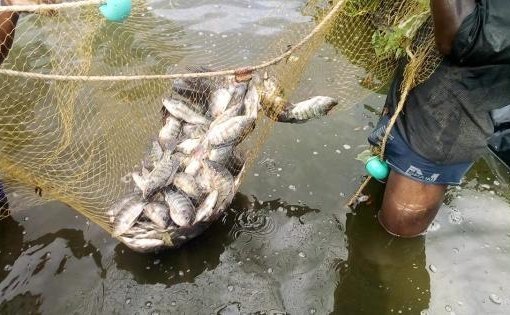
Africa is facing a widening gap between fish demand and supply, a new report by the Food and Agriculture Organization of the United Nations has warned.
The gap, report said, raised fresh concerns over food security and nutrition.
The 2026 edition of The State of World Fisheries and Aquaculture shows that while global aquatic animal production reached a record 195 million tonnes in 2024, driven largely by the expansion of aquaculture, production in Africa is failing to keep pace with rapidly rising demand fuelled by population growth, urbanisation and changing diets.
In Kenya, fish consumption remains below the African average despite growing demand for affordable sources of protein, according to Kenya Marine and Fisheries Research Institute director general Dr Paul Orina.
He said expanding aquaculture could play a critical role in meeting the country’s future food and nutrition needs.
Yet Africa remains the region with the lowest per capita availability of aquatic foods despite their importance in providing nutrition and livelihoods.
According to the report, aquatic foods contribute about 19 per cent of the animal protein consumed across Africa. In some countries, they account for more than half of all animal protein intake.
For Kenya, the findings come at a time of growing concern over how to feed an expanding population amid climate change, shrinking land sizes and rising food prices.
“The pressure on red meat and other sources of protein is going to increase as our population continues to grow,” Orina said.
“Fish remains one of the cheapest sources of quality protein available to citizens. That is the direction we need to take if we are to improve food security and nutrition.”
He says Kenya’s population is projected to continue growing steadily, increasing demand for affordable and nutritious food. As beef, poultry and other protein sources become increasingly expensive, fish is emerging as an important alternative.
Although Kenya has traditionally not been regarded as a fish-eating nation compared with some of its African counterparts, consumption is gradually increasing.
“Years ago, fish consumption was concentrated in a few regions around Lake Victoria and the Coast. Today, people in Central Kenya, Maasailand and many other parts of the country are embracing fish,” Orina said.
He attributes the shift partly to government campaigns promoting fish consumption and efforts to increase local production through aquaculture.
Kenya’s aquaculture sector has recorded remarkable growth over the past decade and a half.
Fish farming production has risen from about 9,000 tonnes before the government’s Economic Stimulus Programme was launched in 2009 to more than 40,000 tonnes today.
“That growth is a clear indication the government is intentional about expanding the aquaculture sector,” he said.
The FAO report identifies aquaculture as Africa’s greatest opportunity to bridge the widening gap between fish demand and supply.
Across the continent, aquaculture production has expanded to more than 2.4 million tonnes, making Africa the fastest-growing aquaculture region globally, with an average annual growth rate of eight per cent since 2000.
However, production remains heavily concentrated in a handful of countries. Egypt alone accounts for nearly two-thirds of Africa’s aquaculture output, followed by Nigeria, Ghana, Uganda and Zambia.
The report estimates average per capita fish availability in Africa at just 9.1 kilogrammes annually, less than half the global average of 21.1kgs. Kenya’s consumption is even lower, at approximately 4.5kg per person each year.
Beyond increasing production, Orina said protecting aquatic ecosystems will be essential if Kenya is to expand the sector sustainably.
He warns that pollution, illegal fishing and environmental degradation continue to threaten fish stocks in both inland and marine waters.
“We are urging fishers to avoid illegal, unreported and unregulated fishing practices,” he said.
“At the same time, communities upstream must understand that activities far from lakes and oceans eventually affect aquatic ecosystems.”
Plastic pollution, untreated sewage, excessive fertiliser run-off and industrial waste eventually find their way into rivers, lakes and oceans, undermining fish production and threatening livelihoods.
Across Africa, fisheries and aquaculture support millions of jobs, particularly in rural communities.
Inland fisheries alone employ more than three million people, while women play a critical role in fish processing, trading and marketing.
The FAO report projects that by 2034, Africa’s fisheries and aquaculture production will grow by 13 per cent compared with 2024 levels.
Achieving that growth, however, will require supportive policies, investment in technology, financing and skills development.
For Kenya, Orina believes the sector offers significant opportunities, particularly for young people.
“There is enormous potential for job creation in fisheries and aquaculture. We need graduates leaving universities prepared to create businesses and employment opportunities rather than simply seeking jobs,” he said.
Ultimately, increasing fish production and consumption could help Kenya tackle some of its most pressing food security and public health challenges.
“Fish is not only nutritious but also rich in omega-3 fatty acids that contribute to better health outcomes,” he said.
“I want to encourage Kenyans to embrace fish as a regular part of their diet. It is one of the safest and most affordable sources of high-quality protein available today.”
The FAO report notes that Africa’s blue economy could play a much bigger role in feeding the continent’s growing population as demand for food continues to intensify.