



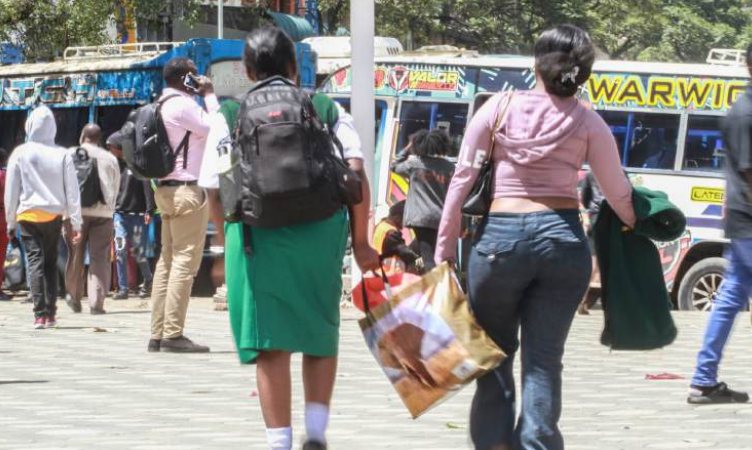
Learning resumed across the country on Monday after the week-long midterm break, with heavy traffic building up on major roads in Nairobi as parents ferried learners back to school for the remainder of the second term.
The reopening comes after a turbulent period that saw widespread student unrest force many schools to close before the official break.
The unrest, characterised by dormitory fires and student protests, disrupted learning in about 204 schools across the country.
While some institutions closed only days before the scheduled midterm holiday, others remained shut for much longer as administrators sought to restore calm and assess the extent of damage caused by the unrest.
In many cases, school heads opted to send learners home as a precautionary measure to avert further disturbances, protect students from the psychological impact of fires reported in neighbouring schools and ease rising anxiety before it escalated into violence.
Despite the heightened tension and the early closures, the Ministry of Education maintained the academic calendar, insisting that learning should continue as planned.
The ministry urged school administrators to strengthen guidance and counselling programmes and engage learners through dialogue instead of resorting to premature closures before the official midterm break.
The one-week holiday is considered an important break in the demanding second-term calendar, giving learners an opportunity to rest, recover from academic fatigue and return refreshed for the remaining weeks of study.
The break also allows teachers to evaluate their progress, refine teaching strategies and prepare lessons for the remainder of the term.
Parents, on the other hand, get an opportunity to spend time with their children, offer guidance and monitor their overall well-being away from the school environment.
As learners settle back into class, schools that remained closed for longer than the official midterm break now face the challenge of recovering lost learning time without falling behind the syllabus before the term concludes.
Education officials also urged schools to avoid practices that could heighten tensions, including impromptu mock examinations and overly harsh disciplinary measures.
Instead, institutions are expected to strengthen guidance and counselling services while promoting dialogue between students and school administrators.
Improving communication channels between school management and learners has emerged as one of the key recommendations following the recent unrest, with poor communication widely cited as a contributing factor in many of the affected institutions.
Speaking on Sunday during the 60th anniversary celebrations of Burieruri Boys Senior School in Igembe Central, Meru county, President William Ruto called for a return to traditional African parenting values as part of the solution to student indiscipline and unrest.
“Let us recover the wisdom of African parenting, where no child belonged to one household alone, but to the whole community; where every elder was a guardian and every child a shared responsibility,” he said.
During the event, the school’s student president appealed to the President to help facilitate the employment of Board of Management teachers on permanent and pensionable terms, as well as support the construction of a modern swimming pool and the acquisition of a school bus.
Ruto said the government was committed to treating all schools equally, regardless of their location or history, arguing that every institution plays a vital role in nurturing Kenya’s future.
“My administration does not measure a school by its fame, its age or the prominence of its alumni. Every school matters, every learner matters, every teacher matters. Whether a school stands in the heart of Nairobi or in the slopes of Igembe, it carries the dream of Kenya,” he said.
As learners embark on the final stretch of the second term, many parents, teachers and education stakeholders hope the ministry will fulfil its commitment to review the 14-week term, which it previously acknowledged contributes to learner fatigue and may have played a role in fuelling unrest in schools.