


Turkana county has intensified disease surveillance and public awareness campaigns along its borders amid concerns over the possible spread of ebola and other zoonotic diseases.
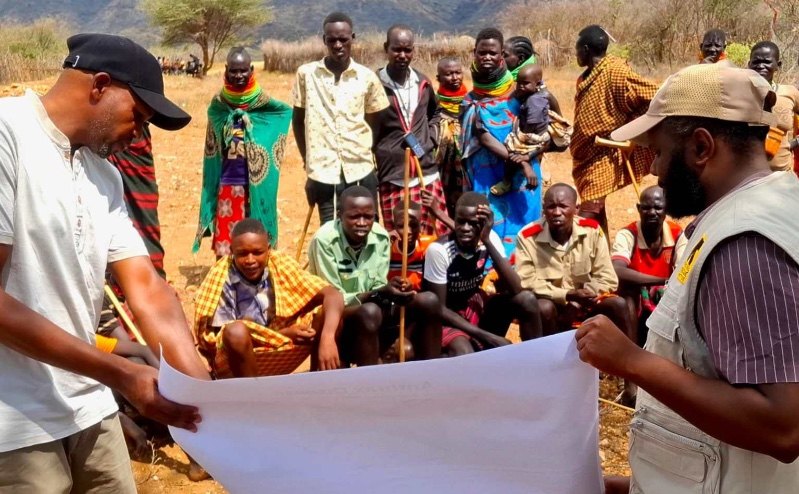
A multi-sectoral Joint Support Supervision (JSS) team has scaled up sensitisation efforts in border areas, including Lomokori and Lochor-Alomala in Lokiriama subcounty.
County health officers and disease experts have been educating cross-border communities on ebola and five priority zoonotic diseases to strengthen case identification, management and referral to health facilities. The priority zoonotic diseases are rabies, anthrax, brucellosis, trypanosomiasis and Rift Valley fever.
The team engaged residents, healthcare workers and community volunteers, including community health promoters, community disease reporters and community mobilisers, on the importance of working together to prevent and contain disease outbreaks.
Health officers have been educating residents on how the diseases are transmitted from animals to humans and why early awareness is critical in preventing outbreaks.
The campaign is particularly important in Turkana, where more than 60 per cent of residents depend on pastoralism and live in close contact with livestock.
Subcounty public health officer Simon Echwa said the sensitisation drives were helping bridge critical gaps between communities and the health system.
“These sessions help residents recognise the early signs before a disease can spread and that early detection saves lives,” he said.
Residents in Lomokori called for enhanced screening at border entry points to reduce the risk of ebola entering the area.
They also appealed to the county government to rehabilitate a sunken borehole to improve sanitation and strengthen preparedness efforts.
Richard Lokuruka of the Ministry of Health in Lokiriama acknowledged the concerns raised and reaffirmed the government’s commitment to addressing them.
“Our communities live closely with their livestock, so the risk of zoonotic spillover is real and constant. That is why such sensitisation efforts are crucial in preparing communities before an outbreak strikes,” he said.
Jamal Abdi, project manager for the International Rescue Committee’s Core Group Partners Project (CGPP) in Turkana, praised residents for their active participation and urged continued collaboration.
“These cross-border communities are often the first to notice when something is wrong, whether it is a sick animal or an unusual illness. Our role is to make sure they have the knowledge, attitudes and confidence to act on that and reach out to health facilities immediately,” he said.
The exercise, supported by the International Rescue Committee through the Core Group Partners Project, also covered health facilities in Loya, Lorengipi, Lochor-Edome, Lokiriama, Urum and Namoruputh.
The team is expected to move to Turkana West next week to complete the quarterly supervision cycle.