


For years, residents of Piny Oyie in Nyamaraga sublocation, Suna Wasimbete location, lived with a persistent shortage of water that defined their daily struggles and shaped their survival.
The community routinely trekked nearly two kilometres to fetch water from the seasonal Ongoche River. Even then, the supply was unreliable and often unsafe, forcing households to rely on dirty water for domestic use when no alternative was available.
Faced with these harsh conditions, residents began searching for a sustainable solution.
Their opportunity came with the Financing Locally-Led Climate Action (FLLoCA) programme, a government initiative designed to empower grassroots communities to plan, budget and implement climate resilience projects at ward level.
The five-year programme is implemented by the Government of Kenya in collaboration with development partners including the World Bank, and is coordinated through the National Treasury and county governments.
For the Piny Oyie community, the programme offered a pathway out of water scarcity.
According to Nyamaraga Otonglo Community Water Project coordinator, Okinyi Nyamwang, the process began with public participation to ensure community ownership and input in decision-making.
“The community endorsed the project before reaching out to the area Member of the County Assembly for support,” Nyamwang said.
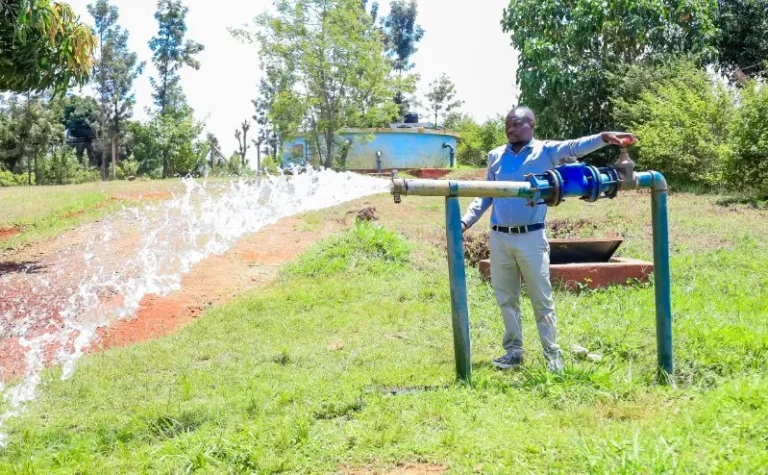
A site was identified for drilling, with technical input from a county hydrologist. The community also remained closely involved throughout implementation, including monitoring drilling works and installation of solar-powered systems.
To strengthen accountability, each clan nominated representatives to a project monitoring committee overseeing progress. Nyamwang said this structure ensured transparency from drilling to completion.
“When the solar panels were being installed, we were also supervising. This ensured transparency and accountability,” he said.
The project, which cost Sh7.5 million, now serves about 1,000 residents. It has been registered as a community-based organisation, allowing for structured financial management through a dedicated account funded by water user fees.
Households accessing metered water pay Sh10 per 100 litres per month, while a 20-litre jerrican costs Sh2 at the point of collection. The borehole currently yields about 7,000 litres per hour, with the community now planning to expand storage capacity through a 60,000-litre galvanised tank.
However, the expansion requires Sh1.5 million, even though the project currently has Sh150,000 in its account.
Nyamwang said sustainability was central to the project design. A community-driven sustainability strategy was subjected to public participation and approved to ensure long-term operation and maintenance.
“We had to look at ways and means to ensure the project is sustained,” he said.
The coordinator was among several committee members who underwent capacity-building training. The training focused on planning, budgeting and implementing climate resilience projects, alongside sessions on climate change, leadership and governance. It brought together representatives from Isebania, Kakrao and Wasimbete wards.
Officials from the National Treasury and the FLLoCA programme also conducted a social audit to assess the impact of the projects. The exercise is part of efforts to strengthen accountability and ensure funds are translating into tangible community benefits.
Social Safeguards Specialist Dr Dan Adino noted that climate change is already affecting food production and displacing communities in some areas.
He pointed to rising sea levels and expanding lakes in parts of the Rift Valley as key indicators of environmental stress.
He said industrial emissions continue to worsen climate change impacts globally, despite Africa contributing relatively little to greenhouse gas emissions.
“The money from FLLoCA has helped communities to address the impacts of climate change,” he said, adding that the programme allows communities to directly choose projects that suit their needs.
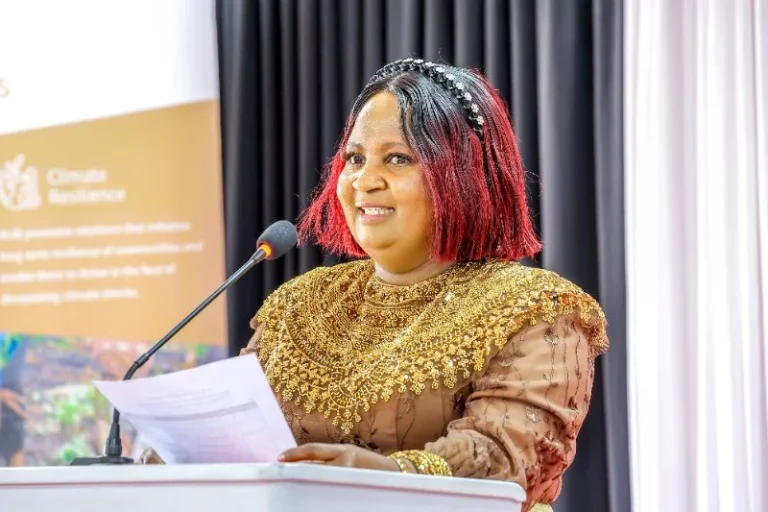
Migori County Climate Change director Mercy Achapa said the county had also contributed resources to support FLLoCA projects alongside development partners.
In the first phase, funding included support from the German government through KfW Development Bank, the International Development Association (IDA), and county allocations.
Achapa said some projects have already shown positive results, while others continue to face implementation challenges.
One such case is the Anjegu water project in Anjegu Sublocation, which began in the 2023-24 financial year but is yet to become operational.
According to Senior Assistant Chief Substone Adamba, the project has stalled due to technical and administrative challenges, leaving about 500 households without access to the intended water supply.
Officials urged struggling projects to learn from successful community initiatives to improve implementation and accountability.
The FLLoCA programme requires counties to establish local climate planning committees comprising women, men, youth, persons with disabilities and other marginalised groups, as outlined in the County Climate Change Act 2021. This inclusive structure is intended to ensure that climate investments reflect community priorities.
Through participatory climate risk assessments, communities have been mapping resources and identifying vulnerabilities, including water sources, land use patterns and environmental risks, to guide project planning and improve resilience at the local level.