


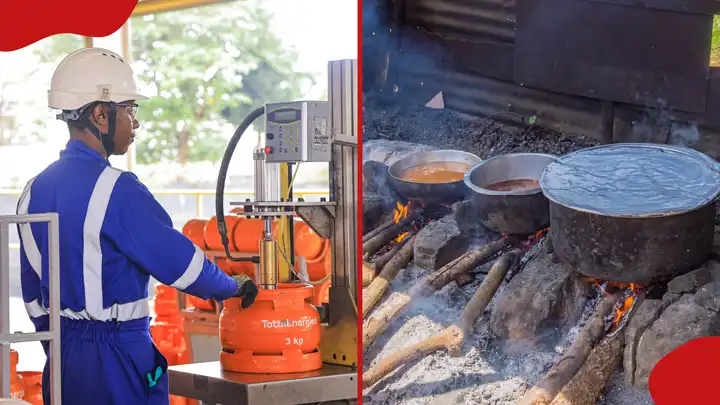
Smoke, which remains a common sight in most kitchens across the country, is slowly fading away as families gradually embrace clean cooking solutions. Kenya is targeting 50% LPG adoption by 2028. The 2022 Kenya National Bureau of Statistics (KNBS) Demographic and Health Survey (DHS) reveals a high dependence on traditional cooking fuels. In total, 68.5% of the population, or 9.1 million households (1.7 million in urban areas and 7.4 million in rural areas), rely on traditional cooking fuel options as their primary source. Firewood remains the predominant cooking fuel. According to the Clean Cooking Association of Kenya (CCAK), Liquefied Petroleum Gas (LPG) remains the commonly used clean cooking solution amongst the urban Kenyan population, followed by charcoal. The government is currently implementing a national clean cooking transition programme that targets to increase LPG access amongst Kenyan households to 70% by 2028, with the private sector expected to play a key role.How is TotalEnergies investing in clean cooking in Kenya? In a bid to support this ambitious programme, TotalEnergies is also implementing a clean cooking strategy. The company has committed to investing Ksh 1 billion annually, with a target of introducing 180,000 cylinders into the Kenyan market. Globally, TotalEnergies is targeting to provide access to clean cooking for 100 million people in Africa and India by 2030. “To achieve this, the company plans to invest more than $400 million in the development of LPG for cooking,” TotalEnergies Marketing Kenya managing director Thibault Flichy told TUKO.co.ke.
“We are convinced that LPG can change the lives of people, improve health and change gender equality. We’re convinced that we have to push clean cooking everywhere in Africa, and we have to push Kenya to adapt, and we know we can develop a clean cooking solution in Kenya; that is why Total is investing in the sector,” he added. TotalEnergies Marketing Kenya MD Thibault Flichy said the company has committed to investing KSh 1 billion annually to support LPG adoption in Kenya. Photo: TotalEnergies. Source: UGC Currently, the company is implementing three key complementary solutions aimed at enabling more Kenyans to access LPG at lower costs and closer to them. It has partnered with M-Gas to provide a pay-as-you-cook solution that enables households to access LPG at a lower entry cost, alongside the Maskani concept and EasyGas delivery. By the end of 2025, over 42,000 cylinders had been deployed under the M-Gas partnership, impacting about 200,000 lives. The company is targeting at least 180,000 cylinders to be deployed across the country by 2027, impacting over a million lives. For Maskani, an LPG container concept that creates retail access points close to communities, 370,000 lives have already been impacted through 42 sites. TotalEnergies plans to have set up 40 additional Maskani sites by the end of 2026, while the EasyGas solution currently has 281 pick-up points with an average of 714 orders per day. TotalEnergies currently has 42 Maskani sites across the country.
But even as TotalEnergies focuses on helping Kenya achieve over 70% LPG access by 2028, the sector still faces the challenge of illegal refilling of gas. The company has already launched the cylinder tagging and tracking project. “To accelerate safe switch to LPG, it is essential to have the right regulatory and enforcement framework in place, to prevent illegal refilling and support cylinders’ circular model. This will be key to encouraging private investment,” said TotalEnergies Marketing Kenya commercial specialist and LPG manager Henry Kwame. What barriers exist for clean cooking in rural areas? Clean Cooking Technology and Compliance Expert at CCAK, Fredrick Asitwa, believes a partnership of the government, private sector and non-governmental organisations can help accelerate LPG adoption. Asitwa told TUKO.co.ke in an exclusive interview that with the current policies in place and the huge investments by the private sector, Kenya’s clean cooking landscape will soon improve. “The common barrier is cost and availability of low-cost or no-cost alternatives for what households are using, but if the urban has already adopted clean cooking, then why not the rural.
I believe by 2030, the landscape will be better,” he said. CCAK Clean Cooking Technology and Compliance Expert Fredrick Asitwa. Photo: Joshua Cheloti. Source: Original Use of clean cooking has a direct impact on households’ health. It betters air quality and, in the process, limits the risk of respiratory complications and cardiovascular diseases. It also reduces inequality by facilitating access to education, employment and ultimately financial independence for women. Data shows that access to clean cooking saves a considerable amount of time for people who can spend up to 20 hours a week collecting firewood. “Switching to LPG can reduce indoor air pollution by up to 9%. One kilogram of LPG can replace up to 5kg of charcoal, with five times fewer CO2 emissions and 150 times fewer carbon monoxide emissions,” notes TotalEnergies. Other state-backed green cooking initiatives include a large-scale programme targeting to convert 11,000 schools to LPG reticulation of homes in urban centres and supporting low-income households. The government is also investing in 10 million subsidised LPG cylinders.