


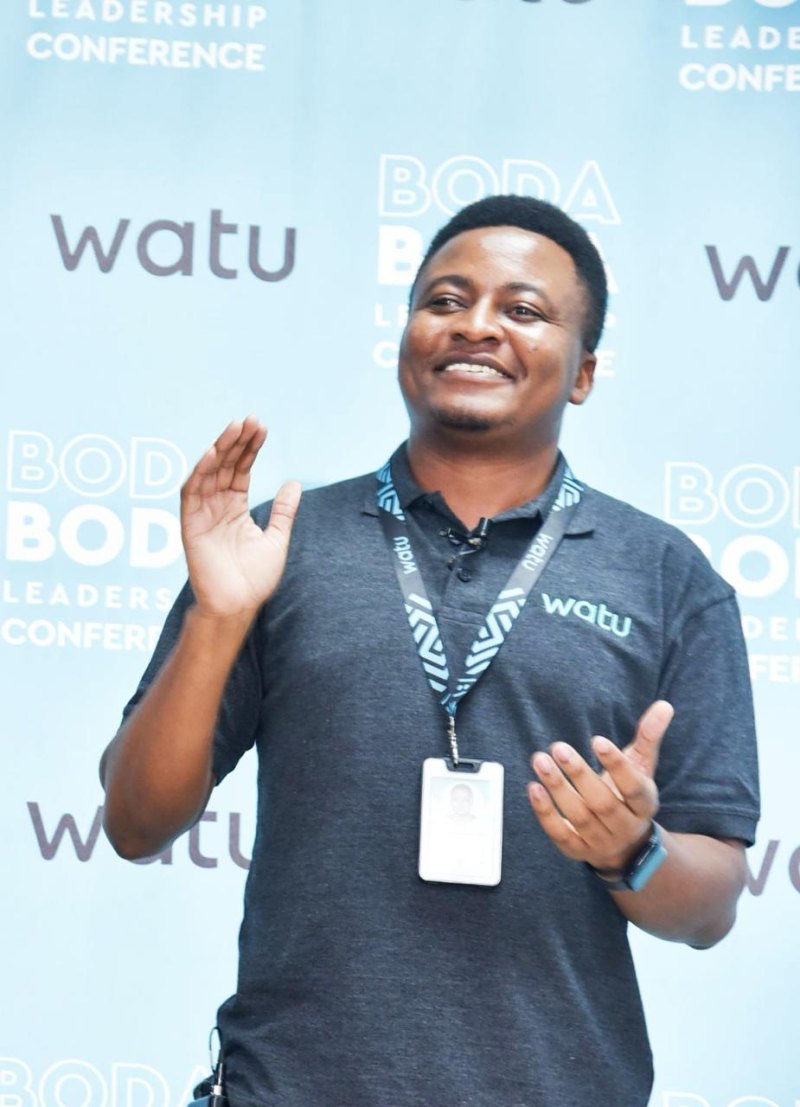
The recently released Kenya Economic Survey 2026 provides a glimpse of growing demand for microcredit access among an underserved yet economically crucial segment of society.
The demand for credit to acquire economic production assets continues to grow, and it no longer resembles what it did a decade ago, offering an illustration of why Buy Now Pay Later (BNPL) firms exist and of their role in fostering financial inclusion.
Over the last two decades, I have worked at several organisations in finance-related roles, but my engagement at Watu has given me a new perspective on development finance and its imperatives.
Working for a micro-assets financier opens one to a world of social and economic resilience that you don’t get exposed to in a mainstream banking or related institution. In a micro-assets finance environment, figures adopt a social perspective, and relationships remain the bedrock of product design.
When you begin to finance a productive asset, such as a motorcycle that generates income from the first day of ownership, you realise that the rider is not repaying the loan from a salary or savings pool. They are repaying from the earnings the asset itself generates on the go.
The loan and the livelihood move together like siamese twins, and this is a different economic logic from consumer credit.
The same applies to smartphone financing. The devices financed by players such as Watu in Kenya and across Africa, and in Latin America, are working tools.
For example, a gig economy worker, say, in the ride-hailing or delivery business, derives economic functionality from a new-generation smartphone.
A Watu customer runs their business from the financed phone, managing ride-hailing jobs, processing mobile money, tracking orders, and communicating with clients.
For many, financed devices are their gateway to reliable access to the digital economy. For BNPL firms, this is not an avenue to fund consumptive and lifestyle purchases; far from it, it is financing the infrastructure that enables people to build and run their economic livelihoods.
BNPL customers are unique and specific. They are self-employed entrepreneurs, most often in the informal economy, with a daily or weekly income stream.
They have no credit history, no collateral, and no prior banking relationship. Banks have not served them, not because they are not creditworthy, but because the conventional credit model was not built for how they earn their money.
See, more than 2.5 million people depend on the boda boda sector alone for their livelihoods, contributing over KSh 660 billion to Kenya’s GDP annually. These are not marginal participants in the economy. They are the true economy players.
BNPL firms like Watu structure repayments around daily cash flows, by assessing creditworthiness against the asset’s earning potential rather than a payslip.
The BNPL loan portfolio, in my view, is not just a number; it is the manifestation of financial inclusion, as each loan helps someone build a credit history for the first time, often the first step toward broader banking for the unbanked.
There can be no denying that productive-asset financiers operate in a genuinely complex capital environment. Unlike banks, BNPLs do not take deposits and instead raise capital through partnerships with local lenders, development finance institutions, and debt funds, each with its own cost structure.
Such capital-raising options carry costs that are further shaped by factors beyond BNPL firms’ control.
Such costs and risks include foreign-exchange fluctuations for foreign-currency-denominated funds, interest-rate environments, and the realities of raising structured debt in frontier markets.
With such costs, BNPLs pass along as little of that cost to the customer, which is the honest context behind why margins in this sector look the way they do. This is not an easy, quick returns business; it requires patient capital, disciplined operations, and a long-term view of what it costs to deliver financial inclusion.
Kenya’s last-mile economy deserves credit infrastructure built for it.