

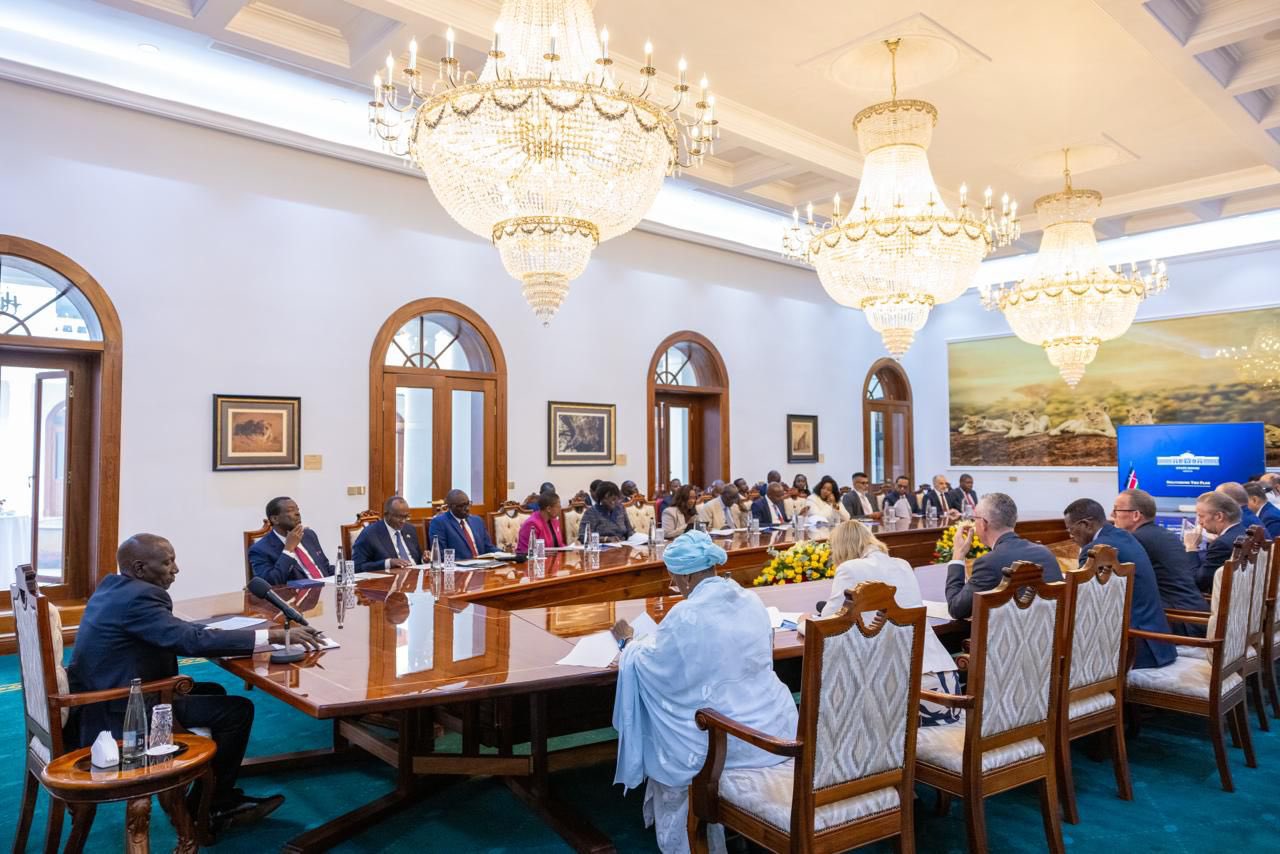
President William Ruto has called for strengthened international cooperation in response to the Ebola virus disease outbreak reported in neighbouring countries, urging global partners to work collectively to reinforce regional health security and prevent cross-border transmission.
Speaking at State House, Nairobi, during a briefing with ambassadors, development partners, and multilateral agencies, President Ruto underscored Kenya’s strategic position as a regional gateway and financial hub, noting that the country’s preparedness efforts are anchored on transparency, coordination, and rapid response.
He said Kenya had intensified surveillance and screening measures across 26 points of entry, where more than 58,000 travellers have so far been screened.
According to the President, all suspected cases identified during screening have tested negative, a development he described as an indication of the effectiveness of early detection systems currently in place.
The Head of State further announced that 17 isolation centres have been identified across the country to handle any potential cases, should they arise, as part of broader contingency planning aimed at strengthening national readiness.
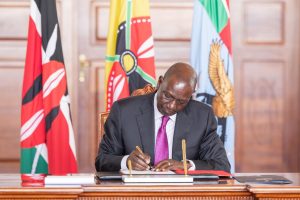
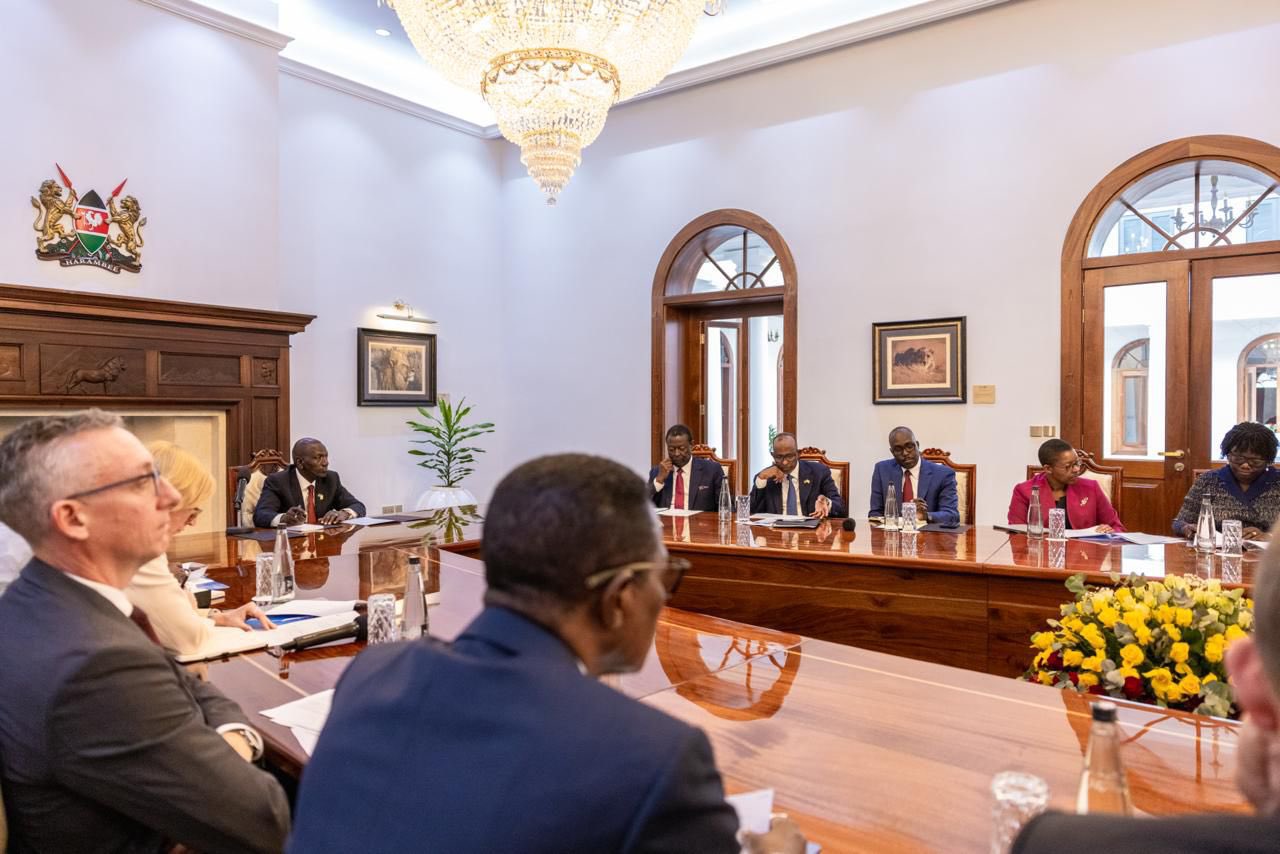 President William Ruto hosts envoys and development partners at State House/PCS
Ruto emphasised that Ebola, like other infectious diseases, does not respect national borders, warning that fragmented responses could undermine regional containment efforts.
He therefore rallied development partners to avoid isolationist approaches and instead embrace coordinated action.
“We agreed on the importance of cooperation and avoiding isolationism, recognising that public health threats do not respect borders,” he said, adding that collective responsibility remains central to managing emerging health risks.
Kenya’s response strategy, he added, will be anchored on collaboration with key global health institutions.
“We are also mobilising support with development partners for affected countries and frontline response institutions, including the World Health Organization, the Africa Centres for Disease Control and Prevention, and the United Nations system,” he said.
These partnerships, he noted, will focus on strengthening surveillance, emergency preparedness, laboratory systems, cross-border coordination, and rapid response capacity.
The President also acknowledged the support of several international partners, commending their continued engagement in regional health security initiatives.
They include the United States, the United Kingdom, the European Union, France, Germany, China, Japan, India, Qatar, the United Arab Emirates, Saudi Arabia, Ethiopia, and Türkiye.
He announced the establishment of a National Response Committee, to be chaired by the Prime Cabinet Secretary and Cabinet Secretary for Foreign and Diaspora Affairs, tasked with coordinating a whole-of-government and whole-of-society approach.
The committee will also oversee public awareness campaigns, preparedness measures, and resource mobilisation to ensure Kenya remains fully equipped to respond to any eventualities.
According to Ruto, the government is also working closely with frontline institutions to enhance health system readiness, including improving diagnostic capacity and reinforcing emergency response mechanisms at both national and county levels.
“Kenya will continue to act transparently, responsibly, and decisively to protect lives while contributing to regional and global health security,” he said.
The meeting in Nairobi comes amid renewed concern over Ebola outbreaks in parts of the region, prompting heightened surveillance across East Africa.