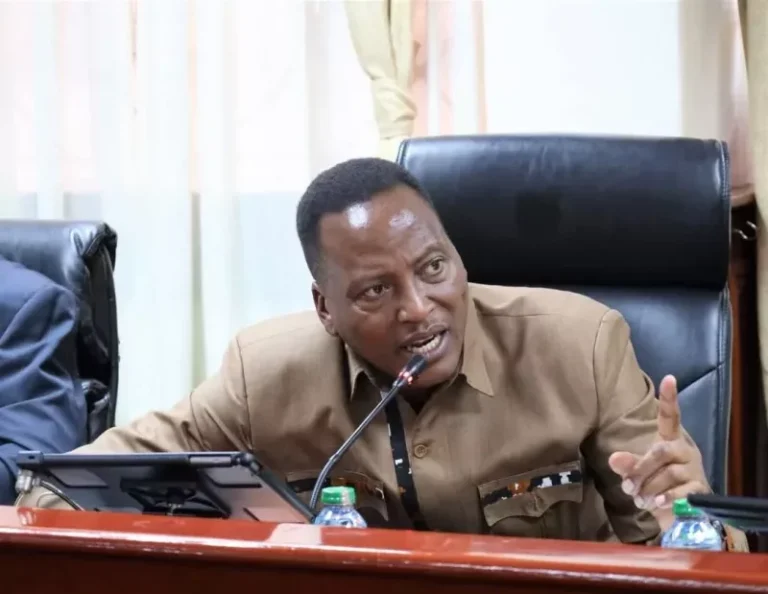



Amnesty International Kenya has appointed George Morara as its new executive director, effective June 2.
The announcement, following a competitive recruitment process, coincides with the global parent organisation’s 65th anniversary, marking an era of major institutional transition.
Morara brings more than three decades of leadership in governance, public accountability and human rights advocacy.
He previously served as vice chairperson of the Kenya National Commission on Human Rights and has built a reputation as a principled and strategic leader committed to constitutionalism, transparency and civic engagement.
“As we welcome George Morara, we are confident that his experience, integrity and energy will guide Amnesty International Kenya and Kenya into its next chapter,” Dr Stellah Wairimu Bosire, Amnesty International Section chairperson, said in a statement on Thursday.
“Morara’s appointment came at a critical moment for human rights in Kenya and East Africa.”
He succeeds Irũngũ Houghton, who stepped down after an eight-year tenure.
The outgoing director provided insights into the current state of advocacy, warning that domestic achievements remain vulnerable to a wider, shifting political climate.
“At a time when millions face threats to constitutional freedoms at home and the erosion of the international human rights system, Amnesty remains a vital force,” Houghton said in February.
The organisation noted gains made under Houghton’s tenure. Amnesty Kenya moved from a foreign‑run office to a locally governed, membership‑based section with an expanded grassroots network.
The organisation deepened its campaigns on police reform and economic justice, and earned a reputation for fearless advocacy.
“He maintained an open but principled public engagement with the Kenyan government, business, diplomatic and Public Benefit Organisations. We are grateful to Irũngũ for his visionary leadership and unwavering commitment to human rights.”
Amnesty reaffirmed its commitment to working with communities, partners and institutions to promote accountability, defend freedoms and advance dignity for all.
Amnesty International, originally founded globally in 1961, operates as a global movement of ordinary people standing up for human rights.
Its work focuses on police reform and the right to peaceful protest, defending freedom of expression and digital rights, campaigns against gender‑based violence and fighting enforced disappearances.
The organisation holds the government to account on socio‑economic justice, including failures in healthcare and social protection that left thousands unable to access essential services.