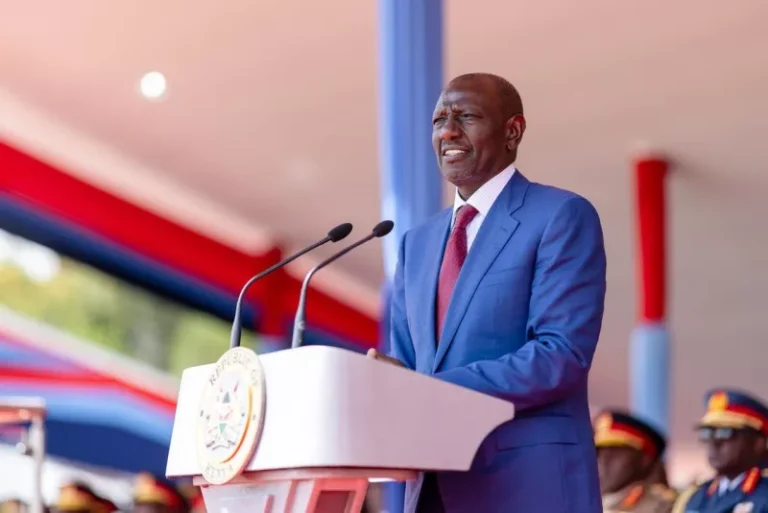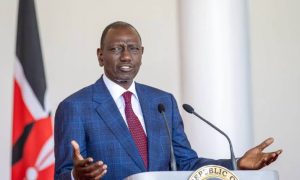


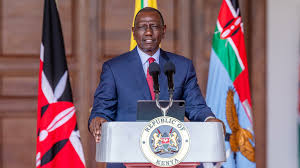
President William Ruto has said he did not influence matatu operators to call off a planned strike, adding that the decision followed discussions about the prevailing fuel situation.
Speaking on Thursday during the National Prayer Breakfast at Safari Park, Nairobi, the President said he had met leaders in the transport sector to discuss the fuel crisis and explained the government’s position and the challenges involved.
He said the engagement, which lasted about three hours, included a review of the current fuel supply situation and a reflection on previous fuel shortages experienced in 2022, when the country faced long queues at petrol stations.
He added that during his early engagements with industry players after assuming office, he had also met oil marketers to discuss fuel subsidy policy and its implications on the economy.
Ruto said he used the meeting to explain the importance of learning from past economic challenges and maintaining stability in fuel supply.
He further stated that fuel was currently available in all petrol stations and that the government was subsidising fuel prices, noting that the actual cost of diesel would be higher without the subsidy.
“Today, the governemnt is subsidising fuel. The actual price of diesel should be Sh273, but it is Sh232. When we finished, they told me, Mr President, we are going to call off the strike. I did not tell them to call off the strike; they looked at the facts. I know many people said they were influenced this way and that way, maybe they were, by the facts of what the situation is,” he said.
According to him, at the end of the discussions, transport sector leaders indicated they would call off the planned strike after considering the information shared with them. He maintained that the decision was not the result of any directive from him.
“I did not tell them (transport sector leaders) to call off the strike. They looked at the facts. Many people said they were influenced this way or that way. Maybe they were; by the facts of what the situation is.”
On May 22, Matatu operators officially called off their planned strike following talks with President William Ruto.
The operators had earlier suspended the industrial action for seven days to allow negotiations with the government after a nationwide protest over soaring fuel prices brought public transport services to a near standstill in many parts of the country.
Addressing the nation from State House, Mombasa, Ruto said he held lengthy consultations with leaders from the transport sector on Thursday as part of efforts to find a lasting solution to concerns raised by operators.
The President announced that the government would further reduce the price of diesel by Sh10 per litre in the June-July fuel price review, building on earlier measures introduced to cushion consumers and businesses from the impact of rising global oil prices.
The latest reduction is expected to lower the cost of diesel to Sh222.86 per litre in Nairobi, offering relief to public transport operators, logistics companies, farmers and manufacturers who heavily depend on the fuel.
National Chairman of the Matatu Owners Association (MOA) Albert Karakacha said the fresh intervention, coupled with continued engagement between the government and transport stakeholders, had persuaded operators to abandon plans for further industrial action.
“We have called off the strike. We had suspended the strike, but we have called it off. We will not have a strike next week; we are going to work,” Karakacha said on May 22.
He thanked the government for the measures it has taken to stabilise fuel prices and pledged the sector’s support in efforts aimed at protecting livelihoods and sustaining economic activity.
Karakacha also singled out Nairobi Governor Johnson Sakaja for his role in mediating between transport operators and the government during the crisis, saying the engagement helped prevent further disruption in the capital.
“We know that the county of Nairobi lost a lot of money, and we agreed with him that we have to work together to make sure that everything is going to work. So, we want to thank the government, we want to thank the President. They have sorted out a lot of our issues which have been pending for long,” he said.
The fuel crisis was triggered by the May 14 review by the Energy and Petroleum Regulatory Authority (EPRA), which increased the price of Super Petrol by Sh16.65 per litre and Diesel by Sh46.29 per litre, pushing pump prices in Nairobi to Sh214.25 and Sh242.92 respectively.