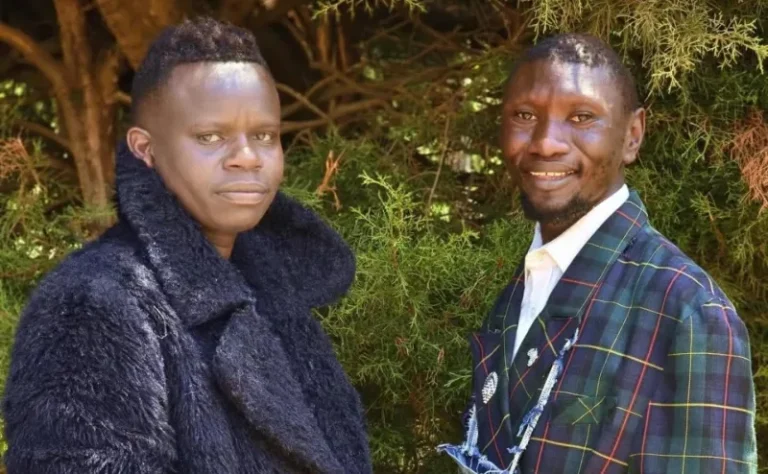




Fresh remarks by veteran Kenyan musician Colonel Mustafa about a past disagreement involving media personality Talia Oyando and the late musician E-Sir have sparked online discussion, reopening conversations about Kenya’s early 2000s entertainment scene.

Talia Oyando Pushes Back
Responding through Instagram, she denied there had ever been a romantic connection between them or any dispute involving E-Sir.
“There was nothing ever brewing anywhere. E-Sir had no beef with you,” she wrote.
She added that she had only viewed Mustafa as a colleague and identified the resurfaced photograph he shared as one taken during the Kora Awards period.
Oyando’s reaction quickly drew attention from fans familiar with Kenya’s music history. Many noted her connection to the legacy surrounding E-Sir, who remains one of the country’s most influential hip hop figures more than two decades after his death in 2003.

Mustafa Says He Was “Clearing the Air”
He maintained that his recollection of events was truthful and reflected the realities of their younger years in the entertainment industry.
“E-Sir and I had a disagreement over her, and as brothers and real men, we sat down and resolved it,” he said.
Mustafa also responded to critics who accused him of seeking publicity, arguing that outsiders did not fully understand the relationships and pressures within Kenya’s music scene at the time.
He insisted he was sharing behind-the-scenes experiences for fans interested in the untold history of local entertainment.