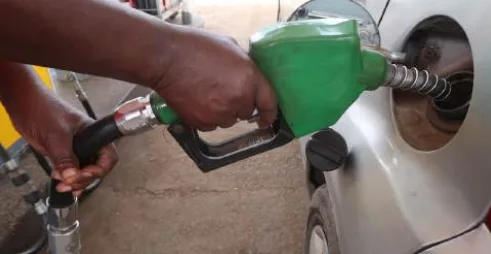



Kenya has enough fuel stocks to last at least one month despite the ongoing global supply disruptions, Energy and Petroleum Regulatory Authority (EPRA) Director of Petroleum and Gas Edward Kinyua has reassured.
Speaking during an interview on Citizen TV’s JKLive Show on Wednesday, Kinyua assured the public that the country has sufficient reserves of diesel and super petrol, with more vessels already lined up for discharge at the Port of Mombasa.
Kinyua disclosed that the country has fuel tankers currently stationed off the Coast of Mombasa awaiting discharge.
“We have enough stock to last us about, for diesel for example, we have 23 days’ stock. For super petrol, we have 28 days’ stock. That’s about 225 million litres,” said Kinyua.
“And that is not to mean that we don’t have vessels that are lined up waiting to discharge. In fact, as of today, we had to hold back a vessel because the system is full. So we have enough stock. We have enough tankers waiting because our planning normally takes 45 days…when this crisis had not begun…but because of the crisis, we decided to increase that planning period to three months.”
Kinyua attributed the stable supply situation to the government-to-government (G2G) fuel import arrangement, saying Kenya’s agreements with international oil companies have helped cushion the country against global shocks.
According to the EPRA director, suppliers are now sourcing fuel from alternative markets beyond the traditional European routes due to the ongoing global crisis.
“I think one of the biggest advantages we have under the current arrangement of supply is the government-to-government supply. Because we have signed contracts with international oil companies. They have an obligation to supply us,” he stated.
“They are looking at all possible means, including sourcing the actual product outside of the traditional sources. That is Europe…they’re also getting it out of India.”
Kinyua explained that suppliers are increasingly using smaller vessels through the Red Sea route, a move he said has pushed up delivery costs.
“When they load on the Red Sea side, they are loading smaller vessels. If you look at the economics of oil, when you load a smaller vessel, maybe 45,000 tonnes as opposed to 85,000 tonnes, you get a more expensive per litre delivery because the bigger vessel gives you economies of scale,” he explained.
“So they are also taking a hit. And that is what we are saying…we empathise with the situation that is there for our country because this is out of the government’s control and it’s not only affecting Kenya, it’s affecting the entire world.”
Kinyua also defended the recent fuel price review in which pump prices dropped by Ksh.10 per litre, noting that global fuel prices have risen sharply following the crisis, putting pressure on local pricing.
“We lowered two days ago…to Ksh.10 shillings. It’s a lot…If you look at the cost of products in the international market, before this crisis broke, a tonne of petrol was going at 686 dollars a tonne. Because of the crisis, it has climbed to 1,060 dollars. That’s like 54 per cent,” he stated.
“If you look at diesel, diesel and kerosene are the worst hit. A tonne of diesel was going for 637 dollars. It has climbed up to 1,300 dollars. That represents 118 per cent.”
The remarks by Kinyua follow countrywide concerns that the country was running short of fuel, which has led to a sharp increase of fuel prices.