


The impact of Nairobi’s recent protests against the rising cost of living has transcended local borders, unexpectedly capturing international attention.
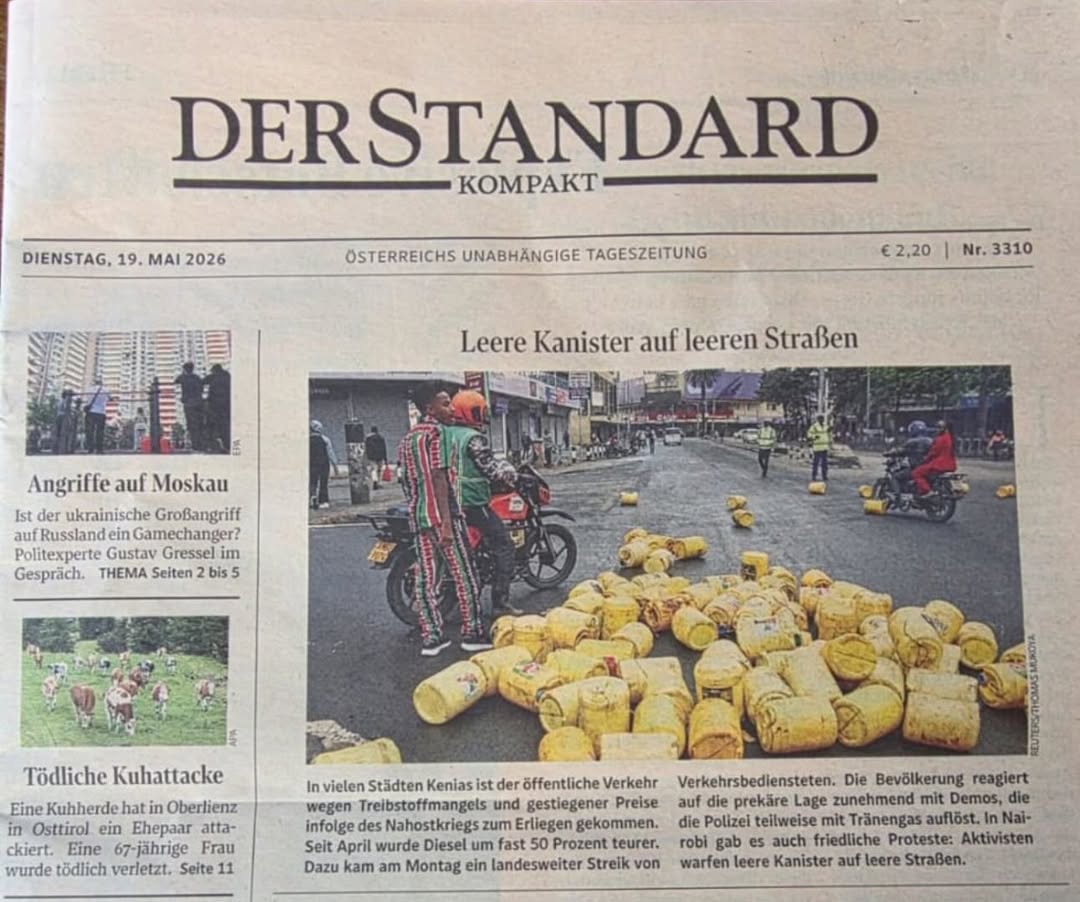
Activist Eric Omondi, who spearheaded a demonstration in the Nairobi Central Business District (CBD) on Monday featuring hundreds of empty plastic jerricans, has officially gained global prominence after his actions were featured on the front page of a major Austrian newspaper.
The image, which depicted the streets of Nairobi littered with empty yellow containers, became the lead story in the Tuesday, 19 May 2026 edition of Der Standard, a prominent Austrian daily.
The publication, under the headline “Leere Kanister auf leeren Straßen” (Empty canisters on empty streets), detailed the intensifying economic crisis currently gripping Kenya.
A Symbolic Message of Economic Despair
The protest, which saw Omondi and other activists place hundreds of empty jerricans across city thoroughfares, was designed as a visual metaphor for the “emptied” pockets of the Kenyan public.
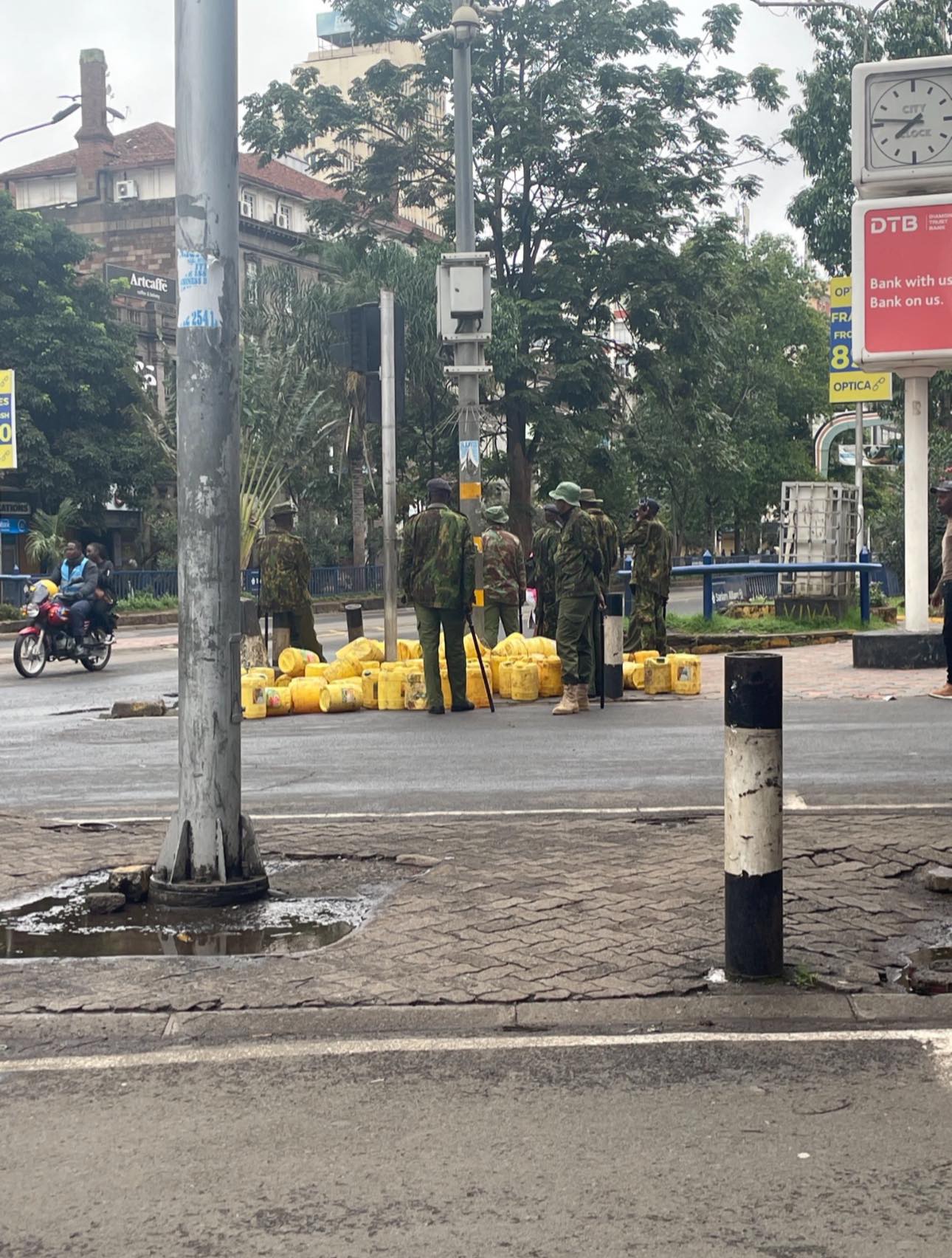
For many residents, these containers—usually associated with carrying water or fuel—now represent the harsh reality of household budgets that have been depleted by soaring inflation.
The protest specifically targeted the recent, steep adjustments in fuel pricing, which have had a cascading effect on the cost of basic commodities and public transport.
Omondi shared the recognition with his followers on Wednesday morning, highlighting the surreal nature of seeing a local street protest broadcast to an Austrian audience.
“Leo Kibuyu day imekua Front page Za Vienna huko Austria,” Eric Omondi captioned.
Global Attention on Kenyan Fuel Crisis
According to the report in Der Standard, the current unrest in Kenya is being closely monitored by international observers due to the severity of the fuel price surge.
The newspaper noted that diesel prices in Kenya have risen by nearly 50 percent since April, a development triggered in part by the ongoing economic fallout from the crisis in the Middle East.
The Austrian publication reported that public transport in many Kenyan cities has effectively come to a standstill. It further highlighted that the civilian population is increasingly responding with demonstrations, some of which have been met with police intervention, including the use of tear gas, as seen in Nairobi.
The Nairobi Unrests
The protest in the CBD is part of a broader, sustained campaign led by Omondi to challenge government economic policies. Activists have argued that the current tax regime and fuel pricing models are unsustainable for the average wage earner.
While the government has previously defended these pricing adjustments as necessary steps to stabilise the economy amidst global supply chain disruptions, Omondi’s “empty jerrican” campaign has succeeded in bringing the frustration of the street to the forefront of both local and now, European, political discourse.