
There was drama after a senior police officer attached to Nairobi’s Central police station was arrested over the alleged unlawful release of dozens of suspects held for public order offences.
The chief inspector of police who is the Officer Commanding Station (OCS) at Central police station, was arrested on Monday by his superiors and placed in police custody pending further action.
He spent his night in the cells at the Langata police station.
According to police authorities the officer is accused of abuse of office after allegedly releasing 64 suspects on May 18, without lawful authority.
The detainees had reportedly been arrested in connection with offences related to public order. This was after the group was arrested during the Monday’s protests against the high cost of fuel.
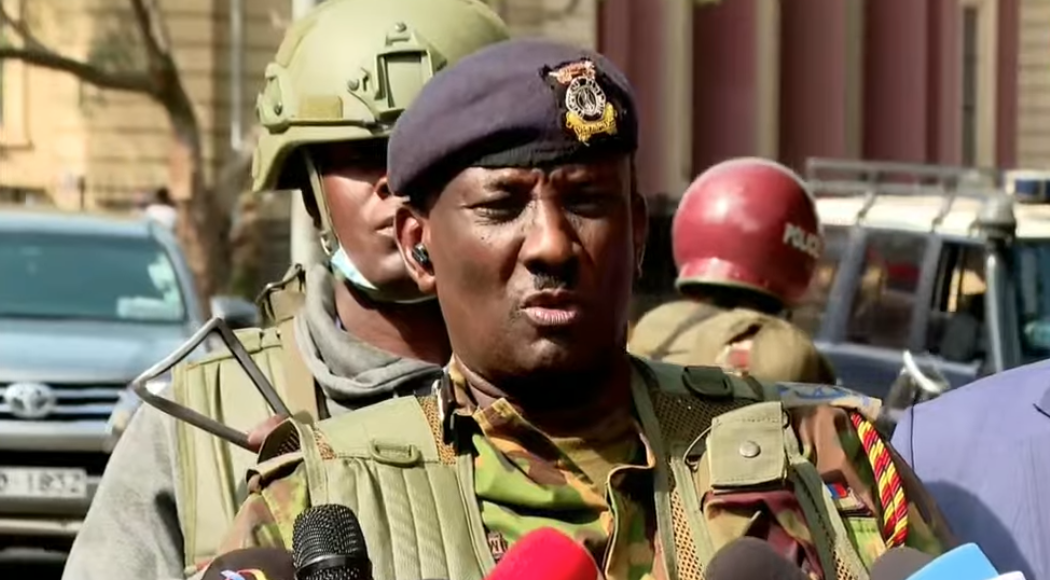
Nairobi police commander Issa Mohamud said the officer is under investigation for allegedly improperly conferring a benefit upon himself through the release of the suspects.
The matter is now being handled by senior police commanders as investigations continue, he said.
“We are handling the matter internally before we decide the way forward,” he said.
By police rules, OCSs are permitted to release suspects in custody.
Police said close to 1,000 people were arrested in the countrywide protests.
In Nairobi, more than 200 people were arrested in the chaos.
At least four people were killed while more than 30 others sustained injuries during the unrest.
Police said at least four vehicles were burnt, others damaged and property looted in the chaos.
The strike continued on Tuesday with public transport players withdrawing their services.
Interior Cabinet Secretary Kipchumba Murkomen accused political actors of hijacking protests over rising fuel prices, saying criminal gangs were mobilised to spread violence, loot property and intimidate government supporters.
Murkomen said the government respected the constitutional right to protest but condemned what he described as organised lawlessness that disrupted transport and businesses across the country.
He addressed the press at his office in Nairobi.
He linked the unrest to the global fuel crisis triggered by the ongoing conflict involving the US, Israel, and Iran, saying the closure of the Strait of Hormuz had sharply increased shipping and insurance costs, leading to higher fuel prices locally.
“Looting, violence, blocking roads, and vandalising public and private property can in no way bring down the prices,” Murkomen said.
Murkomen, however, claimed the protests had been infiltrated by “rogue politicians” sponsoring criminal activities targeting government projects and leaders allied to the Kenya Kwanza administration.
He cited the looting of Khetia supermarkets allegedly linked to a pro-government MP, the burning of a UDA office in Wote, Makueni county, and the torching of two trucks at the Rironi-Mau Summit road project as evidence of what he termed a coordinated campaign to spread fear.
The Interior CS also referenced the death of gospel musician Rachel Wandeto, who succumbed to injuries after an attack in Nairobi, alleging that inflammatory political rhetoric was fueling intolerance and violence.
“We are witnessing a clear scheme where a section of the political class is making incendiary statements to fan intolerance and ethnic bigotry,” he said.
Murkomen warned that organisers of the demonstrations and those behind the violence would face the full force of the law, adding that four people were killed while more than 30 others sustained injuries during the unrest.
“It is quite unfortunate that there are politicians in this country who measure the success of opposition to the government by the number of innocent lives lost,” he said.
He further warned leaders accused of profiling Kenyans based on political affiliation that they would be held personally responsible for lives lost and property destroyed.