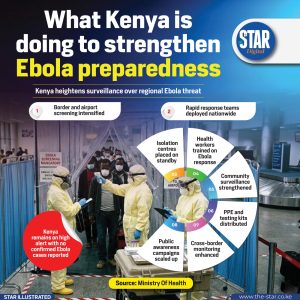



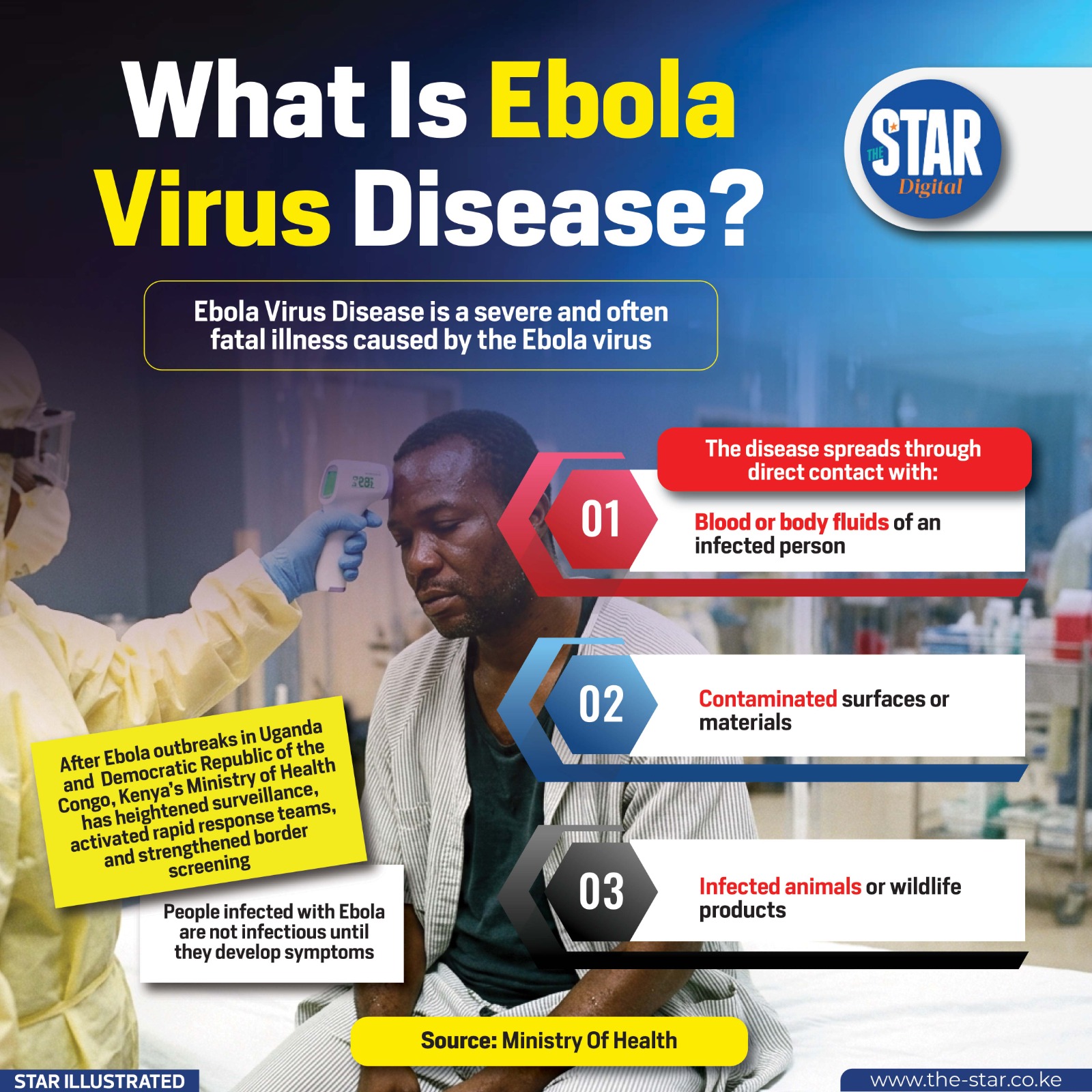
Ebola is a rare but severe illness caused by a virus that affects humans and other primates.
According to the World Health Organization, the disease is often fatal if not treated early.
Ebola spreads through direct contact with the blood, bodily fluids, or contaminated surfaces linked to an infected person or animal.
Symptoms usually appear suddenly and may include fever, fatigue, headache, sore throat, muscle pain, vomiting, diarrhoea and, in some cases, internal or external bleeding.
The incubation period ranges from two to 21 days.
WHO says the average fatality rate for Ebola is about 50%, although it has varied in past outbreaks.
The disease was first identified in 1976 near the Ebola River in the Democratic Republic of Congo.
Health experts stress that early treatment, supportive care, vaccination and strict infection prevention measures are key to controlling outbreaks and improving survival rates.