



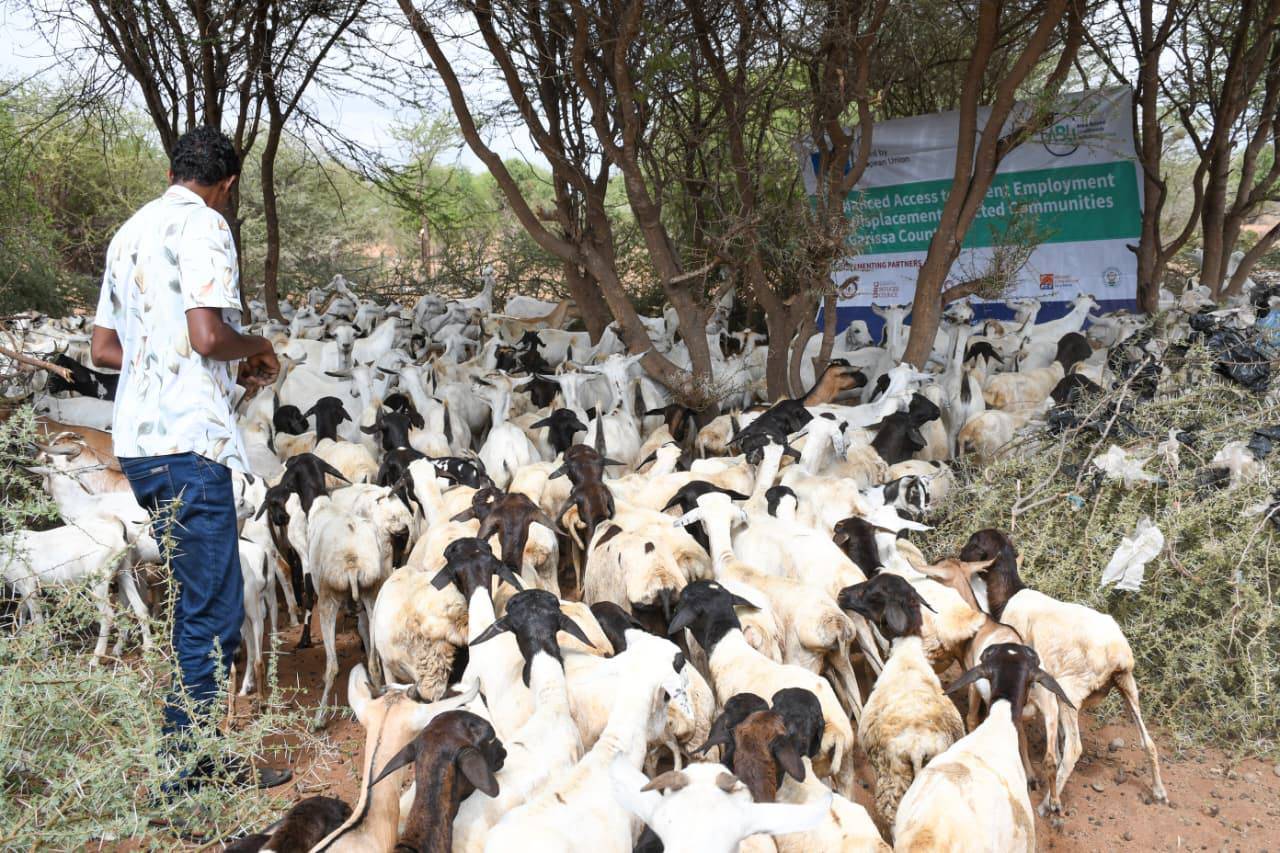
Wajir county on Saturday launched a week-long livestock vaccination campaign targeting more than 250,000 animals.
The initiative is an effort to curb the spread of deadly livestock diseases and protect pastoral livelihoods in the drought-prone county.
County officials said the campaign will focus on vaccinating more than 200,000 sheep and goats against Peste des Petits Ruminants (PPR) and Contagious Caprine Pleuropneumonia (CCPP), alongside 50,000 cattle against Foot and Mouth Disease (FMD) across all six sub-counties.
The exercise comes at a time when livestock-dependent communities in Wajir continue to face recurring climate shocks, disease outbreaks and economic hardship linked to declining livestock productivity.
Speaking during the launch, Livestock and Agriculture executive Farah Saman said the programme forms part of the administration’s broader strategy to strengthen animal health systems and cushion pastoralist households whose livelihoods largely depend on livestock.
“Today marks a significant milestone for Wajir as we officially launch this large-scale livestock vaccination exercise, an initiative that speaks directly to the heart of our economy, our culture and our way of life,” Saman said.
County veterinary teams will be deployed across the wards to ensure wider coverage and provide on-site animal health services.
Under the subsidised E-Voucher programme, livestock owners will pay Sh50 per head of cattle for FMD vaccination and Sh3 per sheep or goat for PPR vaccination, while other vaccines, deworming services and treatment drugs will be offered for free.
The county government said the integrated exercise will also include treatment for weak and sick animals, with mobile teams expected to cover remote grazing zones and settlements across the expansive county.
The campaign is being implemented through a partnership between the county, the Frontier Counties Development Council, the national government and development partners under the Livestock Sector Strengthening Programme and the Food Systems Resilience Project.
Abdi Hussein, a pastoralist in Dadaab, welcomed the exercise, noting that it will go a long way in protecting livestock from major diseases, improving animal health, enhancing productivity and strengthening the economic stability of their communities.
“Healthy animals mean better market value, increased milk and meat production, and improved livelihoods for our pastoralist families,” he said.