


Thousands of Kenyan women could soon benefit from faster breast cancer diagnosis and treatment after a Sh650 million ($5 million) grant was awarded to strengthen the country’s cancer care system and cut deadly delays.
The grant secured by the Indiana University Melvin and Bren Simon Comprehensive Cancer Center from The Pfizer Foundation will support breast cancer care in Kenya over the next three years.
Dr Patrick Loehrer, a lead investigator in the project, said the grant presents a major opportunity to address these challenges.
“Working with our Kenyan colleagues, we are strengthening systems that improve survival. This investment allows us to accelerate progress while also generating lessons that can improve care globally,” he said this in a statement published on the Newswise website.
The funding is part of The Pfizer Foundation’s global cancer initiative aimed at reducing disparities in cancer outcomes between high-income and low- and middle-income countries. Loehrer said similar programmes have already been rolled out in countries such as Rwanda, Ghana and Tanzania.
He said a key focus of the Kenya project will be reducing delays in diagnosis, which is one of the biggest contributors to high mortality.
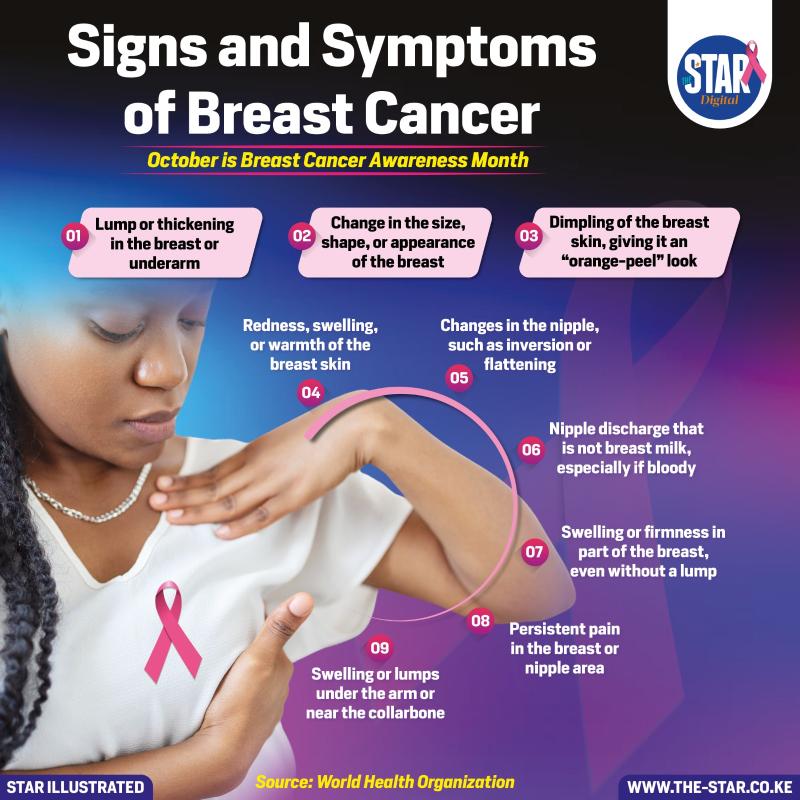
According to the World Health Organization, breast cancer is the most common cancer in sub-Saharan Africa, with survival rates significantly lower than in high-income countries due to late diagnosis and limited access to treatment.
Data from the Ministry of Health and global cancer observatories indicate that thousands of new breast cancer cases are diagnosed each year, with many women presenting at advanced stages when treatment is less effective.
He said the programme will introduce digital pathology technologies to improve accuracy and speed in diagnosing cancer.
“It will also strengthen tumour registries and support biobanking, which helps store samples for research and future treatment advancements,” Loehrer said.
“In addition, the initiative will expand ongoing efforts that include clinical breast examinations, access to ultrasound services, and patient navigation systems that guide patients through diagnosis and treatment.”
Dr Adrian Gardner, another principal investigator, said while Kenya has made progress in expanding cancer services, gaps remain.
“Too many women are still diagnosed at advanced stages. This investment can help reduce breast cancer deaths for generations to come,” he said.
The project will also place strong emphasis on community engagement, recognising that awareness and early action are critical in the fight against cancer.
Community health promoters will be trained to educate the public, while awareness campaigns will aim to reduce stigma and encourage women to seek screening and treatment early.
Dr Jeremiah Laktabai of Moi University said building trust within communities is key to improving outcomes.
“When women understand that breast cancer can be treated, they are more likely to come forward early and remain in care. This partnership strengthens our ability to reach women where they are,” he said.
The funding will be implemented through the Academic Model Providing Access to Healthcare (AMPATH) partnership, which brings together Moi University, the Moi Teaching and Referral Hospital (MTRH) and global health institutions in the US.
The programme will also support the creation of a national network of oncology centres of excellence, led by Moi University and MTRH. The network will help standardise treatment guidelines, expand expert consultations across counties and improve coordination of care.
Dr Loice Sitienei, a breast radiologist involved in the project, said the goal is to ensure more women receive quality care closer to home.
“Kenya has the expertise and commitment to transform breast cancer outcomes. By coordinating screening, diagnosis and treatment, we can ensure more women access timely and effective care,” she said.