



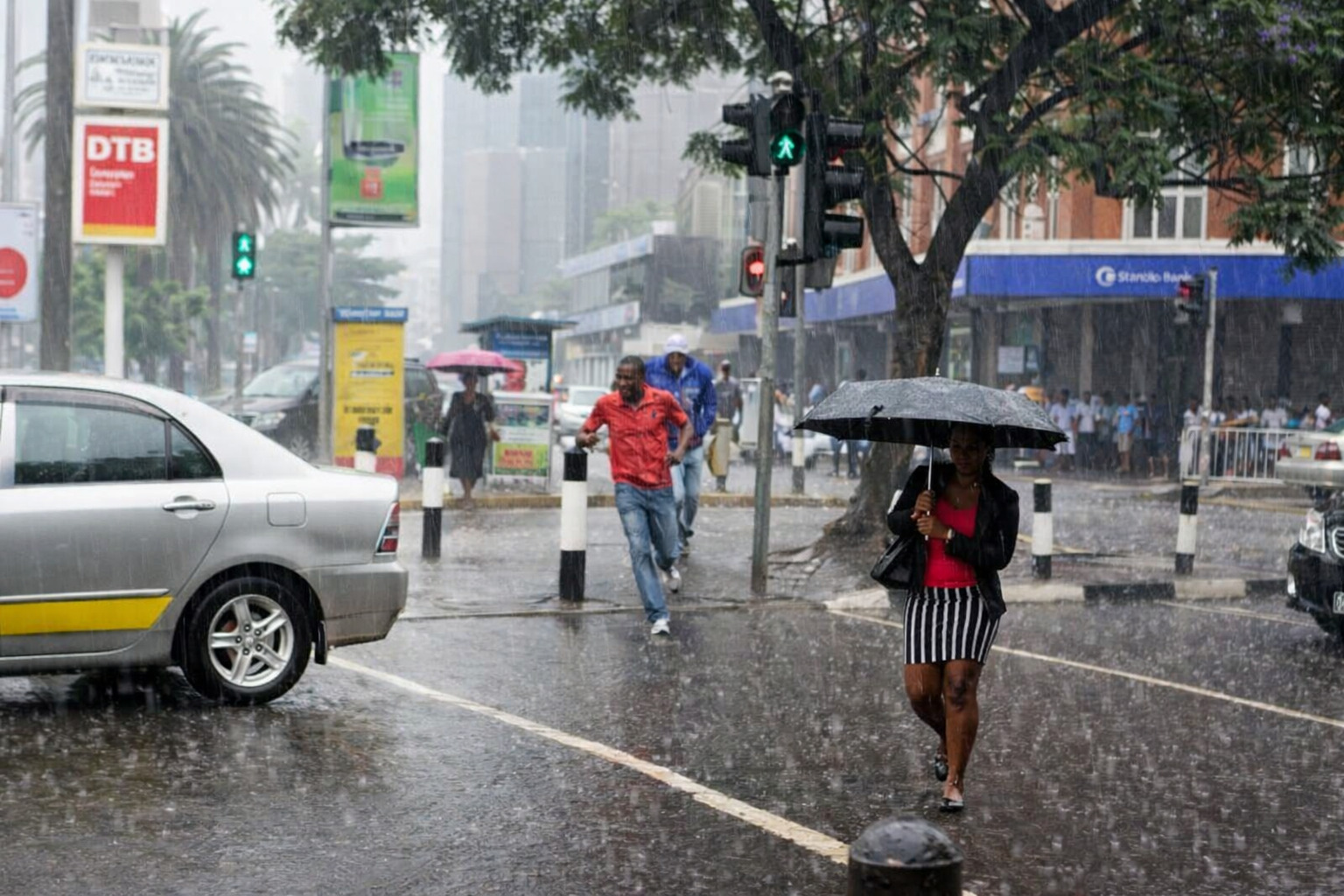
The Kenya Meteorological Department has projected a mixed but potentially intense rainfall pattern for April, warning of heightened flood risks in several parts of the country even as some regions brace for below-average precipitation.
In its latest climate outlook for the March–April–May long rains season, the agency indicates that most regions will experience near-average rainfall, though distribution will vary significantly geographically and over time.
The outlook follows a notably wet March that marked the onset of the long rains season, with above-normal rainfall recorded across most parts of the country.
The Highlands West of the Rift Valley, Lake Victoria Basin, Nairobi and sections of the Southeastern Lowlands began receiving rains as early as the second week of February, with the rest of the country recording onset between the second and third weeks of March.
The March rains were characterised by intense storm events, with several areas recording heavy downpours exceeding 100mm within 24 hours.
In Nairobi, for instance, the highest rainfall was 160mm recorded on Friday, March 6, resulting in catastrophic flooding that swept across the city, destroying buildings, vehicles and causing fatalities, with the national death toll standing at 110 as of April 1.
The April forecast notes a temporal shift in rainfall intensity, with subdued conditions anticipated in the first half before a marked increase towards the end of the month.
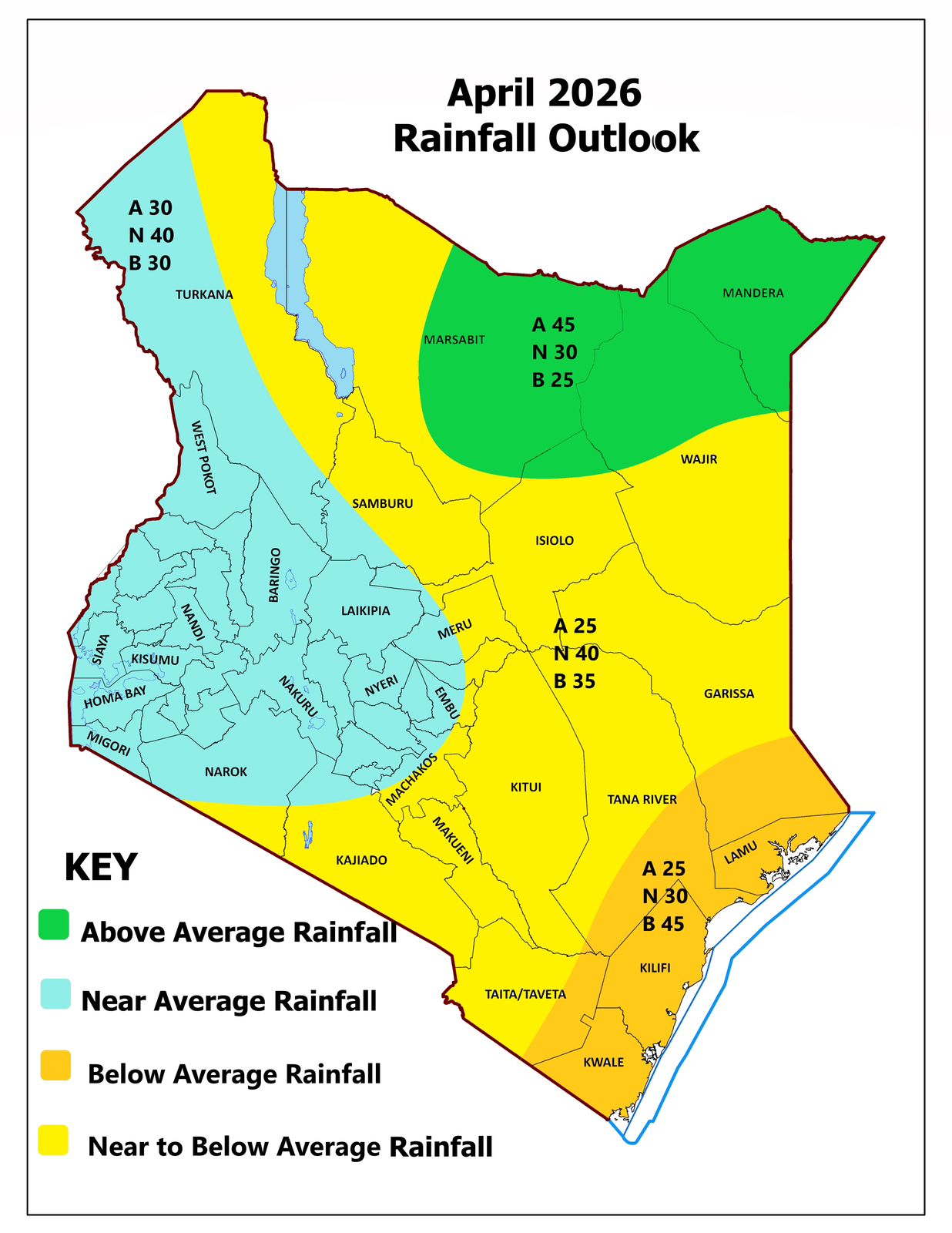
The outlook projects that the Highlands East and West of the Rift Valley, the Lake Victoria Basin, and much of the Rift Valley region are likely to receive near-normal rainfall, with similar conditions expected across parts of Northwestern Kenya.
However, above-average rainfall is forecast in sections of Northeastern Kenya, particularly northern Marsabit, Wajir and Mandera counties, raising the likelihood of flash floods in these typically arid zones.
In contrast, the Southeastern Lowlands are expected to record near- to below-average rainfall, with isolated areas in the Highlands East of the Rift Valley and parts of northern Kenya also likely to experience suppressed precipitation.
The Coast is forecast to remain largely dry, with below-average rainfall expected throughout the month.
Temperature projections point to warmer-than-average conditions along the coastal strip, the Northeastern and Northwestern regions, a pattern that could exacerbate moisture stress in already dry areas.
Meanwhile, cooler conditions are expected in the Highlands, the Lake Victoria Basin and the Rift Valley.
In view of the adverse weather projections in some regions, the Kenya Meteorological Department has issued a series of advisories targeting farmers and communities in vulnerable zones.
In high-potential agricultural areas, farmers are urged to reinforce drainage systems to mitigate waterlogging, which could damage crops during periods of intense rainfall.
Communities in flood-prone regions have been advised to clear drainage channels and remain vigilant, particularly near rivers and low-lying areas where flash floods may occur.
The risk of soil erosion and landslides has also been flagged, especially in areas that may experience heavy downpours.
In arid and semi-arid regions, including the Southeastern lowlands and the Coast, residents are encouraged to prioritise water harvesting and adopt efficient moisture management practices to cope with the expected rainfall deficits.
The April outlook details what has increasingly characterised Kenya’s seasonal weather pattern, with Kenya Met urging the public to stay updated through regular forecasts to better manage emerging risks.