


The government plans to plant at least one million trees in Vihiga as part of this year’s International Day of Forests commemoration.
Kenya will on Saturday mark the day at Maragoli Hills, Vihiga county.
Environment CS Deborah Barasa said the day will also be marked across the country, in a calculated move aimed at enhancing Kenya’s restoration efforts.
“Currently it is the long rains season and tree-growing activities are taking place across the country. We have put plans in place to grow one million seedlings in Vihiga this week; 250,000 will be planted around Maragoli Hills and 750,000 seedlings in schools, hospitals and homes as agroforestry,” Barasa said.
The UN General Assembly proclaimed March 21 the International Day of Forests in 2012, and it helps to raise awareness of the importance of all types of forests.
On each International Day of Forests, countries are encouraged to undertake local, national and international efforts to organise activities involving forests and trees, such as tree planting campaigns.
This year’s International Day of Forests will be themed; ‘Forests and Economies’.
Barasa said the theme is crucial to the country because forests are key drivers of economic growth, livelihoods and environmental sustainability.
She said the forestry sector contributes conservatively an estimated 3.6 per cent of GDP, supporting millions of people through timber, fuelwood, non-timber products and emerging value chains, while also underpinning critical sectors such as agriculture, water, energy and tourism.
“Forests play a vital role in water catchment protection, climate regulation and soil conservation, which are essential for economic stability,” the CS said.
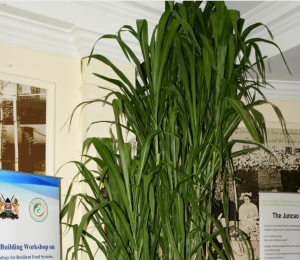
She said the 15 billion Tree Growing Programme, along with other strategies developed by the Forestry department—such as commercial forestry, national bamboo, and agroforestry—presents opportunities for green jobs, carbon financing and sustainable enterprises.
“Thus, sustainably managing and restoring forests is central to Kenya’s transition to a resilient and inclusive green economy,” she added.
Barasa said the activities undertaken during the commemoration of the International Day of Forests will directly contribute to the 15 billion tree-growing programme by mobilising nationwide participation, raising awareness and accelerating tree planting and restoration efforts.
She said all tree-growing activities carried out during this period will be documented through the Jaza Miti app, enabling real-time tracking, accountability and monitoring of progress towards national targets.
In addition, the celebrations provide a platform for stakeholder engagement, partnerships and dissemination of best practices, while encouraging individuals, institutions and communities to not only plant trees but also nurture them to maturity, thereby enhancing survival rates and long-term impact.
Barasa said measures will be put in place to ensure trees grown during the event survive.
The CS said the Maragoli Hills community forest associations (CFA), together with partners such as Earthlungs, will take up the responsibility of tending the seedlings and continue the monitoring as well as setting up the beekeeping and other livelihood support ventures to incentivise communities.
The CS also appealed to Kenyans to take responsibility for growing and protecting trees as a national duty.
“Plant a tree, nurture it to maturity and recognise that tree growing is not only an environmental action but also an opportunity for income and wealth creation through timber, fruits, carbon credits and other forest products,” she said.
“Whether you are a farmer, student, business owner, or public servant, your contribution matters. Together, through collective action, we can restore our landscapes, generate revenue, create jobs, strengthen our economy, and secure a healthier, more resilient Kenya.”
Barasa said forests in the country play a critical role in supporting key sectors of the economy.
In agriculture, she says, forests enhance soil fertility, regulate microclimates and support pollination, thereby improving crop productivity.
In the energy sector, forests provide a major source of biomass energy, including firewood and charcoal, which are widely used by households and industries.
In tourism, forest ecosystems attract visitors through biodiversity, scenic landscapes and wildlife habitats, contributing significantly to revenue and employment.
Additionally, forests are vital for water security, as they protect water catchment areas, regulate river flows, reduce soil erosion and ensure a consistent supply of clean water for domestic use, irrigation and hydropower generation.
Despite their crucial roles, the CS said the full economic value of forest resources has historically been underestimated.
“For a long time, the contribution of the forestry sector has largely been measured through narrow indicators such as logging, overlooking the broader ecosystem services and economic benefits that forests provide,” she said.
“To address this gap, the State Department for Forestry, through collaboration with the Kenya National Bureau of Statistics is advancing the development of forest accounts under the Natural Capital Accounting framework.”
Barasa said the initiative seeks to comprehensively value forestry and other natural resources by capturing their contributions to livelihoods, environmental sustainability and the national economy,.
The CS said a natural capital accounting process in the forest sector has been undertaken, bringing together key stakeholders, data systems, and methodologies to better estimate and quantify these contributions.
She said the findings, which will be shared with the public, will highlight the true value of forests across sectors, including agriculture (through soil fertility and climate regulation), energy (through biomass resources), tourism (through biodiversity and landscapes), and water security (through catchment protection).
On the 15 billion tree growing agenda, Barasa said Kenya is drawing lessons from several countries that have successfully implemented large-scale restoration and afforestation programmes.
Notably, countries such as Ethiopia, which has led massive national tree planting campaigns; China, through its extensive afforestation initiatives like the Great Green Wall; and India, known for large community-driven tree planting efforts, provide valuable experience in scaling up restoration.
Additionally, countries like Rwanda and South Korea offer important lessons in landscape restoration, policy integration and community participation.
These experiences are helping Kenya strengthen its strategies on mobilisation, monitoring, technology use and sustainable forest management.
Barasa said deliberate steps are being taken by the ministry to reduce reliance on imports such as toothpicks, beds, and other wood products by strengthening local production and value chains.
“Through stakeholder engagement forums, the ministry has developed key strategies, including the Commercial Forestry Strategy and the National Bamboo Development Strategy, which aim to expand sustainable raw material supply and promote local manufacturing,” she said.
The CS said these strategies focus on increasing tree growing on farms and plantations, supporting bamboo as an alternative industrial material and encouraging investment in wood processing industries.
“Together, these efforts are intended to boost domestic production, create jobs and enhance Kenya’s capacity to meet its own demand for wood-based products,” she said.
Barasa said the state has set a target of growing 500 million seedlings during this planting season.
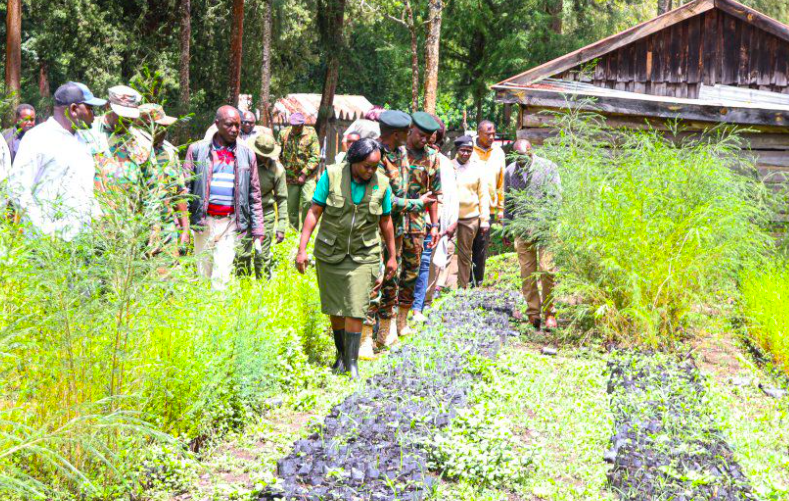
She said her ministry, in collaboration with the NYS and the Housing department, has established mega nurseries across the country to ensure a steady supply of quality seedlings.
Barasa said her ministry, through KFS and its stakeholders, has already secured sufficient seedlings to meet this target.