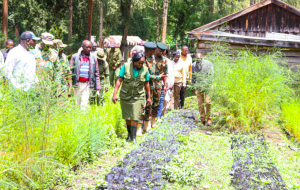



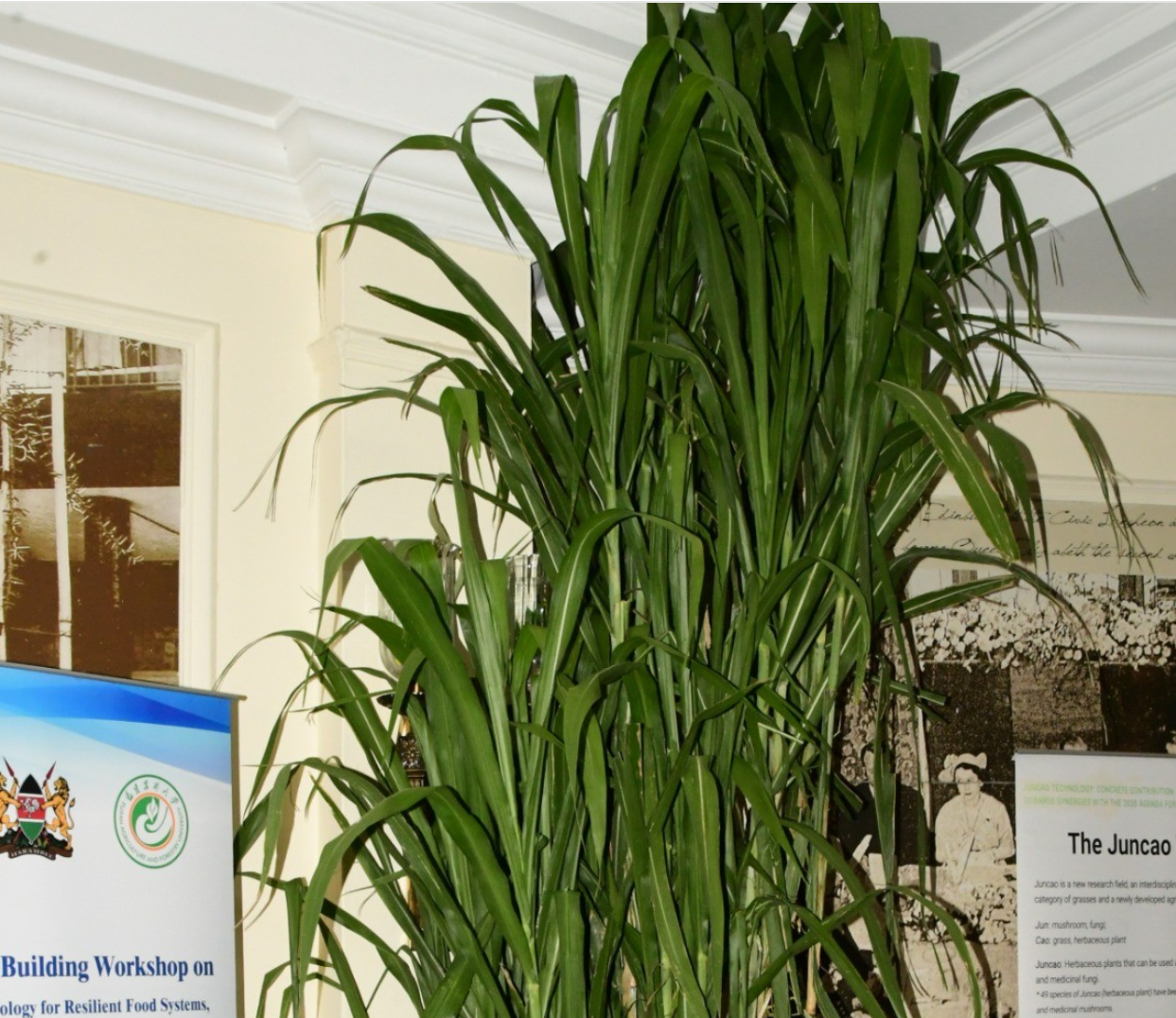
The government is promoting Juncao grass technology, which is not only attractive for livestock production but also useful for supporting feed availability during dry periods.
Juncao grass, a technology from China, is a fast-growing, high-yield grass that offers a strategic solution to challenges in semi-arid and drought-prone regions.
It can be produced in harsh conditions, provides nutritious fodder for dairy and beef livestock and requires low inputs compared to traditional pasture.
Speaking during a national capacity-building workshop in Nairobi on promoting Juncao technology, State Department for Livestock Development PS Jonathan Mueke said a major technical constraint facing the livestock sector is the availability of adequate, affordable and nutritionally balanced animal feeds.
“We face low productivity of existing fodder varieties, limited fodder conservation practices such as silage and hay production,” he said.
We also face high costs of feed ingredients used in commercial feed formulation and pressure on rangelands due to increasing livestock populations,” he added.
In a speech read on his behalf by the Director of Livestock Production Bishar Elmi, the PS noted that Kenya must continue to explore alternative and climate-resilient fodder production technologies to supplement natural pastures and conventional fodder crops.
Having been introduced in Kenya five years ago through private efforts, Juncao technology has shown significant promise in studies conducted to test its suitability for livestock feeding systems.
The grass’s high crude protein content has supported its adoption across a wide range of ecological areas, from high rainfall regions to arid areas such as Wajir county.
On the sidelines of the workshop, Elmi acknowledged that animal feed, particularly in semi-arid areas, has been a challenge, with a 60 per cent feed deficit in the country.
He said Juncao technology is key to increasing meat and milk production.
“Our annual meat demand is 600 tonnes, but production stands at 495 tonnes. One reason we cannot meet demand is the lack of animal feed,” he said.
He added that research institutions have confirmed the grass’s crude protein content is between 13 and 16 per cent, making it a valuable addition to Kenya’s livestock sector.
“We will set aside two acres of land per ward to multiply Juncao grass for animals. If we propagate it widely, we can fill the feed deficit and complement national feed production,” Elmi said.
Regarding the dairy sector, the ministry will contract farmers to produce raw materials for compound feed manufacture. This strategy supports the national target of producing 10 billion litres of milk by 2027, set by the President.
To ensure sufficient feed production at a small scale, the government is providing farmers with subsidised Juncao cuttings to propagate and sell at an affordable price.
Over 10 million Kenyans rely on livestock for their livelihood. For sustainable livestock transformation, it is essential to provide adequate feed alongside disease control and breed improvement.
The government has assessed and mapped areas where Juncao has thrived, including Baringo, Nakuru and Kajiado counties, where some farmers are producing pellets, conserving the grass and selling it to others.
The UN resident coordinator Stephen Jackson said the workshop introduces technology while creating a space for integrating policy, science and field experience.
“This workshop matters. It deepens national capacity to assess, adapt and potentially scale a solution that may hold real promise for Kenya’s future amid both crisis and opportunity,” he added.
Jackson noted that agriculture remains the backbone of the Kenyan economy, central to household incomes, national food security and the country’s export future.
Technologies such as Juncao can increase production, build resilience and support farmer systems under stress.
“This technology can support more sustainable farming systems while contributing to environmental restoration and climate mitigation,” he said.
“It demonstrates the interconnection between food production, livestock development, land restoration, climate resilience and rural incomes.”
Jackson, whose five-year term is ending and who will move to China in the same capacity, said he will continue to bridge partnerships around Juncao and other technologies between China and Kenya.
Livestock fodder is often the first casualty of drought in Kenya. A drought-resistant alternative like Juncao, produced at scale, could transform productivity in affordable and sustainable ways.
Vice director of the China National Engineering Research Centre of Juncao Prof Lin Dong-Mei said “Apart from Juncao grass, we promote many varieties in China and other developing countries.”
“Globally, it is planted from temperate to tropical zones, producing 50 to 150 tonnes of fresh grass per hectare. With proper management, Kenya can expect 200 to 300 tons per hectare.”
Lin added that while the grass is easy to grow, high yields require good management. “You plant once and keep harvesting for many years.”
Chief Scientist and inventor of Juncao technology Dr Lin Zhanxi said with Kenya facing an annual feed deficit of 33 million tonnes, Giant Juncao is a high-quality forage.
It produces 150 tonnes of fresh grass per hectare each year.
“To close this gap, 220,000 hectares of Juncao are needed, which is only 2.1 per cent of Kenya’s idle hillsides and abandoned mining land. The math is simple and the solution is practical,” Zhanxi said.
Juncao grass’s first harvest takes about four months, with subsequent harvests every two months. Its protein content is 16–18 per cent, yielding 180–240 tonnes per acre, enough to feed 20 cows or 200 goats.
The three-day National Capacity Building workshop in Nairobi is running under the theme: “Promoting JUNCAO technology for resilient food systems, poverty eradication, and climate adaptation in Kenya.”