


In the world of motorsport, few spectacles ignite the senses quite like rallying.
It is a discipline where courage meets engineering brilliance, where man and machine are pushed to the absolute edge in a relentless duel against terrain, time and the unpredictable forces of nature.
And when the rally cars roar into life, their engines humming through the countryside, they send a surge of excitement through the hearts of fans, young and old alike.
Spectators line the dusty roadside corridors, waiting patiently for that fleeting moment when the machines flash past in a blur of colour and thunder, sometimes for only a few seconds, yet enough to leave a lasting memory.
It is a feeling almost impossible to capture in words, a powerful reminder of just how far human innovation and engineering mastery have come.
Among rallying’s many iconic events across the globe, none carries the mystique, the drama and the global pull of the legendary Safari Rally.
A proud Kenyan classic that has captivated motorsport enthusiasts both at home and abroad, the rally has grown into one of the most revered events in the sport, drawing millions upon millions of viewers around the world every year.
Unlike traditional fast-paced rallies where outright speed often dictates success, the Safari Rally stands apart as a brutal test of endurance and survival.
Here, drivers must conquer deep mud, choking clouds of “fesh-fesh” sand and unforgiving sharp rocks that threaten to shred tyres and suspension in an instant.
It is a rally that demands patience, strategy and adaptability rather than simply driving flat-out.
Adding to the challenge is Kenya’s famously unpredictable weather. In a matter of minutes, sun-baked tracks can transform into treacherous rivers of mud, turning the rally into a true battle against the elements.
The event unfolds against the breathtaking backdrop of Kenya’s Great Rift Valley, where rally cars snake through wildlife-rich landscapes, often producing unforgettable and sometimes dangerous moments as drivers navigate terrain shared with nature itself.
Beyond the competition, the Safari Rally has evolved into a vibrant celebration of culture, sport and community. Around the rally stages in Naivasha, the atmosphere is electric. Concerts, local cultural showcases and energetic spectator points transform the rally weekend into a festival-like gathering that draws fans from across the region and beyond.
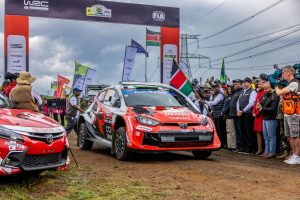
The introduction of a dedicated Rally Village for the 2025/2026 editions has further enhanced the experience, giving fans a rare opportunity to get up close with the drivers, teams and the powerful machines that define the World Rally Championship.
For this year’s Safari Rally, Kenya Tourism Board CEO June Chepkemei revealed that around 10,000 enthusiasts from across the region are expected to descend on Naivasha for the iconic spectacle.
Chepkemei noted that rally enthusiasts from Uganda, Tanzania, Rwanda, the Democratic Republic of Congo and Ethiopia are expected to join thousands of local and international spectators for this year’s edition of the legendary event.
“Our East African neighbours represent a vital and high-potential source market for Kenya. By integrating events like the WRC Safari Rally with diverse regional attractions such as Mombasa, we are creating compelling travel itineraries that cater to a broader range of interests. This strategic approach not only boosts visitor arrivals but also strengthens regional ties and promotes shared prosperity through tourism,” Chepkemei said.
The story of the Safari Rally stretches back more than seven decades. The event was first introduced in 1953 as the East African Coronation Safari, staged to commemorate the coronation of Queen Elizabeth II.
The inaugural edition ran from May 27 to June 1, 1953, traversing the rugged landscapes of Kenya, Uganda and Tanganyika (now Tanzania).
Two decades later, in 1973, the rally secured its place on the global stage when it officially became part of the World Rally Championship calendar.
For years, the Safari Rally stood proudly among the most prestigious rounds of the WRC before it disappeared from the championship after 2003 due to financial and organisational challenges.
Yet the absence only strengthened its legend.
After a 19-year hiatus, the beloved rally made a triumphant return to the WRC calendar in 2021, sparking jubilation among motorsport fans across the globe. The numbers that followed told a remarkable story.
Upon its return, the Safari Rally was reported to be the most-watched and followed round of the World Rally Championship in 50 years, attracting a staggering 128 million television viewers across 150 countries.
The momentum has only grown stronger. The 2025 edition shattered engagement records once again, drawing more than 400,000 spectators to rally stages across Kenya, the largest attendance since the event’s return in 2021.
Digital viewership impressions surged by an incredible 400 per cent, while global television audiences were projected to exceed 100 to 120 million viewers.
Once again, the legendary rally is here in Kenyan soil for the 2026 edition, ready to reignite that unique passion for motorsport.
Drivers from across the world, alongside Kenya’s finest rally stars, will push their machines to the absolute limit over the coming days as they attempt to tame the unforgiving Safari and claim one of motorsport’s most coveted prizes.
But conquering the Safari is far easier said than done.
Over the years, the rally has built a reputation for humbling even the greatest drivers, reminding them that in this contest, they are not just racing against rivals, but against nature itself, which more often than not has the final say.
Since the rally returned to the WRC calendar in 2021, one team has established a commanding grip on Kenyan soil: Toyota Gazoo Racing.
French rally legend Sebastien Ogier ignited the team’s dominance in 2021, clocking a cumulative time of 3:18:11.3 to capture the first title of the modern Safari era.
He passed the baton to Finnish prodigy Kalle Rovanpera in 2022 before reclaiming the crown once again in 2023. The pendulum continued to swing between the two Toyota stars, with Rovanpera returning to the top step of the podium in 2024.
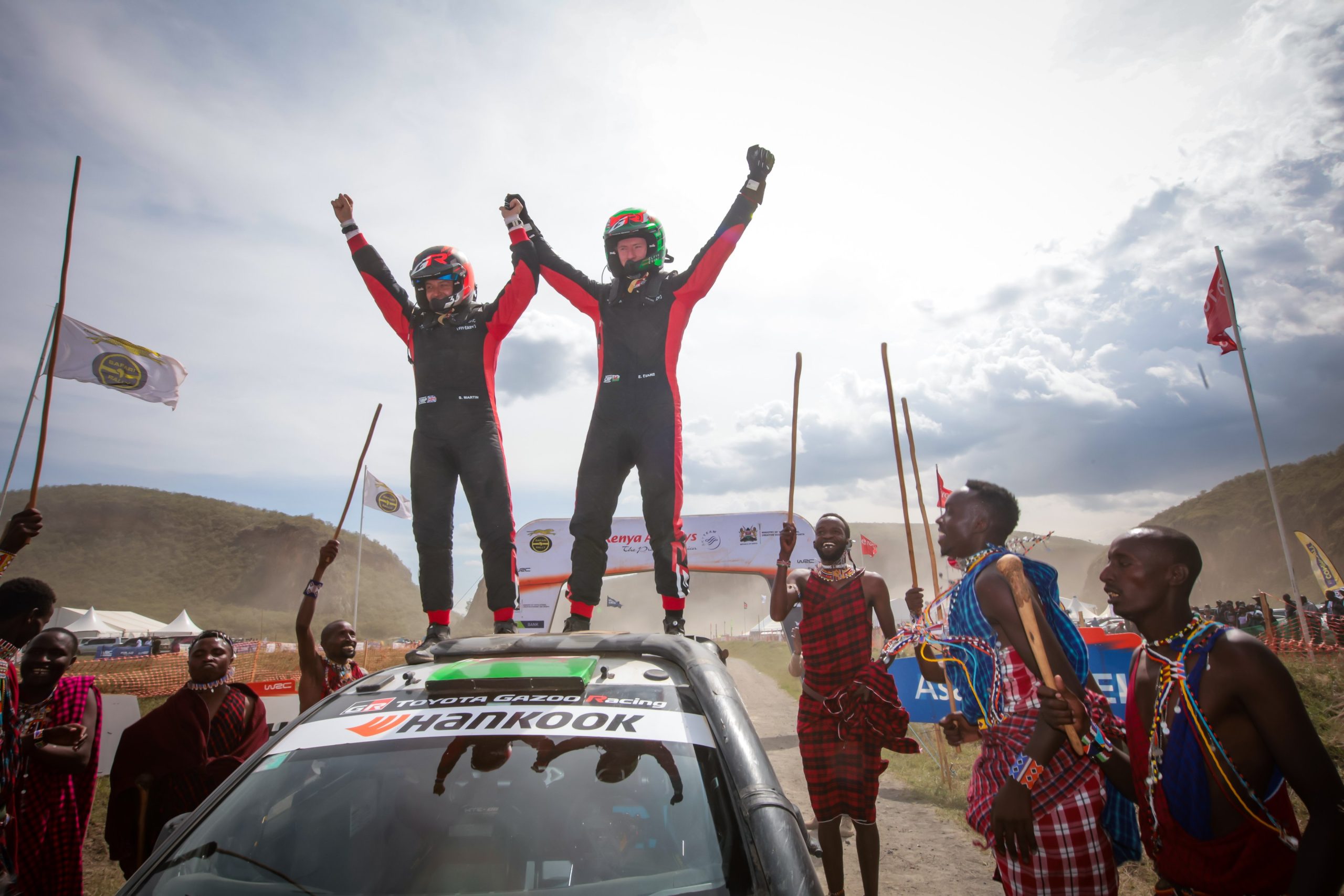
However, the 2025 edition brought a new champion to the fore as Briton Elfyn Evans powered to his maiden Safari Rally victory with a total time of 4:20:03.8, finishing ahead of Hyundai duo Ott Tanak (4:21:13.7) and Thierry Neuville (4:23:35.8).
This year, Toyota has once again assembled a formidable driver lineup.
Defending champion Evans will lead the charge alongside nine-time world champion Ogier, 2025 WRC2 champion Oliver Solberg of Sweden, Japan’s Takamoto Katsuta and rising Finnish talent Sami Pajari.
Standing firmly in their path is a determined Hyundai squad spearheaded by 2024 world champion Neuville of Belgium, French driver Adrien Fourmaux and Finland’s Esapekka Lappi.
Following the ceremonial flag-off yesterday at the Naivasha Wildlife Research and Training Institute, drivers tackled the opening two stages at Camp Moran (24.35km) and Mzabibu (8.86km).
Today, the rally intensifies as competitors return to Camp Moran before charging through Loldia 1 (18.95km), KenGen Geothermal 1 (13.16km), Kedong 1 (13.79km), Kedong 2, KenGen Geothermal 2, Loldia 2, and eventually closing the day with another pass through Mzabibu.
With the 2026 Safari Rally now fully underway, Evans arrives in Kenya as one of the strongest favourites to defend his crown following a commanding start to the WRC season.
The Welshman has been in scintillating form during the opening rounds of the championship. At the Rally Monte-Carlo in Monaco, Evans posted a cumulative time of 4:25:50.8 to secure second place as Toyota Gazoo Racing locked out the podium.
Solberg stormed to victory in 4:24:59.0 while eight-time world champion Ogier completed the Toyota sweep with a time of 4:27:01.2. Evans then stepped up another gear in Sweden, clinching victory with a time of 2:35:53.1 to orchestrate yet another Toyota-dominated podium.
Katsuta finished second in 2:36:07.4 while rising star Sami Pajari sealed third place in 2:36:39.1.
Those performances have propelled Evans to the summit of the 2026 WRC standings with 60 points, ahead of Solberg on 47, while Katsuta currently sits third with 30.
As the WRC caravan rolls into Kenya for the third round of the championship, Evans is eager to once again conquer the unforgiving Safari terrain in a bid to strengthen his championship campaign. “The championship is the ultimate goal. All we really need over the weekend is to have a strong performance,” Evans said.
However, the Welshman remains cautious of the unpredictable nature of one of the most punishing rounds on the calendar. “You can never be too confident, but of course we are here to aim as high as we can and deliver our best performance,” he added.
“The recce will be quite important to take note and get a lay of the land, but until then, it’s difficult to predict.”
Evans also pointed to the brutal nature of the Safari Rally, which makes it one of the toughest endurance tests in world motorsport. “Safari Rally is one of those events that is widely open. Many things can happen within the week,” he said. “You also need a little bit of luck to go through the Safari Rally week with no issues.”
Winning last year’s edition, he admits, remains one of the defining milestones of his career. “The Safari is one of the most iconic events on the calendar and being able to win it is quite special.”
His teammate, Pajari, is equally optimistic about his chances after finishing just outside the podium in last year’s Safari Rally edition with a total time of 4:27:22.5.
Having experienced the unforgiving Kenyan terrain for the first time, the young Finnish driver is hoping to mount a stronger challenge in his second Safari appearance. “Last year was my first time doing the Safari Rally. It was really exciting. I was happy to compete last year, I finished fourth.”
“For this year, I will try to have a little bit of pace. This is a tricky rally, you have to trust your speed to make sure you go through without any issues,” Pajari said.
“I will try to be more competitive this time and try to be closer to the front,” he added.
Toyota Gazoo Racing deputy team principal and four-time world champion Juha Kankkunen also expressed confidence in the team’s impressive record on Kenyan soil. “We have always had very good results here in Kenya for the past five years,” Kankkunen said. “It’s going to be definitely hard this year because of the rains, but I am sure our boys will do well anyway.”
Kankkunen, however, admitted that the team faced logistical challenges in the build-up to the rally. “We were struggling a bit before the rally to get our team spare parts and recce cars here on time, but now everything is fine.”
Beyond the international superstars, Kenya will also field a formidable lineup of local drivers eager to shine on home soil. Among them are rally legend Carl “Flash” Tundo, two-time African champion Karan Patel and reigning WRC3 Safari Rally champion Nikhil Sachania.
Also in the mix are last year’s ARC runner-up Samman Vohra, six-time Two-Wheel Drive national champion Leonardo Varese, Andrew Muiruri, Ishmael Azeli, Tinashe Gatimu, Pauline Sheghu, Jeremiah Wahome and Jasmeet Chana.
Patel, who will be piloting a Skoda Fabia alongside co-driver Tauseef Khan, believes they have what it takes to challenge for top honours among the Kenyan competitors.
“We hope we have what it takes to bring it to the top position among our fellow Kenyans,” he noted. The Kenyan driver also views the Safari Rally as an important stepping stone toward reclaiming the African championship title.
With a punishing 20-stage itinerary covering a competitive distance of 350.02 kilometres over four gruelling days, Patel knows that consistency will ultimately determine success. “We have 20 stages packed into four days. Consistency and smart driving will be key. We respect the level of competition in WRC2, but we are ready to give it our all on home soil.”
Meanwhile, Sachania is equally focused on defending his WRC3 title while ensuring the car survives the demanding rally. “We are aiming to defend our title this year. The competition is strong, and we know it won’t be easy,” Sachania said. “Above all, our primary objective is to complete the rally.”
Youngster Tinashe Gatimu will be relying on her Ford Fiesta R2 as she seeks to improve on last year’s performance. “Our plan remains more or less the same as last year; get to the finish line and then assess ourselves from there,” she said, mindful of Safari’s reputation for punishing even the bravest crews.
“This year, our target is just to improve on what we missed last year.”
For Jasmeet Chana, the ambition is clear. “As a Kenyan driver, my goal is to win my class; anything beyond that would be a bonus,” he said.
Sports Principal Secretary Elijah Mwangi believes the 2026 edition of the Safari Rally Kenya will once again cement the country’s place at the heart of global motorsport. “This year we expect an even bigger spectacle, making Kenya once again the centre of global motorsport excellence,” Mwangi said.
WRC Safari Rally CEO Charles Gacheru also urged fans planning to throng the rally stages to observe traffic regulations and prepare for unpredictable weather conditions. “I urge Kenyans to come out in large numbers, but let us obey traffic laws and be ready for the rains. Gumboots are advised,” he said.
There is also a strong cast of African drivers, including reigning African champion Yasin Nasser and Oscar Ntambi, as well as Queen Kalimpinya, Christian Kanangire and Jean Claude.