



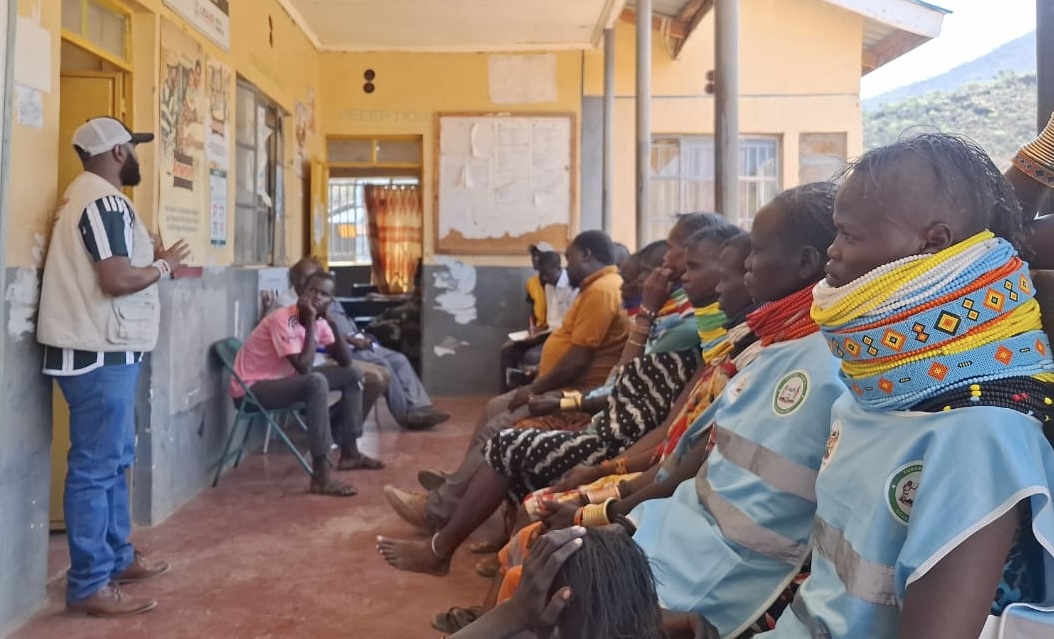
Turkana County has enhanced health services and disease surveillance at border points with Uganda, South Sudan, and Ethiopia.
The county is upgrading services at more than 20 hospitals located on the Kenyan side of the borders.
Through its Department of Health, the county conducted a Joint Support Supervision (JSS) exercise in Kibish and Turkana North subcounties to strengthen cross-border health preparedness.
The initiative is supported by the International Rescue Committee’s Core Group Partners’ Project.
A joint multi-sectoral team visited 14 out of 17 health facilities to assess service delivery, surveillance systems, and community health.
The supervision involved officers from the health, livestock, and environmental sectors to evaluate progress at facility and community levels.
County One Health coordinator Kipkorir Rotich said the exercise focused on community engagement, facility assessments, and strengthening cross-border coordination mechanisms.
“This is to ensure communities are better prepared to detect and respond to zoonotic and priority diseases,” Rotich said.
All 17 health facilities in Kibish subcounty, including Kaikor, were assessed. Health workers received mentorship and on-the-job training in disease surveillance, health messaging, preparedness planning, data management, and reporting.
Assistant Director of Medical Services Samuel Lokemer called on facility teams to be proactive and coordinate with community-centred teams for effective delivery of medical services.
County Disease Surveillance coordinator Absolom Kuya said weekly reporting rates now stand at 90 per cent, reflecting improved compliance.
Kibish subcounty Medical Officer of Health Jacob Nakuleu said the JSS also helped identify service delivery gaps using data from the Kenya Health Information System and findings from the One Health–Kimormor outreach conducted in December.
“Recent data show declines in immunisation coverage, antenatal care attendance and skilled deliveries in the last quarter, prompting renewed focus on outreach and follow-up,” Nakuleu said.
The county has enhanced immunisation services by strengthening cold chain infrastructure.
Six new solar-powered refrigerators were installed and others assessed for repair, achieving 100 per cent cold chain coverage across all 17 facilities in Kibish subcounty.
Despite these improvements, drought-related migration remains a key challenge.
Pastoralists make up approximately 60 per cent of Kibish’s population, with many families moving up to 100 kilometres in search of water and pasture.
This mobility has disrupted routine health services, particularly immunisation tracking, leading to increased defaulters and cases of malnutrition among children under five.
Nakuleu said health teams are conducting targeted outreaches to reach nomadic populations.