


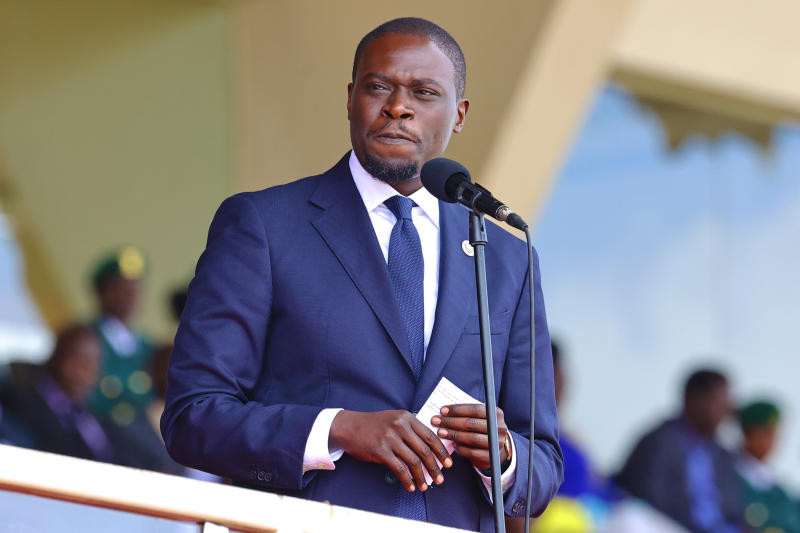
Nairobi Governor Johnson Sakaja has vowed not to resign following criticism after deadly floods in the city, insisting he is working to address challenges despite financial constraints.
The governor spoke after heavy rains on Friday caused severe flooding in several parts of Nairobi, leaving several people dead and exposing weaknesses in the city’s drainage and infrastructure systems.
The disaster sparked anger among residents, some of whom accused the county government of failing to implement effective measures to prevent flooding and improve basic services.
Responding to the criticism, Sakaja maintained that he remains committed to serving Nairobi residents and addressing the city’s challenges with the resources available.
“I am not resigning, I’m working,” Sakaja said.
“And every day, I’ll do my best given the limitations that we have as a city. Of course expectations are extremely higher, and I understand them, but I genuinely put myself out there to solve the problems with what I have,” he added.
The governor said part of the financial strain facing his administration comes from debts and stalled projects inherited from previous administrations.
According to Sakaja, his government is currently clearing long-standing obligations before fully rolling out some of its own development agenda.
“I am paying old debts from the first administration before even implementing mine, stalled projects from 2014,” he said.
Sakaja further explained that many of the county’s projects are being financed through locally generated revenue such as parking fees and land rates.
“I am doing all these based on what we pay for parking and land rates,” he said.
The governor also revealed that the equitable share allocated to counties by the national government largely goes toward paying salaries for county employees, leaving limited funds for development or operational needs.
“Equitable share only covers salaries. We have not looked at operations maintenance, we have not looked at fuel, buying vehicles, or building markets,” Sakaja noted.
He said the shortage of financial resources has slowed down several key projects across the city, including those aimed at expanding drainage infrastructure to mitigate flooding.
“All the projects that I am doing are moving slowly because of the challenge of finance. If we had resources, they would all be done,” he said.
Despite the challenges, Sakaja said the county government is aware of critical development needs across Nairobi and plans to address them as resources become available.
“We know where we need markets, we know where we need the drainage expanded, we know where we need more schools, we know where we need more stadia, but we need to finance it,” he said.
The governor’s remarks come as Nairobi continues to grapple with the aftermath of the floods, which disrupted transport, affected businesses and raised fresh concerns over the city’s preparedness for extreme weather events.