



Kenya loses an estimated Sh45 billion annually to Illegal, Unreported and Unregulated (IUU) fishing, the government has revealed.
Acting Director of Fisheries and Aquaculture at the State Department for the Blue Economy Joseph Mahongah warned that IUU fishing erodes tax revenue, undermines the legal fishing industry and weakens coastal economies.
“It remains an ever-present threat due to inadequate fiscal resources, limited technology and insufficient technical skills to combat the vice,” Mahongah said.
He also cited risks to food and national security, including job losses, resource depletion and declining revenue.
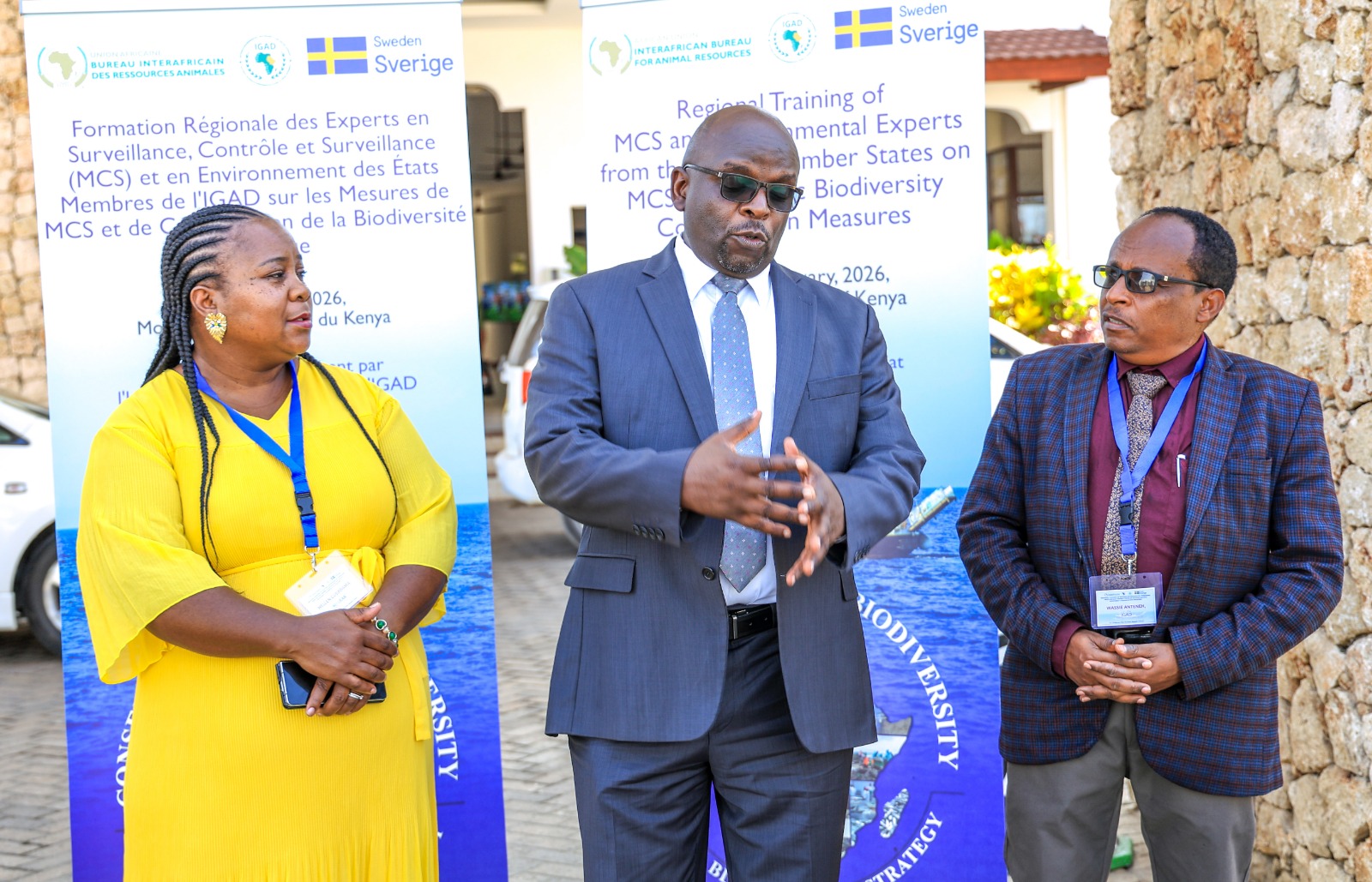
Mahongah spoke during the opening of a three-day expert training workshop on strengthening regional Monitoring, Control and Surveillance (MCS) systems to combat IUU fishing and protect aquatic biodiversity.
The workshop was organised by AU-IBAR in partnership with the Intergovernmental Authority on Development (IGAD) in Mombasa.
He stressed the need for IGAD member states to harmonise mitigation strategies, noting that the challenges are transboundary.
Kenya has strengthened its MCS frameworks, including through the Fisheries Management and Development Act, which established the Kenya Fisheries Service.
The Kenya Coast Guard Service has reinforced maritime protection.
Investments in vessel monitoring systems and onboard observer programmes help track illegal activities. The patrol vessel PV Doria has also curbed high-seas infringements.
Additionally, the operationalisation of Liwatoni Fishing Port in Mombasa ensures compliance with the FAO Port State Measures Agreement, preventing illegally caught fish from entering the market.
According to AU-IBAR, IUU fishing threatens Africa’s economic stability, employment and national security.
Fisheries are critical to GDP, foreign exchange earnings and livelihoods. However, illegal operators bypass taxes, ignore conservation rules and export profits abroad.
AU-IBAR fisheries officer Hellen Guebama highlighted widespread violations, including unauthorised fishing, illegal transhipments, forged licences, harvesting of threatened species and environmental degradation.
Africa’s IUU catch is estimated at 4.7 million tonnes annually, valued at about $10 billion.
The workshop emphasised regional coordination as a solution.
IGAD Senior Blue Economy and Fisheries expert Dr Wassie Antech said transnational challenges require synchronised enforcement that combines technology, legal deterrence and community empowerment.
“Illegal fleets shift locations when enforcement is fragmented,” he said, advocating a source-to-sea approach that integrates biodiversity conservation, upstream management and regional collaboration.
IUU fishing is particularly severe in West Africa. However, East Africa — including Kenya, Somalia and parts of the Indian Ocean — is increasingly affected.
Inland waters such as Lake Victoria are also vulnerable, underscoring the need for shared regional strategies, information-sharing and compliance with international instruments such as the PSMA.
Mahongah urged countries to adopt harmonised MCS measures to protect fisheries, secure livelihoods and safeguard blue economies from the devastating impacts of illegal fishing.