



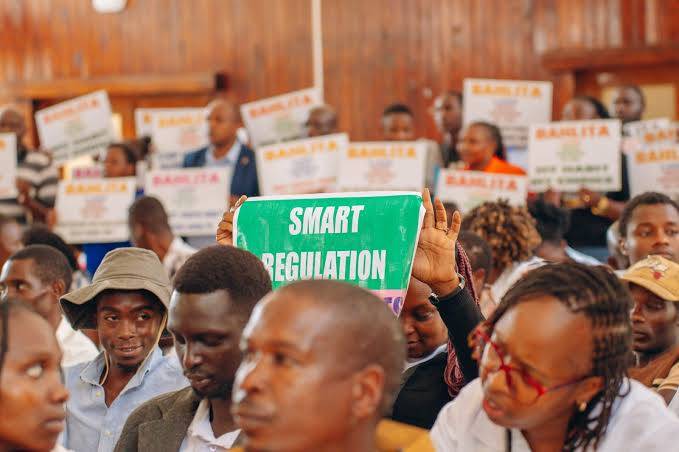
Tobacco farmers and other stakeholders in Western Kenya have called for amendments to the proposed Tobacco Control Bill, 2024, saying some of its provisions could increase the financial burden on farmers, traders and other players in the tobacco value chain.
The Tobacco Control amendment bill was first read a first time in the national assembly on Tuesday, 31st March 2026, and referred to the departmental committee on health for consideration and reporting to the house.
The bill that is sponsored by Senator Catherine Mumma, seeks to amend the tobacco control act, Cap 245A, to regulate electronic nicotine delivery systems, including electronic cigarettes and related products.
Speaking during the public participation forum held at the Kenya Red Cross hall in Bungoma, the stakeholders urged the National Assembly to review provisions they said could result in multiple taxation of tobacco products and further undermine the livelihoods of thousands of people who depend on the crop for income.
The farmers said while they support efforts to regulate the tobacco industry, the proposed law should take into account the economic realities facing farmers and small-scale businesses involved in tobacco production and trade.
Sarah Barbra, a tobacco farmer, appealed to Parliament to amend sections of the Bill that she said would impose additional financial obligations on farmers and businesses.
She said tobacco farmers are already facing numerous challenges, including high production costs and that additional taxes could reduce their earnings and make tobacco farming less attractive.
“As business people and tobacco farmers from this region, we are pleading with the National Assembly to consider removing the burden from tobacco so that we can also earn from our sweat. The people involved in the value chain should not be left with a heavy tax burden after investing their time and resources in production,” Barbra said.
Barbra said farmers were not opposed to regulation of the sector but wanted Parliament to ensure that taxation was structured in a way that did not result in the same product being subjected to multiple taxes at different stages of the value chain.
“The Bill is good in some areas, but there are sections that could put a heavy burden on farmers and other people involved in the value chain. Tobacco farmers and producers are paying taxes at different stages. We are asking Parliament to look at this issue and ensure that taxation is fair and does not amount to double taxation,” she said.
She added that excessive taxation could eventually affect the prices offered to farmers because businesses would seek to recover additional costs along the value chain.
Henry Wekesa, tobacco farmer, said many households in Western Kenya rely on tobacco farming and related businesses as their main source of income.
Wekesa urged legislators to consider the employment and economic benefits generated by the sector before introducing additional financial obligations.
“Many of us are self-employed in tobacco farming and related businesses. This is how we support our families and meet our daily needs. If additional taxes and financial burdens are introduced without considering the farmers, many people could lose their source of livelihood,” Wekesa said.
He called for greater consultation between Parliament, farmers, traders, manufacturers and other stakeholders before the Bill is passed.
Ronald Siundu, who represented persons with disabilities (PWDs) at the forum, also called for amendments that would take into account the interests of vulnerable groups who depend on tobacco-related economic activities.
Siundu said the proposed law should strike a balance between protecting public health and safeguarding the livelihoods of people working in the tobacco value chain.
He urged Parliament to listen to concerns raised during public participation and make changes where necessary before the Bill proceeds to the next stage.
Cleophas Soita, a businessman from Trans Nzoia called for consistency in the enforcement of tobacco-control regulations.
Soita said the government should strengthen implementation of existing tobacco-control laws instead of introducing new structures and requirements that could create confusion among businesses and consumers.
“The 2007 and 2012 amendments should continue to guide the regulation of the sector. We should first ensure that the laws already passed are fully implemented and enforced before introducing additional committees and requirements,” Soita said.
He argued that effective enforcement of existing regulations would help address some of the challenges facing the tobacco sector.
Soita also raised concern over the circulation of illicit cigarettes, particularly products suspected to enter Kenya through porous border points.
He called on the government to strengthen surveillance and enforcement at border points to prevent illegal tobacco products from entering the Kenyan market.
“We are concerned about illegal cigarettes coming into the country through porous borders. The government should strengthen controls at the borders and ensure that illicit tobacco products do not find their way into the Kenyan market,” he said.
Joel Gitari, chairperson of the Tobacco Control and Health Promotion Alliance of Kenya, said the proposed amendments are important in strengthening regulation of tobacco products and protecting public health.
Gitari said tobacco use contributes significantly to the burden of non-communicable diseases and called Parliament to expedite consideration of the proposed legislation.
“This Bill is important to Kenyans because tobacco use has serious consequences for public health. We are calling on Members of Parliament to move with speed, consider the views raised during public participation and pass a law that will strengthen the regulation of tobacco use in the country,” Gitari said.