



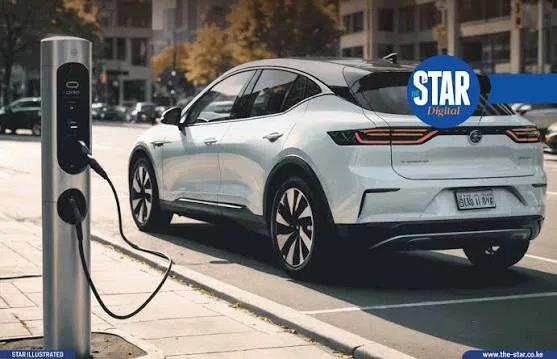
Kenya’s electric vehicle industry has won a major policy boost after the Energy and Petroleum Regulatory Authority (EPRA) removed the 15,000 kilowatt-hour monthly limit.
This ceiling has been restricting access to the special electricity tariff for electric mobility businesses.
The change, contained in an amendment to the 2023 electricity tariff schedule published in the Kenya Gazette on September 18, marks a significant shift in the economics of charging electric vehicles and battery-swapping operations.
It comes at a time when Kenya is trying to rapidly expand electric mobility.
The original e-mobility tariff, introduced in April 2023, was designed to give the emerging industry cheaper electricity and encourage charging during periods when demand on the national grid is low.
Under the tariff, e-mobility customers connected at 240 or 415 volts were charged Sh16 per kilowatt-hour, with the rate falling to Sh8 per kWh during designated off-peak periods.
But the incentive came with a major limitation. The preferential e-mobility category was capped at 15,000 kWh a month.
Once an operator crossed the threshold, the economics became less attractive, creating a major obstacle for businesses expanding their charging networks or operating high-volume battery-swapping stations.
That removal of the ceiling introduces an Energy Consumption Threshold for e-mobility customers.
Rather than treating 15,000 kWh as an absolute ceiling, units consumed above the applicable threshold are to be billed under the discounted Time-of-Use tariff, subject to the conditions in the tariff schedule.
For new e-mobility customers, the threshold is to be established from their average monthly consumption during the first three consecutive months, with the tariff framework applying a growth factor to determine the relevant threshold.
The significance of the change is that an operator is no longer faced with a sharp tariff penalty simply because its business has grown beyond 15,000 kWh a month.
This is particularly important for charging-station operators, electric bus fleets, battery-swapping companies and commercial fleets whose electricity demand rises as the number of vehicles on the road increases.
According to EPRA, electricity consumption by the e-mobility category rose by 300 per cent to 5.04 gigawatt-hours in the year ended June 2025, from 1.26 GWh a year earlier.
By June 2025, 69 customers were being billed under the e-mobility tariff.
The regulator has also recorded a sharp increase in electric-vehicle charging activity.
Kenya Power said in June that cumulative revenue from EV charging had reached Sh382 million between July 2023 and April 2026, with monthly revenue rising from less than Sh1 million at the start of the period to Sh35.25 million in February 2026.
Kenya Power projects electricity sales to the e-mobility sector could generate Sh5.9 billion in revenue by 2030.
An energy expert at EPRA who did not want to be mentioned told The Star the removal of the ceiling changes the relationship between EV growth and electricity demand.
“Instead of treating increased charging demand primarily as a risk to the utility’s revenue structure, the new framework creates room for the two to grow together.”
He explains that this is particularly relevant because the special tariff was introduced partly to encourage consumers to shift charging to off-peak periods.
Kenya has a substantial gap between daytime and night-time electricity demand, and the country’s policy documents have identified electric mobility as one way of creating additional demand during periods when the grid has spare capacity.
The draft National Electric Mobility Policy noted that Kenya had curtailed 495,437 MWh of electricity between July 2022 and June 2023, equivalent to an average of more than 1,350 MWh a day.
It identified night-time EV charging as one potential way of absorbing some of this otherwise unused generation.
“The policy logic is straightforward: electricity that is available but underutilised can be converted into transport energy, while motorists and fleet operators get an alternative to imported petrol and diesel.”
Kenya’s transport system remains heavily dependent on imported petroleum, exposing motorists and businesses to global oil-price shocks, exchange-rate movements and geopolitical disruptions.
At the launch of the National Electric Mobility Policy in February, the government said petroleum products had been Kenya’s largest single import category in 2023, with fuel imports rising to Sh628.4 billion from Sh348.3 billion in 2021.
Electric mobility offers a way of shifting part of that expenditure from imported petroleum towards electricity generated within Kenya.
This is particularly significant because Kenya’s electricity system has a high share of renewable generation.
The National Electric Mobility Policy identifies geothermal, hydro, wind and solar resources as a major advantage for the country’s transition to electric transport.
The environmental case is equally important.
Kenya has committed to cutting greenhouse gas emissions by 32 per cent by 2030 against the business-as-usual scenario under its updated Nationally Determined Contribution.
The transport sector is one of the areas identified for significant emissions reductions, while the country’s climate plans specifically promote electric two- and three-wheelers.
The National Electric Mobility Policy also sets out a framework for progressively establishing zero-emission vehicle transition targets across different vehicle categories.
Its projections point to a rapidly expanding vehicle market.
Kenya’s total vehicle population is projected to exceed 10 million by 2030, with about five million expected to be two-wheelers.
Under the policy’s growth scenario, EVs could account for about 8.8 per cent of the vehicle stock by 2030, with EVs representing about 8.1 per cent of new vehicle sales.
The same projections show EV registrations rising from about 11,680 in 2025 to nearly 47,900 in 2030.
The actual market has already been moving faster in some segments.
The Ministry of Roads and Transport said cumulative EV registrations reached 39,324 by 2025, up from 1,378 in 2022, with electric motorcycles recording particularly strong growth.
The rapid expansion of two-wheelers is important because motorcycles are among the most intensively used vehicles in Kenya.
Even so, the tariff removal does not remove all challenges
Electric vehicles still face high upfront purchase costs and limited charging infrastructure outside major urban centres.
The sector is also faced with financing constraints, technical skills shortages and uncertainty around battery disposal and recycling.
The electricity tariff itself also remains exposed to pass-through costs, including fuel energy costs, foreign-exchange adjustments and other levies.