

President William Ruto’s administration is facing growing calls to make its tax system more progressive by shifting some of the burden from consumption to wealth.
Policy experts and civil society groups are pushing for a tax on the wealth of the country’s richest individuals, arguing that Kenya has significant untapped revenue among high-net-worth households.
The debate comes as ordinary households continue to bear a large share of the tax burden through consumption taxes, majority of which is directed towards repayment of public debt, with analysts warning that this is widening inequality.
At the same time, wealth remains highly concentrated. Data from the World Inequality Database shows that the richest 10 percent of Kenyans control about 63 percent of the country’s wealth, while the top one percent controls about 29 percent.
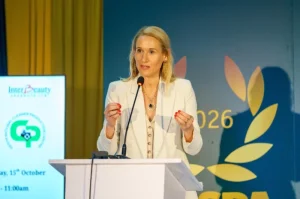
Speaking at a stakeholder meeting organised by the Institute of Public Finance (IPF), researcher Daniel Murakaru, who is also a lawyer with Kenya Women Parliamentary Association said Kenya could raise significant revenue from the wealthiest households.
He however warned that introducing a wealth tax without fixing weaknesses in tax administration could limit its effectiveness.
“Kenya must build the systems to track and verify wealth before imposing a net wealth tax, with the focus on Kenya Revenue Authority capacity, a central wealth database, international information sharing and safeguards against double taxation,” said Murakaru.
He pointed out that Kenya first needs better systems for identifying assets and their owners, including wealth held through companies, trusts and offshore accounts.
World Inequality Database shows the top 10 per cent of Kenyans control roughly 63 per cent of national wealth, with the top 1 per cent alone holding 29 percent.
Oxfam’s Inequality Report, further states that 125 individuals in Kenya own more wealth than 42.6 million of their compatriots combined, while the bottom half of the population holds just 4 per cent of national wealth.
IPF argues that focus should be taxing only on the truly wealthy by setting a high minimum threshold and using moderate, progressive tax rates.
Kenya has about 7,200 dollar-millionaires with assets worth more than Sh129 million, while 16 centi-millionaires have assets above about Sh12.9 billion.
IPF says the tax threshold should fall within these ranges so that it targets the ultra-wealthy rather than people who are simply financially comfortable.
Advocacy and policy expert Tashrifa Silayi said tax reforms would only gain public support if Kenyans could see how their taxes translate into better services.
“Tax fairness must connect to transparency and services. I pay for it, I need to see the value of it. said wealth taxation should be presented as a shared responsibility rather than a punishment for wealthy Kenyans,” Silayi said.
The researchers also point to Uganda as an example of how targeted tax administration can improve compliance among wealthy taxpayers.
IPF researcher Veronicah Ndegwa said Uganda established a specialised unit for high-net-worth individuals in 2015, helping increase filing rates among targeted taxpayers from 13 per cent to 78 per cent within three years.
She urged the Kenya Revenue Authority to consider a similar approach, supported by specialists who can handle complex financial and investment structures.
IPF recommends that any wealth tax should focus only on the ultra-rich rather than ordinary property owners and middle-income households. The proposal includes modest progressive rates, with existing taxes such as Capital Gains Tax considered to avoid taxing the same wealth twice.
The institute is, however, calling for a gradual approach, beginning with improvements to existing taxes and government records before introducing a new wealth tax.