


That was the central message at the Africa Capital Markets Conference that ended in Nairobi on Tuesday.
Policymakers and financial sector players at the two-day conference said that Africa must mobilise more of its own domestic capital to finance infrastructure, housing, climate projects and businesses.
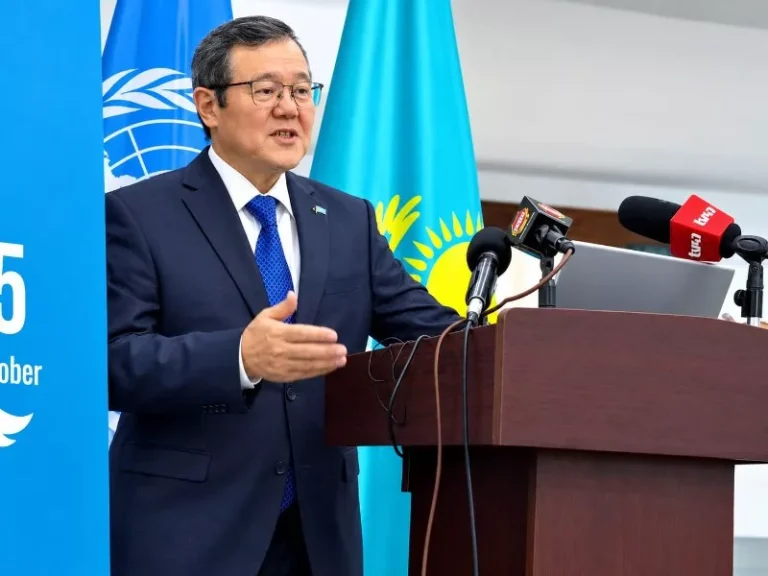
Principal Secretary for Economic Planning Boniface Makokha, representing Prime Cabinet Secretary Musalia Mudavadi, said the continent already controls sizeable pools of institutional capital.
Assets under management are estimated at $3 trillion (Sh388 trillion) and could exceed $7 trillion (Sh905.1 trillion) by 2040.
The opportunity is particularly significant outside South Africa, which accounts for about $1 trillion of the assets.
According to Makokha, markets such as Kenya, Ghana, Morocco, Nigeria and Uganda are recording faster growth as pension funds, insurers, banks and collective investment schemes accumulate long-term savings.
In Kenya, for instance, retirement assets reached Sh3.17 trillion by June 2026, crossing the Sh3 trillion mark for the first time, according to the Retirement Benefits Authority (RBA).
The figure was up 25.1 per cent from a year earlier.
Government securities, however, still accounted for 46.4 per cent of pension assets, showing how heavily domestic savings remain tied to the sovereign.
Makokha noted that most of the continent’s capital goes towards financing government, adding that the trend is not sustainable.
“While this has helped deepen domestic debt markets and reduce reliance on foreign-currency borrowing, it also exposes financial institutions to sovereign risk and can squeeze the private sector.”
He added that when government securities offer attractive risk-adjusted returns, banks and pension funds have less incentive to finance businesses, infrastructure and other longer-term projects.
“This helps explain why the region continues to face high borrowing costs and inadequate private-sector credit despite growing domestic savings.
The solution, Makokha said, is not simply to borrow more, but to mobilise greater domestic revenue, borrow more strategically and ensure debt finances investments capable of generating future economic and fiscal capacity.
He highlighted Kenya’s new Sovereign Wealth Fund, saying that it provides another piece of the emerging architecture.
President William Ruto signed the legislation into law in July, creating Stabilisation, Strategic and Infrastructure, and Future Generations funds.
The framework is intended to preserve part of the country’s resource wealth while supporting long-term economic resilience.
“Mobilisation alone will not solve Africa’s financing gap. Markets also need credible investment products and infrastructure capable of matching long-term savings with long-term projects.”
Financial Sector Deepening Africa (FSD) says Kenya’s experience with green finance demonstrates what is possible.
According to FSD Africa, its green-bond programme has helped build market capacity and supported the development of green financing instruments.
Across Africa, green bonds have raised about $9.6 billion through roughly 76 issuances, although the market remains relatively small.
More recently, KCB unveiled plans for a Sh300 billion sustainability bond programme over five years, targeting green, blue and social investments.
“The initiative illustrates how domestic capital markets can increasingly finance projects beyond traditional government borrowing.”