


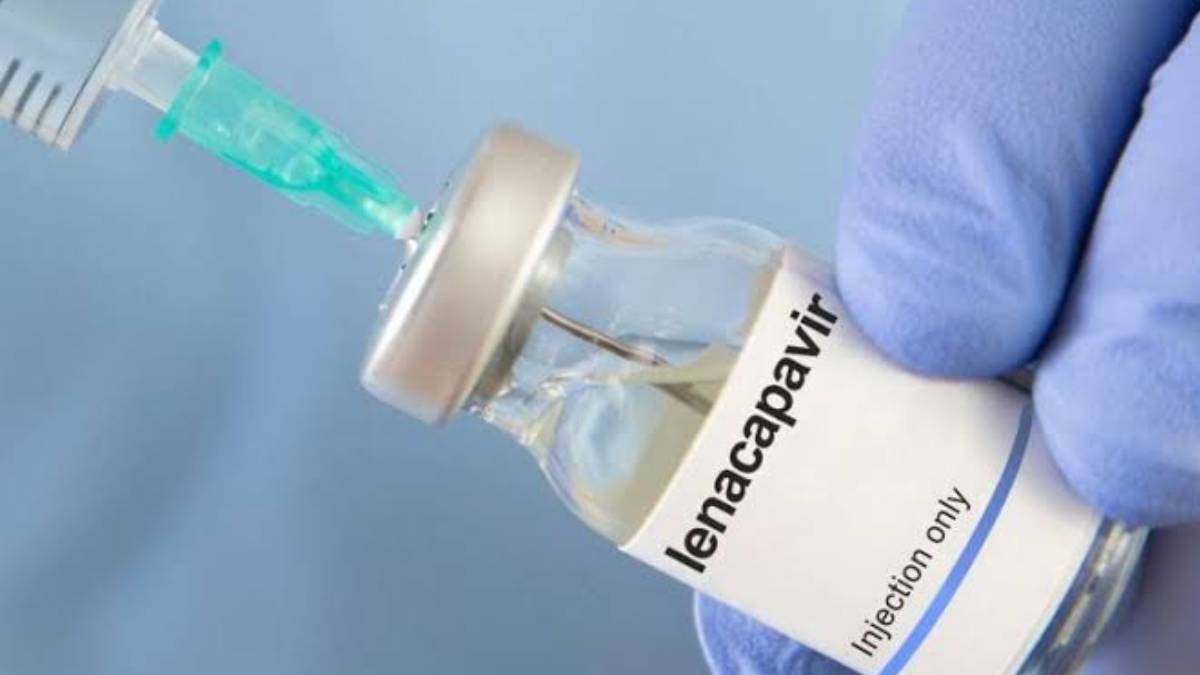
A total of 15,800 lenacapavir – LEN (long-acting HIV prevention injection) doses have been administered in 15 phase-one counties, with the Ministry of Health reporting strong demand and rapid uptake observed across implementation sites.
Phase one of the programme covered counties are; Busia, Homa Bay, Kajiado, Kakamega, Kiambu, Kilifi, Kisii, Kisumu, Machakos, Migori, Mombasa, Nairobi, Nakuru, Siaya and Uasin Gishu.
“NASCOP commends all phase-one counties for their leadership, commitment and support during the initial rollout,” the Ministry, through National AIDS and STI Control Program (NASCOP), says.
Attention now turns to the continuation phase, where the focus will be on tracing and supporting clients due for continuation dosing; strengthening documentation and reporting; monitoring continuation; reinforcing pharmacovigilance; and maintaining quality service delivery.
Counties, health care providers and implementing partners are reminded that oral PrEP, CAB-LA and LEN are effective HIV prevention options and should continue to be offered as part of a choice-based approach.
“Clients should be counselled and supported to use the PrEP option that is available, clinically appropriate, acceptable and aligned with their needs,” the Ministry adds. “Where LEN is temporarily unavailable, providers should reassure clients and offer other available, effective PrEP options to ensure uninterrupted HIV prevention.”
As the programme approaches the six-month mark for clients who initiated lenacapavir, KEMSA is distributing 4,600 continuation doses for clients who received their first LEN dose in March and April and are due for continuation dosing in August and September while on follow-up.
NASCOP, however, warns that these continuation doses should not be used for new initiations.
“In line with the six-monthly dosing schedule for LEN, counties and facilities should identify all clients due for continuation dosing and administer the dose within the recommended dosing window, preferably at the scheduled six-month visit and not later than two weeks from the due date.
Accordingly, the Ministry says that clients who present themselves for continuation doses outside the recommended dosing window should be clinically reviewed and managed according to national guidance, including confirmation of HIV-negative status and consideration of the appropriate re-loading approach before continuation.
County teams have also being advised to ensure continuous stock monitoring, timely ordering, redistribution where necessary, and documentation to support commodity accountability and uninterrupted service delivery.
Refresher training…
The Ministry is also planning to organise virtual refresher training for phase-one counties to reinforce PrEP choice counselling, injection technique, management of injection-site reactions, adverse event reporting, commodity management, documentation and client follow-up.
NASCOP is also preparing for the phased expansion of long-acting PrEP to selected phase-two counties. The selection of phase-two counties will be informed by increased vertical transmission rates (the percentage chance that a mother passes the virus to her child during pregnancy, labour, delivery, or breastfeeding) reported in the Kenya HIV Estimates Report 2025.
Among the selected counties, the reported rates are Wajir (33.4%), Samburu (26.0%), Garissa (23.2%), Marsabit (19.9%), Tana River (18.5%) and Kwale (13.3%).
“NASCOP urges all counties, facilities and partners to ensure that clients due for LEN continuation are actively traced, scheduled and served within the recommended dosing window, while maintaining access to the full range of PrEP options. County teams should strengthen coordination with facilities, commodity managers, health information officers, health promotion officers, implementing partners and community structures to support uninterrupted HIV prevention services, accurate documentation, timely reporting, pharmacovigilance and safe phased expansion.”